
News
Mobile Wound Care vs. Outpatient Wound Centers: Cost, Readmissions & Outcomes
For many patients, particularly those recovering from cancer treatments or severe mobility challenges, traveling to a clinic weekly presents significant physical, financial, and logistical obstacles. Specialized mobile wound care bridges the gap between hospital discharge, oncology care, and long-term home healing. Today, mobile wound care brings physician-led, hospital-grade care directly to the patient’s bedside. At-a-Glance […]
Learn More
CTPs vs. Traditional Wound Dressings: Clinical & Reimbursement Guide
Cellular and Tissue-Based Products (CTPs) differ from traditional wound dressings by providing dynamic biological scaffolds and cellular signaling rather than simple passive moisture management. While traditional dressings protect the wound bed and absorb exudate, bioengineered CTPs directly stimulate cellular migration, angiogenesis, and tissue regeneration in stalled chronic wounds. The management of chronic, non-healing wounds represents […]
Learn More
Medicare Pressure Ulcer Documentation Requirements: Audit Defense Guide
Medicare pressure ulcer documentation requirements mandate precise National Pressure Injury Advisory Panel (NPIAP) staging, exact anatomical locations, weekly longitudinal measurements (length, width, depth in centimeters), and detailed descriptions of the wound bed tissue. To withstand CERT, UPIC, and RAC post-payment audits, medical records must explicitly document active offloading interventions, systemic care plan factors, and detailed […]
Learn More
Neuropathic vs. Ischemic Foot Ulcer Treatment: A Clinical Diagnosis Guide
In terms of neuropathic vs. ischemic foot ulcer treatment, the former are typically painless, warm, highly calloused lesions located on plantar pressure points caused by loss of protective sensation, requiring aggressive offloading and debridement. Conversely, ischemic foot ulcers are painful, cold, pale or cyanotic lesions on distal extremities resulting from arterial insufficiency, requiring urgent vascular […]
Learn More
Hyperbaric Oxygen Therapy vs. Advanced Wound Care for Non-Healing Ulcers
Hyperbaric Oxygen Therapy (HBOT) is a systemic intervention that delivers 100% pressurized oxygen to supersaturate plasma and combat deep tissue hypoxia, whereas advanced wound care encompasses targeted, localized therapies, such as bedside debridement, cellular tissue products (CTPs), negative pressure wound therapy (NPWT), and bioengineered dressings, that manage the immediate wound bed microenvironment. Choosing between hyperbaric […]
Learn More
CMS Proposed Medicare Payment Rules: What They Mean for Wound Care
Medicare payment policy can directly influence how patients receive treatment, which therapies providers can reasonably offer, and where care is delivered. For patients living with chronic wounds or limited mobility, these changes can have consequences beyond billing. At West Coast Wound & Skin Care, we are closely following the proposed 2026 / CY2027 Physician Fee […]
Learn More
Advanced Wound Care: Common Healing Myths Debunked
Cuts, sores, and ulcers often seem straightforward at first, but many wounds require far more than basic home treatment to heal properly. Unfortunately, outdated advice and common misconceptions still influence how people care for injuries. Our approach to advanced wound care focuses on evidence-based therapies rather than outdated myths. By separating fact from fiction, patients […]
Learn More
Mobile Wound Care Treatments Improve Pressure Ulcers: A Study By Our Team
Chronic pressure ulcer wounds are among the most challenging that we treat. Always, we’re looking for better, more effective ways to provide care. Placental-based allografts show real promise for treating chronic pressure ulcer wounds. We wanted to evaluate the efficacy of those allografts when compared against the standard of care for our mobile wound care […]
Learn More
Navigating the Dangerous Gap in Post-Hospital Discharge Care
Leaving the hospital can be a milestone in recovery, but it can also mark the beginning of a vulnerable period. The post hospital wound care transition is one of the most critical phases in healing, particularly within the first 72 hours after discharge. During this time, wounds are still highly susceptible to infection, improper healing, […]
Learn More
The “Spring Gardening” Risk: Managing Abrasions, Soil-Borne Infections & More
For many, gardening is a peaceful and rewarding activity. However, even a small cut from a thorn or a minor scrape while digging can quickly turn serious. That’s especially true for individuals with diabetes, compromised immune systems, or poor circulation. What may seem like a harmless injury can escalate rapidly without proper care, making managing […]
Learn More
Travel Safely: A Guide to Preventing Foot Ulcers When On the Road
Travel offers excitement, new experiences, and a welcome break from routine. Yet, for individuals living with diabetes or those prone to chronic wounds, even a short trip can introduce unexpected risks. Preventing foot ulcers while traveling is a crucial step in protecting long-term health and mobility. With a bit of planning and consistent care, you […]
Learn More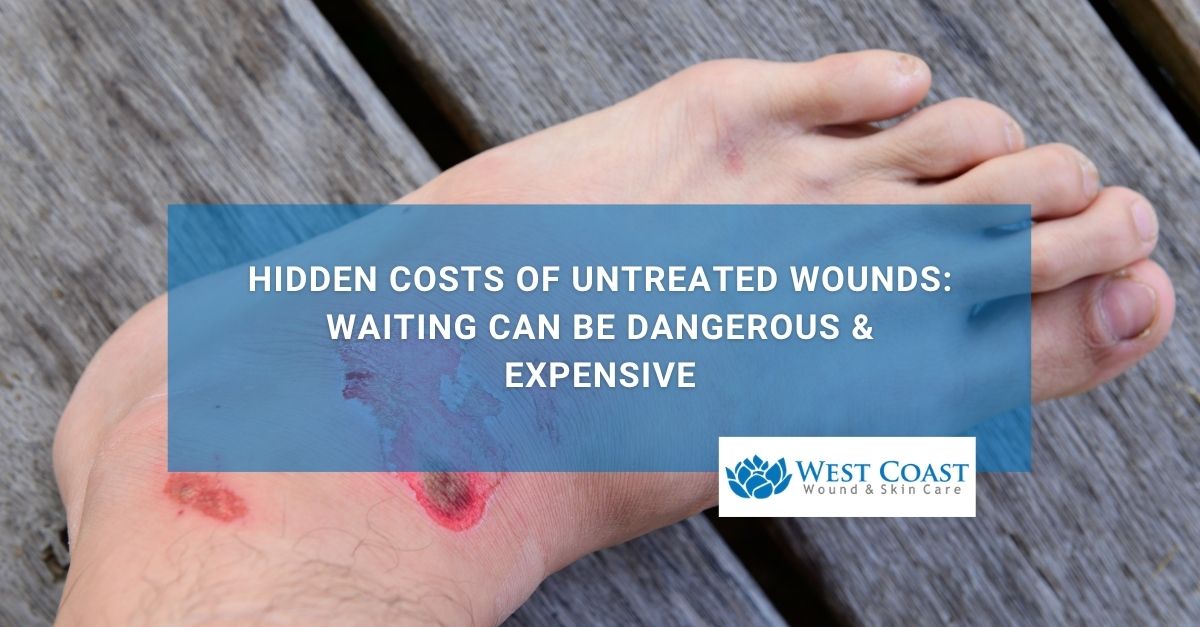
Hidden Costs of Untreated Wounds: Waiting Can Be Dangerous & Expensive
The complications of untreated chronic wounds extend into infection, reduced mobility, and rising medical costs that can quickly become overwhelming. At West Coast Wound & Skin Care, we can intervene early and provide effective care where and when it’s needed most. The medical risks tied to chronic wounds are well documented. What may begin as […]
Learn More