
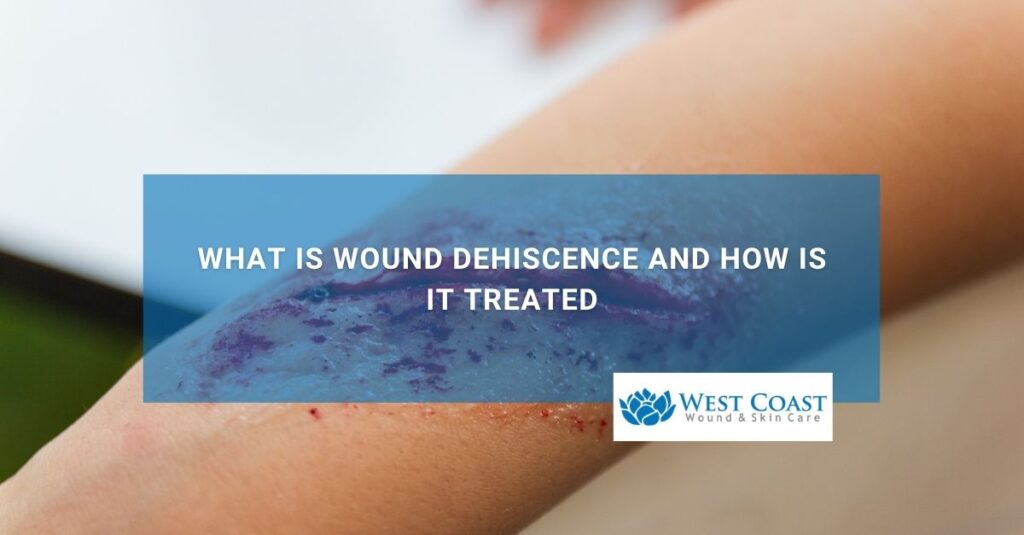
What is wound dehiscence?
Wound dehiscence is a serious post-operative surgical complication in which the previously closed edges of a surgical incision separation or split open along the suture line. In clinical practice, recognizing the early warning signs of wound dehiscence, such as sudden clear or serosanguinous (pink/bloody) drainage pooling under surgical dressings, allows wound care techs to intervene before full incision breakdown occurs.
This breakdown can occur partially, involving only the superficial skin layers, or completely, extending down through the subcutaneous tissue, fascia, and underlying muscular structures. Because an open surgical wound exposes vulnerable deep tissues to environmental pathogens, immediate evaluation by a surgical or clinical wound care specialist is necessary to prevent severe infection, evisceration, and tissue necrosis.
Wound dehiscence typically manifests between 5 to 10 days following a surgical procedure, coinciding with the peak phase of collagen remodeling when tissue tension is highest and original closure materials (sutures, staples, or surgical glues) experience maximum mechanical stress.
When the structural integrity of the incision fails, the wound transitions from primary intention healing (where edges are held together) to secondary intention healing (where the wound bed must granulate and close from the bottom up).
Clinical Classifications of Surgical Separation
- Partial Dehiscence: Only the superficial epidermal and dermal layers separate, leaving the underlying fascial plane and internal closure intact. While less severe, it still requires active wound care to prevent infection and deeper tissue breakdown.
- Complete Dehiscence: The surgical incision splits entirely open through all anatomical layers, including the skin, subcutaneous fat, and deep fascial sheath. This exposes internal organs or deep musculoskeletal structures.
- Wound Evisceration: The most severe form of complete abdominal dehiscence, where internal organs (typically the small intestine or abdominal viscera) protrude or herniate through the open surgical incision. Evisceration is a medical emergency requiring immediate emergency surgical intervention.
What causes a surgical wound to split open (dehisce)?
Wound dehiscence occurs when mechanical stress placed on a surgical incision exceeds the tensile strength of the healing tissue or closure materials, or when systemic factors impair the body’s natural tissue repair process.
Primary causes range from physical strain (such as severe coughing, vomiting, or heavy lifting) to local biological factors including surgical site infection, tissue ischemia, poor blood circulation, and faulty surgical suturing technique.
The physiological mechanisms leading to incision breakdown are divided into physical mechanical forces, local wound bed conditions, and systemic patient risk factors.
Primary Causes and Risk Factors
| Category | Specific Risk Factors | Biological Mechanism & Impact on Incision |
|---|---|---|
| Mechanical Stress | Excessive coughing, vomiting, straining during bowel movements, heavy lifting, sudden body movements[cite: 21] | Increases intra-abdominal or local tissue pressure, pulling incision margins apart and snapping or tearing sutures through tissue.[cite: 21] |
| Local Wound Factors | Surgical Site Infection (SSI), hematoma, seroma formation, tissue necrosis, excessive tension on skin edges[cite: 21] | Bacteria release enzymes that degrade extracellular matrix and collagen; fluid accumulation (seromas/hematomas) creates internal pressure pushing wound edges apart.[cite: 21] |
| Systemic Health Conditions | Uncontrolled Diabetes Mellitus (elevated HbA1c), Peripheral Artery Disease (PAD), chronic venous insufficiency[cite: 21] | Impairs leukocyte function, reduces microvascular oxygen delivery, delays fibroblast proliferation, and severely weakens collagen synthesis.[cite: 21] |
| Nutritional Deficits | Protein-calorie malnutrition, Vitamin C deficiency, Zinc deficiency, hypoalbuminemia[cite: 21] | Deprives the body of essential amino acids and micronutrients required to synthesize new structural collagen and form healthy granulation tissue. Nutrition and mobile assistance can help.[cite: 21] |
| Medications & Therapies | Long-term systemic corticosteroid use, immunosuppressants, chemotherapy, local radiation therapy[cite: 21] | Suppresses the body’s inflammatory response, inhibits fibroblast activity, thins dermal layers, and impairs normal tissue regeneration.[cite: 21] |
| Lifestyle & Demographics | Advanced age, severe obesity (BMI over 30), active tobacco smoking / nicotine use[cite: 21] | Nicotine causes vasoconstriction, reducing tissue oxygenation; excessive adipose tissue has poor vascular supply and increases incisional tension.[cite: 21] |

What are the early signs and symptoms of wound dehiscence?
Early signs of wound dehiscence include a sudden surge of clear, pink, or blood-tinged fluid (serosanguinous drainage) saturating the surgical dressing, visible gaping or separation along the suture line, increased localized pain at the incision site, and surrounding skin redness or swelling. Patients often report feeling a sudden “popping,” “snapping,” or tearing sensation along their incision during physical exertion such as coughing or standing up.
Promptly identifying these clinical warning signs is critical to preventing partial separation from escalating into complete deep-tissue dehiscence or organ evisceration.
Clinical Symptoms to Monitor
- Sudden Increase in Wound Exudate: A noticeable influx of clear, watery, or thin pink fluid soaking through surgical dressings is frequently the single earliest indicator that deeper fascial layers have separated beneath the skin.
- Visible Separation of Wound Margins: Physical opening or pulls along the incision line, ranging from minor gaps between staples to complete separation exposing pink or yellow underlying subcutaneous tissue.
- Localized Pain and Tenderness: A sudden increase in burning, throbbing, or sharp pain at the surgical site that differs from expected post-operative recovery discomfort.
- Signs of Surgical Site Infection: Surrounding skin redness (erythema), localized heat, swelling (edema), foul-forming odor, or thick yellow/green purulent drainage from the open incision line.
- Systemic Manifestations: Spiking fevers, chills, elevated heart rate (tachycardia), and generalized malaise, indicating localized bacterial infection may be spreading systemically.
How is a dehisced wound treated and managed?
Treatment for a dehisced surgical wound depends on the depth of tissue separation, the presence of localized infection, and the patient’s overall medical stability. While superficial separations may be managed non-surgically using advanced moisture-balancing dressings and tissue-approximating strips, deep or infected dehiscence requires immediate surgical debridement, negative pressure wound therapy (NPWT), or emergency resuturing in an operating room.
When an incision dehisces, the primary clinical objective shifts from immediate primary closure to converting the compromised wound bed into a clean, well-vascularized environment that can heal safely.
Primary Medical and Surgical Treatment Strategies
- Clinical Evaluation and Debridement: A wound care specialist or surgeon inspects the wound to remove non-viable, necrotic tissue (slough or eschar), foreign material, and bacterial bioburden using sharp surgical debridement or enzymatic agents.
- Negative Pressure Wound Therapy (NPWT / Wound Vac): Applied to deep, highly exudative dehisced wounds. NPWT utilizes a specialized foam dressing sealed with an airtight drape, connected to a vacuum pump that exerts continuous sub-atmospheric pressure. This pulls wound margins together, evacuates excess fluid, reduces swelling, and accelerates granulation tissue formation.
- Advanced Wound Care Dressings: For clean, superficial dehisced wounds, clinicians utilize absorbent alginates, gelling fibers, or hydrofiber dressings to manage drainage, alongside antimicrobial silver or iodine dressings to prevent bacterial colonization.
- Surgical Resuturing and Tension Relief: Complete dehiscence with clear fascial breakdown often requires returning to the operating room for surgical exploration, thorough irrigation, placement of retention sutures, or fascial repair.
- Antibiotic Therapy: Systemic targeted antibiotics are prescribed when clinical signs of infection, surrounding cellulitis, or positive wound culture results are present.
What is the difference between wound dehiscence and wound evisceration?
The primary difference between wound dehiscence and wound evisceration is the extent of structural breakdown and whether internal abdominal organs are exposed or protruding. Wound dehiscence refers strictly to the separation of closed surgical incision edges, which can be superficial or deep. Wound evisceration is a rare, life-threatening progression of complete abdominal dehiscence where internal abdominal organs (viscera), such as the small intestine, physically protrude through the opened incision out onto the body surface.
While all instances of wound dehiscence require professional medical evaluation, wound evisceration is an acute surgical emergency that demands immediate intervention to prevent organ ischemia, tissue necrosis, severe sepsis, and shock.
Comparison Table: Dehiscence vs. Evisceration
| Clinical Aspect | Wound Dehiscence | Wound Evisceration |
|---|---|---|
| Definition | Separation of closed surgical incision margins along suture lines.[cite: 22] | Protrusion of internal abdominal organs through a fully opened incision.[cite: 22] |
| Severity Level | Moderate to High; requires urgent clinical or surgical assessment.[cite: 22] | Critical Medical Emergency; requires immediate 911 / ER intervention.[cite: 22] |
| Anatomical Depth | Can be partial (epidermis/dermis) or complete down to fascia.[cite: 22] | Complete breakdown through skin, subcutaneous fat, fascia, and peritoneum.[cite: 22] |
| Primary Risk Factors | Infection, mechanical strain, poor healing, diabetes, corticosteroids.[cite: 22] | Abdominal surgery, severe abdominal distension, violent coughing, obesity.[cite: 22] |
| Immediate First Aid | Cover with sterile dry dressing, notify surgeon or wound care team.[cite: 22] | Cover exposed organs with sterile gauze soaked in warm sterile saline; DO NOT force organs back inside.[cite: 22] |

How can patients and caregivers prevent wound dehiscence after surgery?
Preventing wound dehiscence requires a combination of gentle incisional physical protection, strictly following post-operative activity restrictions, maintaining optimal incisional hygiene, managing underlying systemic health conditions like blood sugar levels, and adhering to proper nutritional support.
Caregivers and patients, whether in wound centers or mobile providers, must work together to minimize mechanical stress on the surgical site during the critical initial weeks of tissue recovery.
Implementing targeted preventive strategies significantly lowers the risk of incisional breakdown, particularly in high-risk patients undergoing major abdominal, orthopedic, or cardiothoracic surgeries.
Evidence-Based Incision Protection Strategies
- Incisional Splinting During Physical Strain: Patients with abdominal or thoracic incisions should firm press a clean pillow or folded towel firmly against their surgical site when coughing, sneezing, vomiting, laughing, or transitioning from sitting to standing positions to absorb sudden intra-abdominal pressure spikes.
- Strict Adherence to Lifting Restrictions: Avoid lifting heavy objects (typically anything over 5–10 pounds), strenuous exercise, pushing, pulling, or vigorous torso twisting for the full duration recommended by the surgical team.
- Proper Wound Care and Hygiene: Keep the incision site clean and dry according to post-operative instructions. Inspect the line daily for increased redness, swelling, or unusual drainage, and avoid submerging the wound in bathwater, hot tubs, or pools until fully closed.
- Optimized Nutrition and Hydration: Consume a high-protein diet rich in essential amino acids, Vitamin C, Vitamin A, and Zinc to supply the necessary metabolic building blocks for rapid cellular synthesis and strong collagen deposition.
- Strict Glycemic Control: Patients with diabetes must tightly manage blood glucose levels, keeping blood sugar below target thresholds to ensure white blood cells can effectively combat bacteria and prevent surgical site infections.
- Smoking Cessation: Stop all tobacco, nicotine, and vaping product usage prior to and immediately following surgery to prevent peripheral blood vessel constriction and maintain microvascular tissue oxygenation.
How do mobile wound care services assist in managing dehisced surgical wounds at home?
Mobile wound care services assist patients with dehisced surgical wounds by delivering advanced, hospital-grade clinical wound management, physician evaluations, and specialized dressing protocols directly to the patient’s home, assisted living facility, or skilled nursing center.
For patients suffering from an open, painful surgical incision, mobile care eliminates the stress, pain, and physical trauma associated with travelling to outpatient clinics, while drastically reducing the risk of hospital readmission and exposure to healthcare-associated infections.
Managing a dehisced wound requires frequent clinical oversight, complex dressing changes (such as negative pressure wound vac maintenance), and ongoing infection surveillance.
Benefits of In-Home Mobile Wound Management
- On-Site Clinical Debridement and Evaluation: Licensed wound care specialists perform bedside assessments, wound measurements, bacterial culture collection, and conservative sharp or enzymatic debridement in the comfort of the patient’s living space.
- In-Home Negative Pressure Wound Therapy (NPWT): Mobile teams deliver, install, troubleshoot, and perform routine sponge changes for specialized wound vac systems directly at the bedside, ensuring uninterrupted therapeutic sub-atmospheric pressure.
- Advanced Biologic and Cellular Dressings: Application of advanced cellular and tissue-based products (CTPs), collagen matrix dressings, and targeted antimicrobial barriers to accelerate granulation and epithelialization in slow-healing dehisced wounds.
- Seamless Surgical Communication and Coordination: Mobile providers maintain direct communication channels with operating surgeons, primary care physicians, home health nurse teams, and family caregivers, ensuring unified treatment plans and rapid antibiotic adjustments if infection arises.
- Reduced Transportation Trauma and Readmissions: Preventing fragile, open surgical incisions from being strained during transport preserves incisional stability, enhances patient comfort, and keeps high-risk post-operative patients recovering safely at home.