
Chronic wound care requires specialized care that goes beyond the traditional scope of long-term care facilities. To bridge this gap without setting residents’ care back, nursing homes increasingly partner with specialized wound care providers.
Understaffing, inadequate specialist training, outdated protocols, and a reimbursement model that penalizes advanced wound care supplies all converge to leave residents with non-healing wounds undertreated often for months.
We bring board-certified wound care physicians and advanced practice clinicians directly to residents in skilled nursing facilities, delivering the level of care for chronic wounds that patients require but are not receiving from facility staff alone.

How Does the Relationship Between Nursing Homes and Chronic Wound Care Providers Work?
Facilities that work with us gain direct access to board-certified wound care physicians and advanced practice clinicians who come to the bedside, bringing the specialized wound expertise that most facility nursing staff do not have the training or bandwidth to provide.
Our team coordinates closely with your existing staff on every visit. That way, care is consistent, well-documented, and aligned with each resident’s broader treatment plan, all without adding further strain to your staff.
We currently work alongside nursing homes, skilled nursing facilities, assisted living communities, board and care homes, and hospice partners across the country. As of this writing, we are actively seeking to expand those partnerships.
Whether you are looking to improve outcomes for a handful of complex residents or establish an ongoing specialist presence across your facility, we would welcome the conversation. Contact us today to explore a partnership. **insert contact button to contact form**
How prevalent are chronic wounds in nursing home settings?
A chronic wound is one that has failed to progress through the normal stages of healing within approximately four to six weeks. Rather than closing in an orderly, timely manner, these wounds often cycle through inflammation, tissue breakdown, and infection without ever reaching full closure.
The scale of the problem in long-term care is significant. Research published in peer-reviewed literature, including a cross-sectional study on chronic wound prevalence in nursing homes, estimates that approximately 7.8% of all nursing home residents are affected by chronic wounds at any given time.
Of those, more than half present with pressure ulcers, which are the preventable, painful injuries that develop when sustained pressure cuts off circulation to vulnerable tissue. Venous leg ulcers, diabetic foot ulcers, and arterial insufficiency wounds account for much of the remainder.
Nationwide, approximately 6.5 million Americans, roughly one in every 38 adults, live with a chronic wound each year. Older adults living in nursing homes are older, less mobile, and manage more comorbidities than the general population, so they account for a disproportionate share of that figure.
Despite this reality, the long-term wound treatment these patients need is rarely available within the walls of the facility housing them.
Leveraging Advanced Expertise Beyond Generalist Nursing
The nurses working the floors of most skilled nursing facilities are LVNs and RNs trained as generalists. Their foundational education covers wound assessment and basic dressing application, but it stops well short of the specialized knowledge required to manage complex, non-healing wounds.
Obtaining a Certified Wound Care Nurse (CWCN) designation, the most recognized wound-specific credential in the field. requires a Bachelor of Science in Nursing degree, an active RN license, completion of a WOCN-accredited education program, and passage of a formal certification examination.
The Wound Treatment Associate (WTA) credential, accessible to both RNs and LPN/LVNs, requires completion of a WOCN-approved training program on top of existing licensure. Neither credential is standard among the general nursing workforce in long-term care settings.
Without this specialized training, nursing home nurses often lack the clinical framework to select the right debridement method for a given wound bed, recognize when tissue is failing to granulate, apply offloading or pressure redistribution strategies correctly, or navigate the decision tree for antimicrobial stewardship and cellular biologics. Those are just some examples.
Floor nurses manage a wide range of daily medical needs. So, expecting them to also maintain advanced wound care certifications is impractical at best. A specialized partner never replaces the facility’s nursing staff. Instead, a partner supports them by bringing dedicated expertise and a literal helping hand.
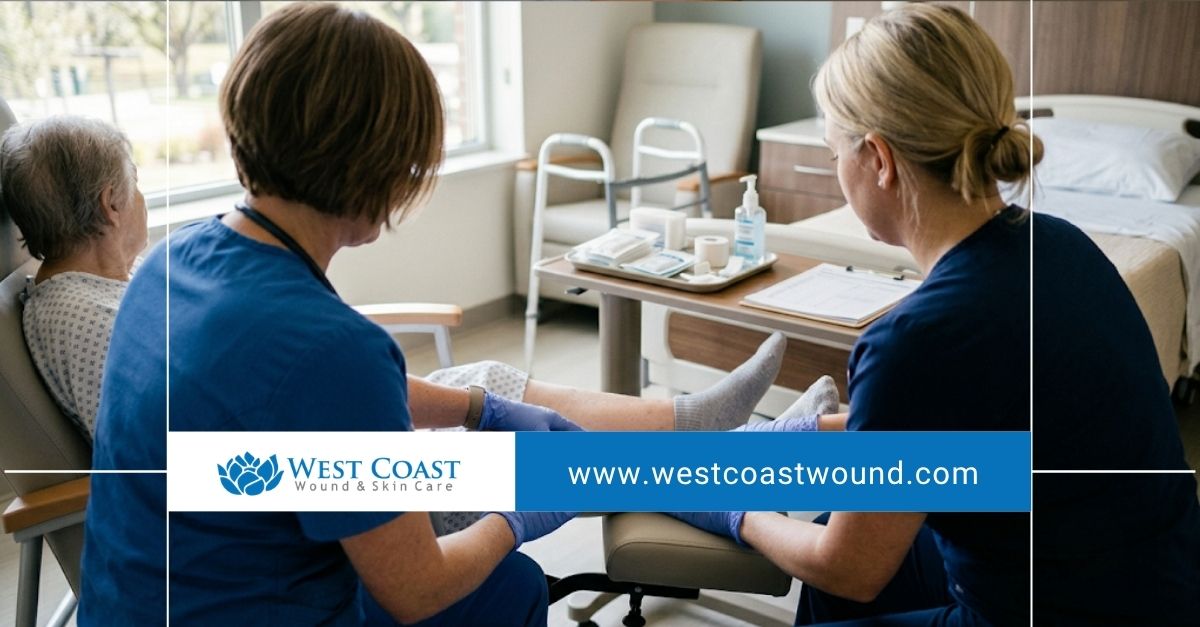
Addressing Wound Management Gaps in Nursing Homes
One of the most damaging features of inadequate wound care in nursing homes is not simply that wounds go untreated. Rather, it is that they are actively managed in ways that impede healing.
The table below illustrates the contrast between standard-of-care gaps commonly observed in nursing homes and the evidence-based interventions that our modern wound care specialists can apply.
| Clinical Area | Common Generalist Limitations | Modern, Evidence-Based Approach |
| Debridement | Wet-to-dry gauze dressings (non-selective, damages granulating tissue) | Sharp conservative bedside debridement or enzymatic debridement with collagenase (Santyl) selective, targeted, and tissue-preserving |
| Wound bed moisture | Dry or minimally moist dressings | Moist wound healing environment using hydrocolloid, hydrogel, alginate, or foam wound dressings matched to exudate level and wound type |
| Infection management | Routine use of topical antiseptics (povidone-iodine) on open wounds | Evidence-based antimicrobial stewardship targeted antimicrobial dressings (silver, iodine cadexomer), wound cultures to guide therapy |
| Negative pressure | Rarely utilized | Negative pressure wound therapy (wound vac) for complex, deep, or high-exudate wounds |
| Pressure redistribution | Repositioning schedules alone | Offloading devices, specialized mattresses, and physical therapy-guided mobility programs |
| Nutritional support | Generalized dietary monitoring | Targeted dietitian assessment protein intake, vitamin C, vitamin A, and zinc optimization for healing |
| Vascular assessment | Not routinely performed | Vascular evaluation of perfusion status as a prerequisite to treatment planning for lower extremity wounds |
| Advanced biologics | Not available | Cellular and tissue-based products, skin substitutes, platelet-rich plasma, and MIST therapy where clinically indicated |
How Partnerships Help the Floor Staff Deliver Better Care
Federal minimum staffing standards for nursing homes, finalized by the Centers for Medicare & Medicaid Services (CMS) in 2024, require facilities to maintain a total nursing staffing level of 3.48 hours per resident per day (HPRD), including just 0.55 registered nurse HPRD.
Critically, more than 79% of nursing homes across the United States currently fall below even these minimums.
Research consistently recommends significantly higher staffing to prevent omitted or delayed care. The 2023 Abt Associates study commissioned by CMS found that keeping rates of delayed clinical care below five percent requires 1.4 to 1.7 licensed nurse HPRD.
Academic modeling suggests that facilities with higher-acuity residents, exactly the population most likely to develop chronic wounds, may require 4.29 to 6.77 total nursing HPRD to meet care needs safely.
The practical consequence of operating below these thresholds directly undermines wound healing:
A nurse managing twenty, thirty, or more residents must complete medication administration, fall risk monitoring, catheter and feeding tube care, documentation, family communication, and admission assessments all within a single shift. Wound care competes for time against every one of these obligations.
When time is limited, clinicians may perform only cursory wound assessments. They may skip measurements and overlook tunneling, undermining, or signs of an evolving infection in the wound bed. They also often change dressings quickly using the products they know best instead of selecting the most clinically appropriate option. Even when they apply the proper treatment, they sometimes fail to update care plans to reflect the wound’s progression.
Each of those missteps can make a chronic wound worse. A wound that goes unmeasured cannot be tracked for deterioration. Additionally, a wound that is not assessed for infection will not receive timely treatment. A wound dressed with an inappropriate product will stall.
The result is a patient who remains in a nursing home for months with a wound that never closes not because healing is impossible, but because the conditions for healing were never created.
Navigating the Economics of Advanced Wound Care Supplies
However, a partnership can serve as a financial lifesaver for the facility. By partnering with an outsider, the facility can offload both the financial as well as the logistical burden. Quite literally, a partnership makes sure that the facility doesn’t have to deal with this all by itself.
Why Cost Often Drives Wound Care Decisions
For example, negative pressure wound therapy (wound vac) systems can cost well over one hundred dollars per day when factoring in equipment and consumables. Bioengineered skin substitutes and cellular tissue products represent a further significant cost.
Even the transition from standard gauze to clinically appropriate advanced hydrocolloid, foam, or alginate dressings increases per-wound supply costs substantially.
For a nursing home operating on thin Medicaid margins, which most do, every upgrade in wound care product represents a line item absorbed by the facility with no corresponding increase in reimbursement.
As a result, the financial incentive runs in precisely the opposite direction from what evidence-based chronic wound healing requires.
This is not an indictment of every facility’s intentions. Rather, the payment architecture creates a structural problem. It does not reward facilities for achieving wound closure. Instead, it pays the same flat rate regardless of clinical outcome.
Until the reimbursement model changes, the economics of nursing home wound care will continue to favor cheaper, less effective interventions. But, by partnering with a wound care provider, the facility can provide better care and do better business.
Skin Assessments in Skilled Nursing Facilities
Proactive intervention is the foundation of effective wound management. To catch potential complications before they escalate, our specialized team conducts comprehensive, head-to-toe skin and wound assessments every six weeks within Skilled Nursing Facilities (SNFs) and Assisted Living Facilities (ALFs). This regular cadence allows for early identification, ensuring residents receive precise, evidence-based care plans as quickly as possible.
Facilities trust our team as a seamless clinical extension because we understand the operational flow of long-term care. Operating across nine states, we bring wound-trained physicians, nurse practitioners (NPs), and physician assistants (PAs) directly to the bedside. This collaborative approach yields proven outcomes, accelerating healing times by up to 25% through our integrated care protocols. To maintain maximum accessibility for all residents, we accept a wide range of health insurance providers, including most major plans.
Our scheduling process is designed to minimize administrative friction for facility staff. The process unfolds smoothly through the following steps:
- Logistical Coordination: Our office coordinates a mutually convenient date and time for the assessments with your facility.
- Documentation Retrieval: We request the facility’s current census and patient face sheets to prepare our clinical team.
- Collaborative Rounding: We coordinate to have the facility’s treatment nurse round alongside our specialized provider, ensuring real-time communication and knowledge sharing.
- Provider Mobilization:Once the schedule is finalized, our office notifies the visiting provider.
To ensure maximum operational flexibility on the day of the assessments, our main office can transmit the resident census directly to the provider, or our clinician can obtain a copy from the nursing station upon arrival. Through this shared framework, we help facilities elevate their preventative care without increasing their administrative burden.
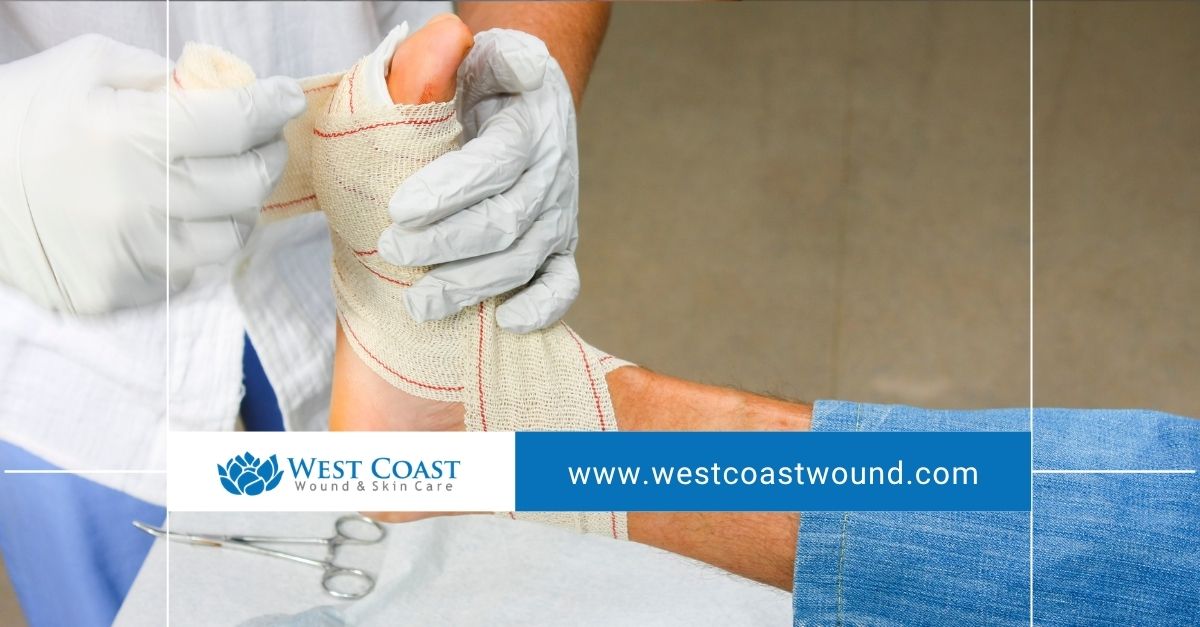
Why Chronic Wounds Benefit From an Interdisciplinary Medical Approach
Chronic wound recovery is not a single-discipline problem. A non-healing wound is almost never the result of a single cause. It is the surface expression of underlying systemic dysfunction impaired vascular perfusion, uncontrolled blood glucose, protein-energy malnutrition, sustained pressure, bacterial biofilm, or some combination of all of the above.
Addressing each of those requires a coordinated care team. Vascular assessment is essential for any lower extremity wound. Remember: a wound that cannot be perfused cannot heal, regardless of how advanced the dressing applied to it.
Dietary evaluation ensures that patients have adequate protein, zinc, and vitamins C and A. Those are considered to be the physiological building blocks of tissue repair.
Physical therapy contributes pressure redistribution strategies and mobility support that reduce ischemic injury to wound margins. Endocrinology input optimizes glycemic control in diabetic patients, where even modest improvements in blood glucose can meaningfully accelerate wound closure.
Within nursing homes, this team of specialists is rarely assembled for a single patient’s wound. Residents may receive a general practitioner visit once a week, a cursory dietary review, and periodic physical therapy. However, they’re unlikely to receive the kind of coordinated, wound-specific interdisciplinary review that complex long-term wound treatment demands.
Comprehensive holistic injury care, by definition, requires looking beyond the wound bed to the whole patient and that is not a model nursing homes are structurally equipped to deliver.
A Seamless Extension of Your Facility’s Care Team
The gaps described throughout this FAQ in training, time, resources, and interdisciplinary coordination are not gaps that nursing home administrators can easily close on their own.
What residents need is access to clinicians who do nothing but manage wounds, who bring the full scope of modern wound science to the bedside, and who are not competing for time against forty other patients.
That is what our wound care specialist team provides.
Our services at the bedside include but are not limited to: debridement, negative pressure wound therapy (wound vac), skin grafting, MIST Therapy, compression therapy, manual lymphatic drainage, wound cultures and biopsies, antimicrobial assessment, and targeted guidance on nutrition and mobility.
This interdisciplinary framework provides the level of expertise that complex wound healing requires, without requiring the patient to leave the facility.
For those who cannot travel, our mobile wound care model ensures that geography and mobility limitations do not become barriers to evidence-based treatment.
Currently, we operate across California, Texas, Arizona, Colorado, Florida, Georgia, Illinois, Michigan, Nevada, Massachusetts, Pennsylvania, South Carolina, and Oklahoma.
As a result, we bring specialized wound care to residents in communities where access to this level of expertise may have been out of reach.
Ultimately, nursing homes are designed to provide continuous and dedicated daily care. By integrating West Coast Wound & Skin Care into your facility, you can improve resident outcomes without increasing the burden on your staff.
FAQ: Chronic Wound Care Partnerships in Nursing Homes
What is considered a chronic wound?
A chronic wound is a wound that has not healed within about four to six weeks. Instead of progressing through normal healing, it remains stuck in a cycle of inflammation, tissue damage, or infection.
How common are chronic wounds in nursing homes?
Chronic wounds affect a significant percentage of nursing home residents. Pressure ulcers are the most common type, followed by venous leg ulcers, diabetic foot ulcers, and arterial wounds.
Why do many nursing homes struggle to provide effective wound care?
Most facilities face a combination of understaffing, limited specialist training, and financial constraints. These challenges make it difficult to deliver the advanced, evidence-based wound care that complex wounds require.
Are nursing home nurses trained in specialized wound care?
Most nursing home nurses are trained as generalists rather than wound care specialists. Advanced wound management often requires additional certification and specialized education that many facilities do not have on staff.
Why are wet-to-dry dressings considered outdated?
Wet-to-dry dressings can damage healthy tissue and slow healing. Modern wound care favors selective debridement methods and moisture-balanced dressings that protect new tissue growth.
How does understaffing affect wound healing?
When nurses care for too many residents, they may rush or delay wound assessments and dressing changes. They can also miss important signs of infection or deterioration, allowing wounds to worsen over time.
Does Medicaid reimbursement impact wound treatment quality?
Yes. Medicaid’s daily payment model does not separately reimburse many advanced wound care products and therapies, which can discourage facilities from using more effective but more expensive treatments.
Why do chronic wounds require an interdisciplinary approach?
Chronic wounds are often linked to underlying problems such as poor circulation, diabetes, malnutrition, or limited mobility. Successful treatment usually requires coordination among wound specialists, dietitians, therapists, and other medical providers.
Can specialized wound care be provided inside a nursing home?
Yes. Mobile wound care teams can bring advanced wound treatment directly to residents without requiring them to travel to a clinic.
What services do specialized wound care providers offer?
Specialized providers may offer debridement, wound vac therapy, compression therapy, skin grafting, wound cultures, nutritional guidance, and other advanced treatments. These services are designed to address both the wound itself and the underlying conditions preventing healing.
Sources
Prevalence of Chronic Wounds in Nursing Homes
- Prevalence and risk factors of chronic wounds in nursing homes in Germany: a cross-sectional study
https://onlinelibrary.wiley.com/doi/abs/10.1111/iwj.13486 - Prevalence of chronic wounds and structural quality indicators of chronic wound care in Dutch nursing homes
https://onlinelibrary.wiley.com/doi/abs/10.1111/iwj.12172 - Prevalence and characteristics of older people with pressure ulcers and leg ulcers in nursing homes in Barcelona
https://www.sciencedirect.com/science/article/pii/S0965206X21000048
CMS Staffing Minimums and Nursing Hours Per Resident Day
Medicare and Medicaid Programs: Minimum Staffing Standards for Long-Term Care Facilities (CMS Fact Sheet)
https://www.cms.gov/newsroom/fact-sheets/medicare-and-medicaid-programs-minimum-staffing-standards-long-term-care-facilities-and-medicaid-0
Is Your State Ready for the CMS Nursing Home Staffing Standards Rule? (UMass Chan Medical School)
https://forhealthconsulting.umassmed.edu/is-your-state-ready-for-the-proposed-cms-nursing-home-staffing-standards-rule/
CWCN/WTA Credential Requirements
Wound, Ostomy, and Continence Certification: Eligibility (WOCNCB)
https://www.wocncb.org/certification/wound-ostomy-continence/eligibility
About the WTA Program (WOCN Society)
https://www.wocn.org/wta/wound-treatment-associate-program/about/
Wound Treatment Associate-Certified (WOCNCB)
https://www.wocncb.org/certification/wound-treatment-associate
Medicaid Per-Diem Reimbursement Structure
Medicare and Medicaid Programs: Minimum Staffing Standards for Long-Term Care Facilities (CMS)
https://www.cms.gov/newsroom/fact-sheets/medicare-and-medicaid-programs-minimum-staffing-standards-long-term-care-facilities-and-medicaid-0
Evidence on Dressings, Debridement, Offloading, and Interdisciplinary Wound Care
International Guidelines (National Pressure Injury Advisory Panel)
https://npiap.com/page/InternationalGuidelines
Prevention Points: Repositioning and Mobilization (National Pressure Injury Advisory Panel)
https://npiap.com/page/PreventionPoints
Debridement of Diabetic Foot Ulcers (SAGE Journals)
https://journals.sagepub.com/doi/abs/10.1089/wound.2021.0016
Continuous Integral Debridement: Optimising Wound Bed Preparation Through the Cleanse, Debride, Cleanse and Dress Cycle (MAG Online Library)
https://www.magonlinelibrary.com/doi/abs/10.12968/jowc.2026.0275