[fusion_builder_container hundred_percent=”no” equal_height_columns=”no” menu_anchor=”” hide_on_mobile=”small-visibility,medium-visibility,large-visibility” class=”” id=”” background_color=”” background_image=”” background_position=”center center” background_repeat=”no-repeat” fade=”no” background_parallax=”none” parallax_speed=”0.3″ video_mp4=”” video_webm=”” video_ogv=”” video_url=”” video_aspect_ratio=”16:9″ video_loop=”yes” video_mute=”yes” overlay_color=”” video_preview_image=”” border_color=”” border_style=”solid” padding_top=”” padding_bottom=”” padding_left=”” padding_right=”” type=”legacy” admin_toggled=”no”][fusion_builder_row][fusion_builder_column type=”2_3″ layout=”1_1″ background_position=”left top” background_color=”” border_color=”” border_style=”solid” border_position=”all” spacing=”yes” background_image=”” background_repeat=”no-repeat” padding_top=”” padding_right=”” padding_bottom=”” padding_left=”” margin_top=”0px” margin_bottom=”0px” class=”” id=”” animation_type=”” animation_speed=”0.3″ animation_direction=”left” hide_on_mobile=”small-visibility,medium-visibility,large-visibility” center_content=”no” last=”false” min_height=”” hover_type=”none” link=”” border_sizes_top=”” border_sizes_bottom=”” border_sizes_left=”” border_sizes_right=”” first=”true” spacing_right=”2.6666666666666665%”][fusion_text columns=”” column_min_width=”” column_spacing=”” rule_style=”default” rule_size=”” rule_color=”” content_alignment_medium=”” content_alignment_small=”” content_alignment=”” hide_on_mobile=”small-visibility,medium-visibility,large-visibility” sticky_display=”normal,sticky” class=”” id=”” margin_top=”” margin_right=”” margin_bottom=”” margin_left=”” font_size=”” fusion_font_family_text_font=”” fusion_font_variant_text_font=”” line_height=”” letter_spacing=”” text_color=”” animation_type=”” animation_direction=”left” animation_speed=”0.3″ animation_offset=””]
Osteomyelitis is a serious bone infection that can occur due to bacterial or fungal invasion. It is a condition that can cause significant damage to the bone and surrounding tissue and have long-lasting effects if left untreated. In some cases, it can even lead to chronic bone infections, bone death, or amputation. Fortunately, with the help of wound specialists and adhering to proper wound care techniques, Osteomyelitis can be effectively treated, and making a full recovery is possible.
Throughout this guide, we will offer a better understanding of what osteomyelitis is and what causes it, how the condition is diagnosed, and why early intervention and treatment is so important.
Osteomyelitis is an infection of the bone, usually caused by bacteria, fungi, or other pathogens. While infection can start in the bone itself after an injury, in other cases infections reach the bone by spreading from surrounding tissue or through the bloodstream. Osteomyelitis can occur in any bone in the body but is most commonly found in the long bones of the arms and legs, as well as the spine and pelvis.
Osteomyelitis is usually caused when bacteria from infected tissue or an open wound settle in the bone and begin to multiply. The most common bacteria that can result in osteomyelitis are Staphylococcus aureus, which is found on the skin and in the nose, and Pseudomonas aeruginosa. In some cases, osteomyelitis can be caused by an injury or trauma to the bone, which allows bacteria to enter and cause an infection. It can also be caused by a pre-existing infection in the body that spreads to the bone.
Symptoms of osteomyelitis can vary depending on the type and severity of the infection. In fact, in some cases, osteomyelitis can present no symptoms at all. That said, some of the more common symptoms can include:
If you are experiencing any of these symptoms, it is essential to visit a wound care center as soon as possible.
Because the symptoms of Osteomyelitis can be similar to other conditions, it can be difficult to diagnose. Your wound specialist will likely begin the process by taking a detailed medical history and performing a physical examination. They may utilize a variety of tests and procedures, including blood tests, imaging tests, and in some cases, bone biopsies.
Blood tests can help detect inflammation and signs of infection, and while they might not be able to determine definitively if you have Osteomyelitis, they can help your specialist determine what follow up tests might be needed. Imaging tests are utilized to help identify the location and severity of the infection. A bone biopsy can help in determining what type of infection you have, which can help in identifying the correct course of treatment.
While young children younger, the elderly, and people with certain circulatory conditions are at a higher risk of developing osteomyelitis other factors may include:
There are two main types of osteomyelitis: acute and chronic. Acute osteomyelitis is a sudden and severe infection, while chronic osteomyelitis is a long-term and persistent infection that can last for months or even years.
The treatment of osteomyelitis typically involves a combination of antibiotics and surgery. Antibiotics are used to eliminate the infection, while surgery may be necessary to remove any dead or infected bone tissue.
The type of antibiotics used will depend on the severity of the infection and the type of bacteria or fungus causing it. Surgery may be necessary to remove any dead or infected bone tissue, as well as to help improve blood flow to the affected area. In some cases, bone grafts may also be necessary to help the bone heal.
In addition to antibiotics and surgery, it is important to practice proper wound care and management to prevent the infection from spreading. This can include keeping the affected area clean and dry, changing dressings regularly, and avoiding any activities that could cause further injury. Your wound care specialist can outline a plan and recommendations for you to follow as you heal.
Additionally, it can be important to follow your specialist’s recommendations for treating any underlying conditions that could impair healing such as diabetes.
Osteomyelitis is a serious condition that requires prompt treatment. If you suspect you may have osteomyelitis or are experiencing symptoms, it’s imperative to seek help from a nearby wound care center. The sooner the condition is diagnosed and treated, the better the outcome and the faster you can get back to normal activity.
The specialized wound care physicians at West Coast Wound Center are equipped with the expertise in treating a complete range of wound types and skin concerns including Osteomyelitis as well as other chronic wounds. Reach out to our expert team and let us help put you on the path to healing and back to the quality of life you deserve.[/fusion_text][/fusion_builder_column][fusion_builder_column type=”1_3″ layout=”1_3″ spacing=”” center_content=”no” link=”” target=”_self” min_height=”” hide_on_mobile=”small-visibility,medium-visibility,large-visibility” class=”” id=”” hover_type=”none” border_color=”” border_style=”solid” border_position=”all” border_radius=”” box_shadow=”no” dimension_box_shadow=”” box_shadow_blur=”0″ box_shadow_spread=”0″ box_shadow_color=”” box_shadow_style=”” padding_top=”” padding_right=”” padding_bottom=”” padding_left=”” margin_top=”” margin_bottom=”” background_type=”single” gradient_start_color=”” gradient_end_color=”” gradient_start_position=”0″ gradient_end_position=”100″ gradient_type=”linear” radial_direction=”center center” linear_angle=”180″ background_color=”” background_image=”” background_image_id=”” background_position=”left top” background_repeat=”no-repeat” background_blend_mode=”none” animation_type=”” animation_direction=”left” animation_speed=”0.3″ animation_offset=”” filter_type=”regular” filter_hue=”0″ filter_saturation=”100″ filter_brightness=”100″ filter_contrast=”100″ filter_invert=”0″ filter_sepia=”0″ filter_opacity=”100″ filter_blur=”0″ filter_hue_hover=”0″ filter_saturation_hover=”100″ filter_brightness_hover=”100″ filter_contrast_hover=”100″ filter_invert_hover=”0″ filter_sepia_hover=”0″ filter_opacity_hover=”100″ filter_blur_hover=”0″ last=”true” border_sizes_top=”0″ border_sizes_bottom=”0″ border_sizes_left=”0″ border_sizes_right=”0″ first=”false” spacing_left=”1.3333333333333333%”][fusion_widget_area name=”avada-blog-sidebar” title_size=”” title_color=”” background_color=”” padding_top=”” padding_right=”” padding_bottom=”” padding_left=”” hide_on_mobile=”small-visibility,medium-visibility,large-visibility” class=”” id=”” /][/fusion_builder_column][/fusion_builder_row][/fusion_builder_container]
[fusion_builder_container hundred_percent=”no” equal_height_columns=”no” menu_anchor=”” hide_on_mobile=”small-visibility,medium-visibility,large-visibility” class=”” id=”” background_color=”” background_image=”” background_position=”center center” background_repeat=”no-repeat” fade=”no” background_parallax=”none” parallax_speed=”0.3″ video_mp4=”” video_webm=”” video_ogv=”” video_url=”” video_aspect_ratio=”16:9″ video_loop=”yes” video_mute=”yes” overlay_color=”” video_preview_image=”” border_color=”” border_style=”solid” padding_top=”” padding_bottom=”” padding_left=”” padding_right=”” type=”legacy” admin_toggled=”no”][fusion_builder_row][fusion_builder_column type=”2_3″ layout=”1_1″ background_position=”left top” background_color=”” border_color=”” border_style=”solid” border_position=”all” spacing=”yes” background_image=”” background_repeat=”no-repeat” padding_top=”” padding_right=”” padding_bottom=”” padding_left=”” margin_top=”0px” margin_bottom=”0px” class=”” id=”” animation_type=”” animation_speed=”0.3″ animation_direction=”left” hide_on_mobile=”small-visibility,medium-visibility,large-visibility” center_content=”no” last=”false” min_height=”” hover_type=”none” link=”” border_sizes_top=”” border_sizes_bottom=”” border_sizes_left=”” border_sizes_right=”” first=”true” spacing_right=”2.6666666666666665%”][fusion_text columns=”” column_min_width=”” column_spacing=”” rule_style=”default” rule_size=”” rule_color=”” content_alignment_medium=”” content_alignment_small=”” content_alignment=”” hide_on_mobile=”small-visibility,medium-visibility,large-visibility” sticky_display=”normal,sticky” class=”” id=”” margin_top=”” margin_right=”” margin_bottom=”” margin_left=”” font_size=”” fusion_font_family_text_font=”” fusion_font_variant_text_font=”” line_height=”” letter_spacing=”” text_color=”” animation_type=”” animation_direction=”left” animation_speed=”0.3″ animation_offset=””]
From minor wounds like skinned knees to severe injuries like gunshot wounds, everyone experiences traumatic wounds at some point in their life. Traumatic wounds are defined as sudden acute (ripped or torn skin), cuts/lacerations, or puncture wounds (penetrating, stabbing, gunshot) which cause damage to the skin and underlying tissues.
While the body has a remarkable ability to generate new skin and heal minor wounds, more major wounds can develop into chronic wounds and pose a serious risk of infection. And the longer the injury stays untreated the greater the risk of infection.
That’s why it’s imperative if you or someone you know has suffered from a traumatic injury to reach out to a wound care specialist to diagnose and treat it as soon as possible. This is even more important if you have a weakened immune system or underlying comorbidities that can impair healing like diabetes.
Let’s take a deeper look at some of the most common types of traumatic wounds and effective treatment options available to you that can promote healing.
According to a study of experts in the field and Emergency Physicians, published in the World Journal of Emergency Surgery, traumatic wounds can be classified by:
Accidents and violence are strongly associated with traumatic wounds. Examples can include falls, road traffic accidents, domestic accidents, trips, burns (electrical, heat, chemical, or cold), gunshot wounds, and incidents involving machinery, among other things. The type of traumatic wound primarily depends on the cause of injury and the way it presents itself on the body.
Each type of traumatic injury comes with its own set of risks. For example, Clostridium Tetani is a bacteria found in soil, dust, and metal objects. Injuries with nails and other metal objects or scraping against dirty surfaces like roads enhance your risk of contracting Tetanus. It’s also important to note, that multiple types of wounds can occur from a single source of trauma.
When your skin slides and rubs against a rough surface or debris like sand, metal, gravel, or glass, an abrasion may occur. Abrasions are partial thickness wounds that can range from smaller injuries like a scraped knee to scrapes that cover a large area of the body.
Although this type of skin scraping generally produces little blood, foreign contaminants can become lodged in the wound/tissue. Unless an infection develops or a large amount of skin is involved, these types of traumatic injuries are often less intensive than other wounds.
A laceration is a tear or deep opening in the skin, often caused by metal, glass, or wood. Lacerations can be characterized by jagged, irregular edges with the severity depending on the site, cause, depth, and size. Lacerations can range from little to heavy bleeding and various levels of tissue damage.
Skin tears are an example of a specific type of laceration. Often occurring among the older population due to the increasing fragility of the skin, skin tears are caused by friction separating the skin. Skin tears can be partial thickness or full thickness where both layers of the skin become separated.
As opposed to the rough and uneven edges of a laceration, an incision is a straight and clean-edged cut in the skin often caused by a knife. You may have heard of surgical incisions, whose clean cuts resemble injuries from razor blades, knives, broken glass, and other sharp objects. Incisions can cause quick and heavy bleeding and generally require stitches.
Puncture wounds are characterized as a hole in the soft tissue. These wounds can range from smaller injuries such as stepping on a nail to much larger wounds like that from a gunshot. In most cases, puncture injuries are deeper than they are wide.
Nevertheless, this hole can damage deep muscles and internal organs, and depending on the source could present as significant bleeding. As you can imagine, gunshot wounds are particularly dangerous, given the sheer force they generate and the potential presence of both entry and exit wounds.
Forcefully tearing away skin and its underlying tissue can cause an avulsion. Avulsions are deep wounds accompanied by heavy bleeding and missing tissue. Violent accidents such as motor vehicle accidents, explosions, body-crushing injuries, and animal attacks are common causes of avulsions.
Animal bites from creatures like dogs, rodents, cats, and snakes penetrate the skin and besides the damage described above, they pose a serious threat of infection. It’s important to identify the cause of a bite wound, as different sources can result in different types of bacteria or toxins. For example, a human bite could transmit Staphylococcus Aureus and Streptococci, as well as blood-borne diseases like HIV and Hepatitis.
Identifying a traumatic wound can be relatively straightforward after identifying the source, with common symptoms such as redness, bleeding, and pain, but as discussed above, it’s crucial to look out for signs of infection. Bacteria accumulate on the skin’s surface, and open wounds are the perfect opportunity for them to infiltrate. Signs of an infection can include:
Because the cause and severity of traumatic wounds can vary, treatment approaches can also differ. Depending on the injury, treatment can range from simply cleaning and dressing the wound to more severe cases that require surgical interventions. That said, generally, the treatment goals for traumatic wounds involve stopping the bleeding, preventing infection, and maximizing functional/cosmetic outcomes by repairing the damage.
If you have suffered a minor wound and it’s bleeding the first thing to do is stop the flow of blood. Use a clean cloth or bandage to apply gentle pressure on the wound. If it’s on a limb, you can elevate it so gravity slows blood flow as well. If there is a lot of bleeding and/or it lasts longer than 20 minutes, seek immediate care from a wound care specialist.
Depending on the type of traumatic wound, your specialist may utilize different approaches. For example:
A tetanus shot is administered for most traumatic wounds to avoid tetanus infection.
As discussed above, severe traumatic wounds should be diagnosed and treated by a trained wound specialist. However, for more minor injuries there are a few additional steps you can take to promote healing (depending on the cause):
Because traumatic wounds significantly damage skin and soft tissues, it’s always best to try to avoid them. Wear well-fitted and comfortable shoes to avoid exposure to hazardous objects, and be extra careful when working with sharp equipment like scissors, knives, and complex machinery. Adhere to safety protocols and use gloves and eyewear whenever required.
That said, accidents do happen and while some minor traumatic wounds can be taken care of at home as the body works to heal them, more severe injuries take longer to heal and may require the help of a wound care specialist.
If you or someone you know has suffered a traumatic injury the specialized team at West Coast Wound Center is here to help. Book an appointment at our wound care center in Fresno and let us put you on the path to recovery.
[/fusion_text][/fusion_builder_column][fusion_builder_column type=”1_3″ layout=”1_3″ spacing=”” center_content=”no” link=”” target=”_self” min_height=”” hide_on_mobile=”small-visibility,medium-visibility,large-visibility” class=”” id=”” hover_type=”none” border_color=”” border_style=”solid” border_position=”all” border_radius=”” box_shadow=”no” dimension_box_shadow=”” box_shadow_blur=”0″ box_shadow_spread=”0″ box_shadow_color=”” box_shadow_style=”” padding_top=”” padding_right=”” padding_bottom=”” padding_left=”” margin_top=”” margin_bottom=”” background_type=”single” gradient_start_color=”” gradient_end_color=”” gradient_start_position=”0″ gradient_end_position=”100″ gradient_type=”linear” radial_direction=”center center” linear_angle=”180″ background_color=”” background_image=”” background_image_id=”” background_position=”left top” background_repeat=”no-repeat” background_blend_mode=”none” animation_type=”” animation_direction=”left” animation_speed=”0.3″ animation_offset=”” filter_type=”regular” filter_hue=”0″ filter_saturation=”100″ filter_brightness=”100″ filter_contrast=”100″ filter_invert=”0″ filter_sepia=”0″ filter_opacity=”100″ filter_blur=”0″ filter_hue_hover=”0″ filter_saturation_hover=”100″ filter_brightness_hover=”100″ filter_contrast_hover=”100″ filter_invert_hover=”0″ filter_sepia_hover=”0″ filter_opacity_hover=”100″ filter_blur_hover=”0″ last=”true” border_sizes_top=”0″ border_sizes_bottom=”0″ border_sizes_left=”0″ border_sizes_right=”0″ first=”false” spacing_left=”1.3333333333333333%”][fusion_widget_area name=”avada-blog-sidebar” title_size=”” title_color=”” background_color=”” padding_top=”” padding_right=”” padding_bottom=”” padding_left=”” hide_on_mobile=”small-visibility,medium-visibility,large-visibility” class=”” id=”” /][/fusion_builder_column][/fusion_builder_row][/fusion_builder_container]
[fusion_builder_container hundred_percent=”no” equal_height_columns=”no” menu_anchor=”” hide_on_mobile=”small-visibility,medium-visibility,large-visibility” class=”” id=”” background_color=”” background_image=”” background_position=”center center” background_repeat=”no-repeat” fade=”no” background_parallax=”none” parallax_speed=”0.3″ video_mp4=”” video_webm=”” video_ogv=”” video_url=”” video_aspect_ratio=”16:9″ video_loop=”yes” video_mute=”yes” overlay_color=”” video_preview_image=”” border_color=”” border_style=”solid” padding_top=”” padding_bottom=”” padding_left=”” padding_right=”” type=”legacy” admin_toggled=”no”][fusion_builder_row][fusion_builder_column type=”2_3″ layout=”1_1″ background_position=”left top” background_color=”” border_color=”” border_style=”solid” border_position=”all” spacing=”yes” background_image=”” background_repeat=”no-repeat” padding_top=”” padding_right=”” padding_bottom=”” padding_left=”” margin_top=”0px” margin_bottom=”0px” class=”” id=”” animation_type=”” animation_speed=”0.3″ animation_direction=”left” hide_on_mobile=”small-visibility,medium-visibility,large-visibility” center_content=”no” last=”false” min_height=”” hover_type=”none” link=”” border_sizes_top=”” border_sizes_bottom=”” border_sizes_left=”” border_sizes_right=”” first=”true” spacing_right=”2.6666666666666665%”][fusion_text columns=”” column_min_width=”” column_spacing=”” rule_style=”default” rule_size=”” rule_color=”” content_alignment_medium=”” content_alignment_small=”” content_alignment=”” hide_on_mobile=”small-visibility,medium-visibility,large-visibility” sticky_display=”normal,sticky” class=”” id=”” margin_top=”” margin_right=”” margin_bottom=”” margin_left=”” font_size=”” fusion_font_family_text_font=”” fusion_font_variant_text_font=”” line_height=”” letter_spacing=”” text_color=”” animation_type=”” animation_direction=”left” animation_speed=”0.3″ animation_offset=””]
Arterial ulcers are a type of painful skin wound commonly found on the lower leg. These types of wounds generally don’t heal like other injuries because there is a lack of blood flow to the area; preventing much needed oxygen and nutrients from reaching the wound site. Even a small injury can develop into an ulcer without sufficient blood reaching it.
If left untreated, arterial ulcers can result in serious complications like infection, tissue necrosis, and in the worst-case scenario, amputation. Fortunately, with the help of wound specialists and proper wound care, arterial issues can be managed, treated, and in some cases even prevented.
When an artery in your leg becomes blocked, poor blood circulation deprives leg tissue of oxygen and nutrients. As such, arterial ulcers are also often referred to as ischemic (restricted blood and oxygen flow) ulcers. If this continues, your skin and underlying tissue begin to die, creating an open wound – or an arterial ulcer (or arterial wound). This poor circulation also makes it difficult for red blood cells to carry the nutrients the wound needs, resulting in these types of wounds healing more slowly and increasing the risk of infection.
There are a number of reasons why arteries may be blocked resulting in arterial issues. Some of the most common causes of arterial blockage may include:
Comorbidities like sickle cell anemia and rheumatoid arthritis also enhance the risk of an arterial ulcer. Moreover, foot deformities and poor footwear can also hamper blood circulation in the leg, leading to ischemic ulcers in areas where there is pressure from exercising, walking, or wearing footwear.
Arterial ulcers often occur on the toes, heals, or bony parts of the foot. They are typically characterized by a ‘punched out’ appearance, such that their round shape has well-defined margins, but the sore is deeper in the skin than the healthy tissue that surrounds it. The base of the wound can be yellow, brown, grey, or black in color. The wound itself can be quite painful, with discomfort typically worsening at night or at rest.
Its symmetrical shape and distinctive color can be accompanied by other signs such as:
Unlike some other wounds, because low blood circulation is the primary cause of these types of ulcers they don’t bleed. The pulse in the affected area is also typically low and cool to the touch.
It’s common for affected patients to try to relieve pain by hanging their legs from the bed or sleeping in a chair. Additionally, you may experience cramping pains in the back of the legs and your glutes after exercise since your muscles are ill-equipped to meet the growing oxygen demands of the activity. In many cases, however, this pain will subside with rest.
Since the blood supply to this region is poor, white blood cells are in low supply. That means your body may have more difficulty warding off infections.
Some red flags to watch out for include fever (infection), discharge, numbness (nerve damage), and a foul odor. You should contact a wound care specialist or medical professional as soon as possible if you experience any of these symptoms; as delayed treatment can result in severe complications including amputation.
Because arterial and venous ulcers both can occur on the lower extremities and share some characteristics, it can be difficult to tell them apart. That said, there are several key differences between both of these conditions such as:
If you would like to learn more about Venous ulcers and how they are treated we highly recommend this in-depth guide we put together on the subject.
Although in some cases, the body can heal arterial wounds on its own, as we discussed earlier, because of poor circulation to the area the process may be slower. While the above symptoms are common among arterial ulcers, it’s important to consult a wound specialist for a proper diagnosis and treatment. Your specialist will begin with a thorough assessment to determine the potential of healing and the best course of treatment.
There are a number of tests healthcare professionals can use that indicate vascular compromise, such as capillary refill time and a Beurger test (where the patient lies flat and raises their leg 45 degrees above horizontal for 1 minute). Visiting a wound care center also allows your specialist to address any underlying causes; a crucial aspect of treating arterial ulcers.
Diabetes, arterial disease, and kidney diseases are a few risk factors of arterial disease, which is why just treating the ulcer itself might not be sufficient for full recovery. Restoring blood circulation to the affected area is the primary goal of treatment for arterial ulcers along with treating underlying causes, preventing infection, removing pressure on the affected limb, and keeping the wound dry and clean with dressings.
Pressure on the sore can also be relieved through special shoes and orthopedic devices. The wound is kept dry and clean with bandages and dressings, which must be regularly changed.
While some dressings reduce discharge, others serve as an optimal medium for healing. Your specialist can recommend specific wound dressings based on the nature of your arterial wound.
Because infection can lead to rapid deterioration of an arterial ulcer, antibiotics may also be prescribed if there are any indications of an infection.
Most importantly, blood circulation must be re-established. In some cases, surgical options, such as angioplasty (balloon to open up the affected artery) and bypass (setting up a new pathway for blood flow), may be utilized.
Your specialist may also outline specific lifestyle changes such as exercising regularly, taking note of your sodium intake, quitting smoking, and managing your cholesterol, blood pressure, and blood sugar by switching to a healthier diet. Not only can these changes aid in the healing process but can play a role in preventing arterial ulcers from coming back.
Whether you are at risk of developing an arterial ulcer or are looking to reduce potential complications there are a few other steps you can take to help:
Taking Care of Your Feet and Legs
Lifestyle Tips
Additionally, if you are recovering from an arterial ulcer at home your doctor may recommend:
Arterial ulcers sound scary, but recovery is possible with proper wound care and management. While your wound specialist focuses on treating the underlying disease and reestablishing circulation, there is much you can do as well. Keeping the wound dry by changing the dressing, taking your prescribed medicines, wearing orthopedic shoes, and adopting a healthy lifestyle can be an invaluable defense against arterial ulcers.
If you or someone you care for is suffering from an arterial ulcer or is at risk of developing one; the specialized team at West Coast Wound Center is here to help.
Through our fully integrated wound and dermatology care and high-quality services, we heal arterial ulcers 25% quicker than other practices.
Our specialized wound care staff is equipped with the expertise to treat a full range of wound types and skin concerns. Book an appointment at our wound care center today and discover how we can restore your quality of life.
[/fusion_text][/fusion_builder_column][fusion_builder_column type=”1_3″ layout=”1_3″ spacing=”” center_content=”no” link=”” target=”_self” min_height=”” hide_on_mobile=”small-visibility,medium-visibility,large-visibility” class=”” id=”” hover_type=”none” border_color=”” border_style=”solid” border_position=”all” border_radius=”” box_shadow=”no” dimension_box_shadow=”” box_shadow_blur=”0″ box_shadow_spread=”0″ box_shadow_color=”” box_shadow_style=”” padding_top=”” padding_right=”” padding_bottom=”” padding_left=”” margin_top=”” margin_bottom=”” background_type=”single” gradient_start_color=”” gradient_end_color=”” gradient_start_position=”0″ gradient_end_position=”100″ gradient_type=”linear” radial_direction=”center center” linear_angle=”180″ background_color=”” background_image=”” background_image_id=”” background_position=”left top” background_repeat=”no-repeat” background_blend_mode=”none” animation_type=”” animation_direction=”left” animation_speed=”0.3″ animation_offset=”” filter_type=”regular” filter_hue=”0″ filter_saturation=”100″ filter_brightness=”100″ filter_contrast=”100″ filter_invert=”0″ filter_sepia=”0″ filter_opacity=”100″ filter_blur=”0″ filter_hue_hover=”0″ filter_saturation_hover=”100″ filter_brightness_hover=”100″ filter_contrast_hover=”100″ filter_invert_hover=”0″ filter_sepia_hover=”0″ filter_opacity_hover=”100″ filter_blur_hover=”0″ last=”true” border_sizes_top=”0″ border_sizes_bottom=”0″ border_sizes_left=”0″ border_sizes_right=”0″ first=”false” spacing_left=”1.3333333333333333%”][fusion_widget_area name=”avada-blog-sidebar” title_size=”” title_color=”” background_color=”” padding_top=”” padding_right=”” padding_bottom=”” padding_left=”” hide_on_mobile=”small-visibility,medium-visibility,large-visibility” class=”” id=”” /][/fusion_builder_column][/fusion_builder_row][/fusion_builder_container]
[fusion_builder_container hundred_percent=”no” equal_height_columns=”no” menu_anchor=”” hide_on_mobile=”small-visibility,medium-visibility,large-visibility” class=”” id=”” background_color=”” background_image=”” background_position=”center center” background_repeat=”no-repeat” fade=”no” background_parallax=”none” parallax_speed=”0.3″ video_mp4=”” video_webm=”” video_ogv=”” video_url=”” video_aspect_ratio=”16:9″ video_loop=”yes” video_mute=”yes” overlay_color=”” video_preview_image=”” border_color=”” border_style=”solid” padding_top=”” padding_bottom=”” padding_left=”” padding_right=”” type=”legacy” admin_toggled=”no”][fusion_builder_row][fusion_builder_column type=”2_3″ layout=”1_1″ background_position=”left top” background_color=”” border_color=”” border_style=”solid” border_position=”all” spacing=”yes” background_image=”” background_repeat=”no-repeat” padding_top=”” padding_right=”” padding_bottom=”” padding_left=”” margin_top=”0px” margin_bottom=”0px” class=”” id=”” animation_type=”” animation_speed=”0.3″ animation_direction=”left” hide_on_mobile=”small-visibility,medium-visibility,large-visibility” center_content=”no” last=”false” min_height=”” hover_type=”none” link=”” border_sizes_top=”” border_sizes_bottom=”” border_sizes_left=”” border_sizes_right=”” first=”true” spacing_right=”2.6666666666666665%”][fusion_text columns=”” column_min_width=”” column_spacing=”” rule_style=”default” rule_size=”” rule_color=”” content_alignment_medium=”” content_alignment_small=”” content_alignment=”” hide_on_mobile=”small-visibility,medium-visibility,large-visibility” sticky_display=”normal,sticky” class=”” id=”” margin_top=”” margin_right=”” margin_bottom=”” margin_left=”” font_size=”” fusion_font_family_text_font=”” fusion_font_variant_text_font=”” line_height=”” letter_spacing=”” text_color=”” animation_type=”” animation_direction=”left” animation_speed=”0.3″ animation_offset=””]
Surgery doesn’t always end at the operating table. The procedure can leave you with a surgical wound (incision) to care for. A surgical wound refers to any incision made by a surgeon that has resulted in a wound or hasn’t healed properly. And the last thing you want is an infection to develop.
Most incisions heal within a couple of weeks and although your wound care specialist will provide detailed guidelines, surgical wounds still require careful oversight and wound care to minimize scars, discomfort, pain, and in the worst-case scenario, an infection.
Surgical wounds are generally closed with staples, tissue glue, stitches, and Steri-Strips (special adhesive tape). Even so, there may be occasions when the incision breaks open. That’s why it’s of the utmost importance to educate yourself on proper wound care and management techniques to avoid any complications after surgery.
Wound care after surgery plays an important role in the recovery process; helping prevent infection, reducing scarring, and promoting healing. Generally speaking, proper wound care following surgery involves:
In light of its importance, throughout this guide, we take a more in-depth look at the proper way to care for surgical wounds after a procedure and the crucial steps to take to help keep your injury clean and safe as it heals.
Generally, there are three ways in which surgical wounds heal:
Incisions may vary in depth and width, and your wound care specialist can provide personalized guidelines for caring for them depending on your individual situation. In any case, it’s recommended to ensure the surgical wound doesn’t become wet within the first 24 hours following surgery. As such, it’s best to avoid showers or baths. If you must, a sponge bath may be a viable option.
After 24 hours, it is up to your wound specialist whether it is okay to start rinsing your wound with water, depending on the type of operation you had and the site of the wound. If the doctor allows it, opt for a shower over a bath to prevent soaking the wound, which can soften and cause it to open.
If your doctor still recommends avoiding showers you can try covering it with a plastic bag to keep it dry.
Remove any incision dressings before you shower, unless your dressing is waterproof or you are instructed otherwise. You can gently rinse the incision with water as you shower, but try not to scrub or rub the wound or apply shampoo, lotion, or other bath products.
Incisions require regular cleaning so that they don’t develop into a nidus for bacterial growth. To start, it’s recommended to clean the skin around the injury with a gauze pad or a soft cloth soaked in mild soapy water or a saline solution (salt and water mixture).
Gently dab and wipe the skin (instead of rubbing it) to get rid of any dried blood, fluids from the wound, and other matter accumulated on the skin.
Avoid Hydrogen peroxide, iodine, soap containing antibacterial chemicals, rubbing alcohol, and skin cleansers to minimize tissue damage.
When cleaning the wound itself, the procedure is generally the same. Gently wash it with soap and water to remove the crust without scrubbing or soaking it.
You can air-dry or pat the area with a clean towel before changing the dressing. Like the skin surrounding the wound, lotions, creams, and herbal remedies should be avoided, unless specifically instructed by your healthcare practitioner or wound care specialist.
In some cases, your specialist may recommend washing out or irrigating the wound, which is usually done with a syringe full of saline or soapy water.
Another name for a bandage, a dressing creates an ideal environment for healing by absorbing drainage and preventing skin closure before the wound has successfully filled in. Wound dressings minimize the risk of infection, protect against germs, and cover the wound so stitches/staples do not catch onto clothing among other things.
Given its importance to the healing process, it is not only crucial to regularly change your dressings but it also needs to be done the right way. Your wound specialist will provide specific instructions on when and how often to change your dressing. While most wounds might not need to remain covered for extended periods, keeping it covered is still a good idea to protect the injury.
Although, you should ask your wound specialist for detailed instructions, here are a few tips for changing wound dressings you can follow:
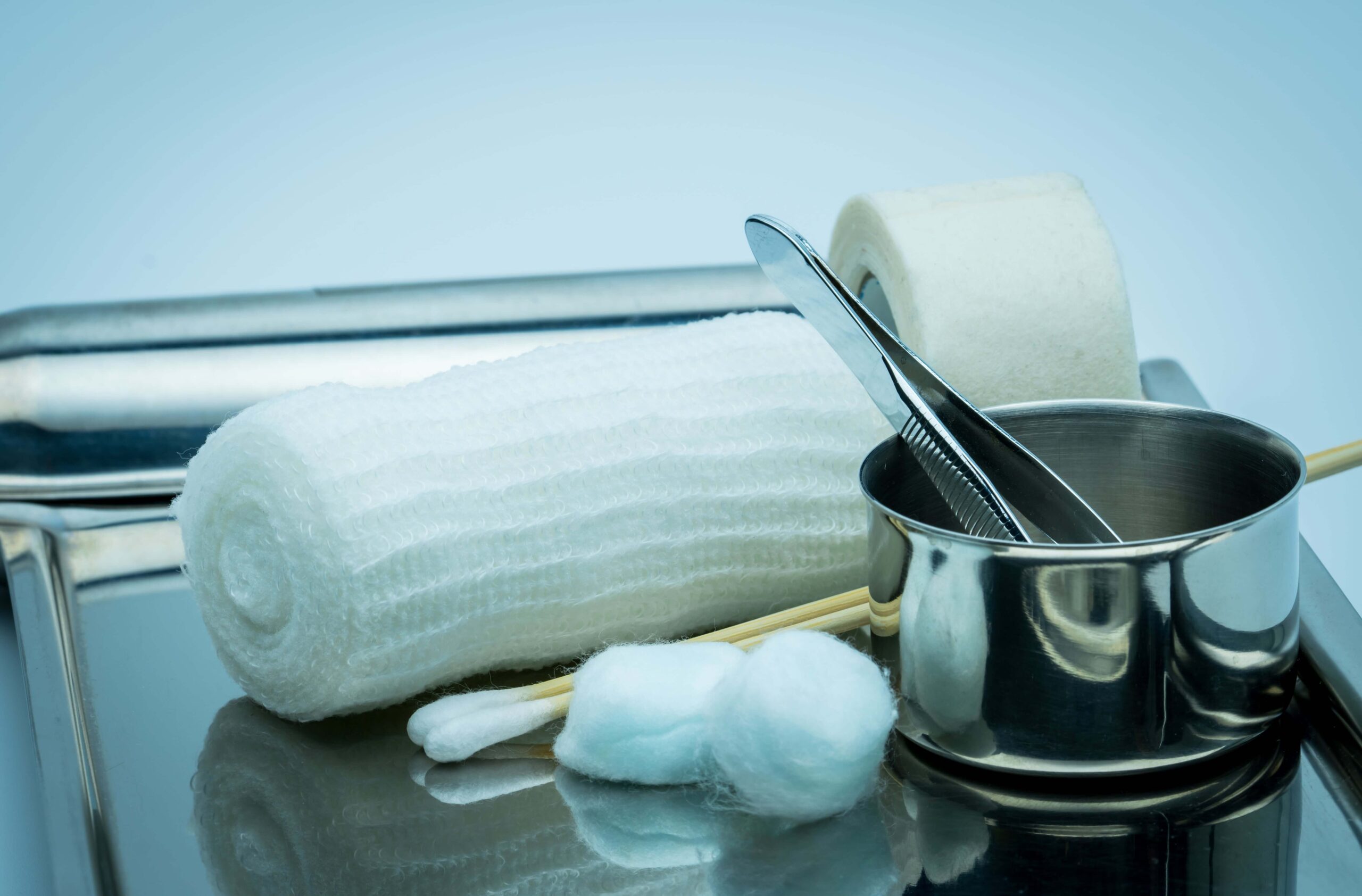
Remember to make sure to take any jewelry off your hands and clean them with water (you can add an alcohol-based cleanser) beforehand. Ensure you clean under your nails as well, and grab all required supplies, which can include:
Once you have opened the gauze packages, cut new tape strips and put on clean medical gloves, loosen the tape around the old dressing and gently pull it off. If it sticks to the wound, you can try wetting it unless you have been specifically instructed to remove it dry.
After doing so, clean the incision as described above. Look for any signs of infection, and if your physician has asked you to apply an ointment or medicine, you can do so now.
Next, open the gauze package without touching the gauze. Hold it by the corner and place it over the surgical wound before taping all four sides. You can dispose of the trash, including the old dressing, in a plastic bag before washing your hands again.
Avoid touching the inside of the dressing, old or new.
In most cases, some degree of redness, swelling, and itching around the wound site following getting stitches is normal. For the first few days, you might also see some drainage around the area. However, if this continues or if it starts to bleed or pus, get in touch with your wound care specialist as soon as possible.
When it comes to wound care for stitches or staples, they generally require the same cleaning instructions as above. Some stitches dissolve within 7 to 10 days. And non-dissolvable ones are removed by a doctor usually 5 to 21 days after the surgery. Never attempt to remove stitches on your own.
On the contrary, if tissue glue was used, it’s important to keep it dry. If it gets wet, dry it immediately, as moisture may limit its efficacy. It will dry out and take care of itself in about 5 to 10 days. Similarly, adhesive strips should also loosen and fall off over time.
As we referenced earlier, after a surgical procedure, it’s crucial to regularly check the wound for any signs of infection so it can be treated as soon as possible.
Infection is always a risk after surgery but it’s even more important to be wary of if you have conditions such as diabetes, a weak immune system, obesity, a history of smoking, or other risk factors that could impair healing.
If you notice any of the following signs contact a doctor or wound care specialist as soon as possible:
Temperature higher than 100.5°F (38°C) for more than 4 hours can also be a cause of concern.
Depending on the type of surgery, your specialist may give you other specific instructions. Make sure to follow them carefully and ask any questions you might have. That said, in addition to the guidelines discussed above, there are a few steps wound care specialists recommend taking after a surgical procedure to help the healing process:
Most people recover from surgical wounds with minimal scarring. If you would like to learn more about minimizing scarring we highly recommend our guide discussing wound care and healing scars.
Proper wound care after surgery is essential to efficient healing and recovery. By following your wound care specialists’ advice for cleaning and dressing your wound, and preventing complications you can help promote healing and even reduce scarring.
If you recently have had surgery or are caring for someone who has and have questions on proper wound care; the specialists at West Coast Wound Center are here to help. We are specialized wound and skin care physicians with expertise in treating a complete range of wound types and skin concerns. Book an appointment today and find out how we can help restore your quality of life.
[/fusion_text][/fusion_builder_column][fusion_builder_column type=”1_3″ layout=”1_3″ spacing=”” center_content=”no” link=”” target=”_self” min_height=”” hide_on_mobile=”small-visibility,medium-visibility,large-visibility” class=”” id=”” hover_type=”none” border_color=”” border_style=”solid” border_position=”all” border_radius=”” box_shadow=”no” dimension_box_shadow=”” box_shadow_blur=”0″ box_shadow_spread=”0″ box_shadow_color=”” box_shadow_style=”” padding_top=”” padding_right=”” padding_bottom=”” padding_left=”” margin_top=”” margin_bottom=”” background_type=”single” gradient_start_color=”” gradient_end_color=”” gradient_start_position=”0″ gradient_end_position=”100″ gradient_type=”linear” radial_direction=”center center” linear_angle=”180″ background_color=”” background_image=”” background_image_id=”” background_position=”left top” background_repeat=”no-repeat” background_blend_mode=”none” animation_type=”” animation_direction=”left” animation_speed=”0.3″ animation_offset=”” filter_type=”regular” filter_hue=”0″ filter_saturation=”100″ filter_brightness=”100″ filter_contrast=”100″ filter_invert=”0″ filter_sepia=”0″ filter_opacity=”100″ filter_blur=”0″ filter_hue_hover=”0″ filter_saturation_hover=”100″ filter_brightness_hover=”100″ filter_contrast_hover=”100″ filter_invert_hover=”0″ filter_sepia_hover=”0″ filter_opacity_hover=”100″ filter_blur_hover=”0″ last=”true” border_sizes_top=”0″ border_sizes_bottom=”0″ border_sizes_left=”0″ border_sizes_right=”0″ first=”false” spacing_left=”1.3333333333333333%”][fusion_widget_area name=”avada-blog-sidebar” title_size=”” title_color=”” background_color=”” padding_top=”” padding_right=”” padding_bottom=”” padding_left=”” hide_on_mobile=”small-visibility,medium-visibility,large-visibility” class=”” id=”” /][/fusion_builder_column][/fusion_builder_row][/fusion_builder_container]
[fusion_builder_container hundred_percent=”no” equal_height_columns=”no” menu_anchor=”” hide_on_mobile=”small-visibility,medium-visibility,large-visibility” class=”” id=”” background_color=”” background_image=”” background_position=”center center” background_repeat=”no-repeat” fade=”no” background_parallax=”none” parallax_speed=”0.3″ video_mp4=”” video_webm=”” video_ogv=”” video_url=”” video_aspect_ratio=”16:9″ video_loop=”yes” video_mute=”yes” overlay_color=”” video_preview_image=”” border_color=”” border_style=”solid” padding_top=”” padding_bottom=”” padding_left=”” padding_right=”” type=”legacy” admin_toggled=”no”][fusion_builder_row][fusion_builder_column type=”2_3″ layout=”1_1″ background_position=”left top” background_color=”” border_color=”” border_style=”solid” border_position=”all” spacing=”yes” background_image=”” background_repeat=”no-repeat” padding_top=”” padding_right=”” padding_bottom=”” padding_left=”” margin_top=”0px” margin_bottom=”0px” class=”” id=”” animation_type=”” animation_speed=”0.3″ animation_direction=”left” hide_on_mobile=”small-visibility,medium-visibility,large-visibility” center_content=”no” last=”false” min_height=”” hover_type=”none” link=”” border_sizes_top=”” border_sizes_bottom=”” border_sizes_left=”” border_sizes_right=”” first=”true” spacing_right=”2.6666666666666665%”][fusion_text columns=”” column_min_width=”” column_spacing=”” rule_style=”default” rule_size=”” rule_color=”” content_alignment_medium=”” content_alignment_small=”” content_alignment=”” hide_on_mobile=”small-visibility,medium-visibility,large-visibility” sticky_display=”normal,sticky” class=”” id=”” margin_top=”” margin_right=”” margin_bottom=”” margin_left=”” font_size=”” fusion_font_family_text_font=”” fusion_font_variant_text_font=”” line_height=”” letter_spacing=”” text_color=”” animation_type=”” animation_direction=”left” animation_speed=”0.3″ animation_offset=””]
Burn wounds are a common occurrence for everyone. Be it contact with flame, chemicals, electricity, or wet sources like steam or hot water, burns can happen at any time. Therefore, it is critical to understand emergency management for burns and be aware of safety measures to ensure quick recovery in case of an accident.
Small burns are often not life-threatening, but larger burns can impose a significant risk in addition to being extremely painful. According to a recent review “Acute thermal injuries requiring medical treatment affect nearly half a million Americans each year, with approximately 40,000 hospitalizations and 3,400 deaths annually.”
When examining burns, wound care specialists prioritize critical patients by classifying the type of burn and stabilizing the patient, cleansing, and debridement to prevent infections and focusing on full functional recovery.
It’s important to be able to recognize the severity and type of burn you have, so you not only know when it’s time to seek professional support but also how to care for your wound at home.
Burns can be classified based on how deep they penetrate the skin’s surface and the size of the burn.
It’s important to note that it is possible to suffer from more than one level of burn depth. As such, multiple approaches to wound management might be necessary. Your wound care specialist will perform an initial assessment to evaluate your burn and determine the appropriate treatment plan.
First-degree burns are common and though you can typically care for them at home, it is always better to have a wound care specialist take a look at the injury and guide you on its management. Seeking professional guidance is even more pertinent in cases where the injury has occurred on your face, genitals, hands, or feet.
Through proper wound care, most minor burns commonly heal within a week or two. Below are a few helpful tips for managing a minor burn and helping it heal:
If your superficial burn injury gets progressively worse, is not improving, or causes increased pain, swelling, or fever, it is important to visit a wound care center or consult with a specialist.
Though there is overlap in treatments for a first degree burn, you need to be more careful when dealing with these kinds of more serious burns. When it comes to burn management, the priority is wound protection and preventing shock. Burn shock occurs when the body’s tissues do not receive enough oxygen in the blood, causing low blood pressure, hypovolemia, and may result in organ failure. Hence, the blood pressure, pulse, and breathing rate should be checked continuously.
Unless you have suffered a neck, head, or leg injury, it’s recommended to lay flat, with feet and the burnt area elevated, and cover the wound to minimize air contact. A blanket or coat can be used to help stabilize core temperature.
After first aid and a thorough wound assessment are conducted, burn treatment can include multiple approaches such as lotions and medications, appropriate wound dressings, and potentially even surgery. Some of the goals of treatment for a serious burn include:
Let’s explore some of the wound care approaches commonly utilized to achieve those goals and encourage healing:
Try to avoid scratching or bumping into things as your burn heals, as it can cause skin tears. If it does occur and begins to bleed you can apply pressure for a few minutes until the bleeding stops and gently run the area under water. Antibiotic ointment and nonstick dressings can be used to promote healing. If the area becomes red or shows any sign of infection, you should contact a doctor or wound care specialist as soon as possible.
When it comes to more serious burns, there are different opinions as to how to manage blisters. Some experts recommend debriding blisters, while others are in favor of leaving them intact during healing. Your wound specialist can recommend the appropriate approach based on your individual situation.
When heat is inflicted on the skin it can cause serious damage. Knowing when it’s time to seek help from a wound care center and educating yourself on how to properly care for your burn can be essential to effective and efficient healing.
If you or someone you love has suffered a burn, the specialists at West Coast Wound Center can help, no matter how severe. We provide a full spectrum of wound care, including advanced therapies. Book an appointment today and discover how we can help you heal and improve your quality of life.
[/fusion_text][/fusion_builder_column][fusion_builder_column type=”1_3″ layout=”1_3″ spacing=”” center_content=”no” link=”” target=”_self” min_height=”” hide_on_mobile=”small-visibility,medium-visibility,large-visibility” class=”” id=”” hover_type=”none” border_color=”” border_style=”solid” border_position=”all” border_radius=”” box_shadow=”no” dimension_box_shadow=”” box_shadow_blur=”0″ box_shadow_spread=”0″ box_shadow_color=”” box_shadow_style=”” padding_top=”” padding_right=”” padding_bottom=”” padding_left=”” margin_top=”” margin_bottom=”” background_type=”single” gradient_start_color=”” gradient_end_color=”” gradient_start_position=”0″ gradient_end_position=”100″ gradient_type=”linear” radial_direction=”center center” linear_angle=”180″ background_color=”” background_image=”” background_image_id=”” background_position=”left top” background_repeat=”no-repeat” background_blend_mode=”none” animation_type=”” animation_direction=”left” animation_speed=”0.3″ animation_offset=”” filter_type=”regular” filter_hue=”0″ filter_saturation=”100″ filter_brightness=”100″ filter_contrast=”100″ filter_invert=”0″ filter_sepia=”0″ filter_opacity=”100″ filter_blur=”0″ filter_hue_hover=”0″ filter_saturation_hover=”100″ filter_brightness_hover=”100″ filter_contrast_hover=”100″ filter_invert_hover=”0″ filter_sepia_hover=”0″ filter_opacity_hover=”100″ filter_blur_hover=”0″ last=”true” border_sizes_top=”0″ border_sizes_bottom=”0″ border_sizes_left=”0″ border_sizes_right=”0″ first=”false” spacing_left=”1.3333333333333333%”][fusion_widget_area name=”avada-blog-sidebar” title_size=”” title_color=”” background_color=”” padding_top=”” padding_right=”” padding_bottom=”” padding_left=”” hide_on_mobile=”small-visibility,medium-visibility,large-visibility” class=”” id=”” /][/fusion_builder_column][/fusion_builder_row][/fusion_builder_container]
[fusion_builder_container hundred_percent=”no” equal_height_columns=”no” menu_anchor=”” hide_on_mobile=”small-visibility,medium-visibility,large-visibility” class=”” id=”” background_color=”” background_image=”” background_position=”center center” background_repeat=”no-repeat” fade=”no” background_parallax=”none” parallax_speed=”0.3″ video_mp4=”” video_webm=”” video_ogv=”” video_url=”” video_aspect_ratio=”16:9″ video_loop=”yes” video_mute=”yes” overlay_color=”” video_preview_image=”” border_color=”” border_style=”solid” padding_top=”” padding_bottom=”” padding_left=”” padding_right=”” type=”legacy” admin_toggled=”no”][fusion_builder_row][fusion_builder_column type=”2_3″ layout=”1_1″ background_position=”left top” background_color=”” border_color=”” border_style=”solid” border_position=”all” spacing=”yes” background_image=”” background_repeat=”no-repeat” padding_top=”” padding_right=”” padding_bottom=”” padding_left=”” margin_top=”0px” margin_bottom=”0px” class=”” id=”” animation_type=”” animation_speed=”0.3″ animation_direction=”left” hide_on_mobile=”small-visibility,medium-visibility,large-visibility” center_content=”no” last=”false” min_height=”” hover_type=”none” link=”” border_sizes_top=”” border_sizes_bottom=”” border_sizes_left=”” border_sizes_right=”” first=”true” spacing_right=”2.6666666666666665%”][fusion_text columns=”” column_min_width=”” column_spacing=”” rule_style=”default” rule_size=”” rule_color=”” content_alignment_medium=”” content_alignment_small=”” content_alignment=”” hide_on_mobile=”small-visibility,medium-visibility,large-visibility” sticky_display=”normal,sticky” class=”” id=”” margin_top=”” margin_right=”” margin_bottom=”” margin_left=”” font_size=”” fusion_font_family_text_font=”” fusion_font_variant_text_font=”” line_height=”” letter_spacing=”” text_color=”” animation_type=”” animation_direction=”left” animation_speed=”0.3″ animation_offset=””]
When it comes to minor wounds and scratches, the body can start healing within minutes as blood cells clump together to form a barrier in the skin. However, deeper or more serious wounds take more time and energy to heal.
Treating chronic wounds requires a multifaceted and holistic approach. While treatments such as wound debridement and preventing infection strategies are more widely known, evaluating and optimizing nutritional status should also be a part of a comprehensive treatment plan.
While not all wounds are the same, nutrition must be taken into account in the treatment of all types of wounds. But what happens when the body doesn’t receive the nutrition it needs? How does malnutrition impact the healing process? And what can you do to ensure you are giving your body what it needs to recover? This guide has everything you need to know.
Article Contents
There is a well-established link between nutrition and wound management. Nutrition can be essential throughout each stage of wound healing.
When a person is malnourished the body lacks sufficient nutrients to build, maintain and repair tissue, which can result in issues such as reduced fatty tissue, less resistant skin, oedema, and other potential complications that interfere with healing. Additionally, suboptimal nutrition can impair the healing process by interfering with the immune system, collagen synthesis as well as wound tensile strength.
During the wound healing process, the body works to replace the damaged tissue with new tissue. This response requires increased use of energy and specific nutrients. Most notably protein.
During the catabolic phase which occurs after a wound, the body prioritizes supplying the area with the nutrients it needs to heal by releasing stress hormones and altering metabolism. If the body doesn’t receive enough nutrients or this phase takes too long, a condition known as protein energy malnutrition (PEM) can occur.
Protein energy malnutrition may be directly linked to slow healing wounds. When the body is suffering from PEM, it breaks down the amino acids it needs to heal; resulting in a reduction of lean body mass. As lean body mass goes down, the body breaks down the protein from muscles and is more likely to suppress the immune system and impair healing. This can be especially detrimental for patients with comorbidity such as those suffering from diabetes.
Unfortunately, nutrition is often neglected in the management of chronic wounds. This is particularly relevant in the older population who are at higher risk of chronic wounds and often suffer from nutritional deficiencies. As referenced above, wounds can increase the metabolic and protein demands of the body.
According to a review published in Advances in Wound Care, “the presence of a chronic wound can increase protein requirements by 250% and calorie requirements by 50%”. The review went on to mention that in some cases, administering more than the usual nutrients may aid in the healing process.
This was further discussed in a later paper on improving clinical outcomes for chronic wounds through proper nutrition published by the Journal of the American Society of Plastic Surgeons.
That’s why many wound care specialists will work with a nutritionist to conduct a nutritional screening and follow up assessment as part of their treatment plan for chronic wounds.
Nutritional screening is a strategy utilized by wound specialists to help identify nutritional disorders as well as any signs of malnutrition that could impair wound healing. During the assessment, a specialist will evaluate a patient’s food and medical history and determine whether specific nutritional interventions might be needed.
The Mini Nutritional Assessment (MNA) is a type of tool a specialist may utilize to identify a patient’s potential for malnutrition; especially among older individuals. The MNA evaluates a number of parameters such as body mass index, mobility, and food intake to better understand nutritional risk.
Being able to spot the most common signs of malnutrition can help a specialist know whether a nutritional assessment might be needed and what actions should be taken moving forward. Here are a few common indicators of malnutrition a specialist might be on the lookout for:
Because less food intake can cause blood pressure and blood sugar to decrease, some patients might also feel dizzy, tired, or cold for most of the day.
It’s also important to note that malnutrition does not only apply to underweight individuals. Rather, it can also include those who eat too much, eat the wrong things, and/or are overweight.
Wound healing is a complex, multi-phase process that relies on specific macro and micronutrients in order to progress through each stage. Additionally, caloric intake should be assessed on an individual basis based on factors such as weight, age, comorbidities, and what type of calories might be needed. The severity of the wound and where in the healing process the patient is should also be evaluated.
Let’s explore some of these nutrients essential to wound healing in greater depth:
Proteins
Proteins are the main nutrients needed for repair, tissue regrowth, and cell renewal throughout the healing process. Because protein is directly linked to the body’s ability to produce collagen it plays a major role in how effectively wounds heal.
Protein also plays other roles in the healing process. It has been shown to impact immune function, wound contraction, and fibroblast proliferation. It can also help maintain oncotic pressure which can be valuable in treating venous insufficiency wounds.
Additionally, as discussed above, deficiencies in calories can result in the body utilizing protein for other functions instead of the wound site. Making it all the more important to make sure you’re getting enough protein.
Some of the foods known to be a good supply of protein include whole grains, eggs, cheese, meat, fish, and chicken.
Carbohydrates
If the body doesn’t receive enough energy, it will use the protein it should be using to help the healing process. The bigger and more severe the wound, the more carbohydrates are needed to avoid this from happening.
Carbohydrates provide a major fuel source for the body. They encourage metabolic activity, stimulate insulin production, and facilitate collagen synthesis as well as tissue regeneration. Making sure you get enough carbohydrates can also aid in fibroblast production.
Lipids and essential fatty acids
Many of the benefits of carbohydrates also apply to lipids and fatty acids. They provide energy to the body to support the healing process and aid in wound remodeling.
Getting enough fats in your diet can also help absorb fat soluble nutrients such as Vitamin A, and omega-3 and omega-6 fatty acids that help the body heal.
Water and Fluids
In addition to caloric intake, dehydration is another important factor to consider. Dehydrated skin is more fragile and easier to injure. It can also interfere with the supply of nutrients to the wound site by affecting blood circulation. It’s imperative to regularly monitor hydration levels after a wound for signs of dehydration. It’s also a good idea to make sure you are drinking plenty of water throughout the day.
Amino Acids
Amino acids such as arginine and glutamine can also contribute to recovery after an injury. Arginine plays a crucial role in the inflammatory stage of wound healing. It can also aid in collagen synthesis as well as lymphocyte mitogenesis.
While similar to arginine, glutamine can also impact how effectively wounds heal. It can serve as an energy source, lower risk of infection, and increase insulin sensitivity.
Vitamins
Ensuring you are getting adequate Vitamins in your diet can also facilitate healing and improve outcomes. For example:
Zinc
Zinc plays a role in how the body metabolizes carbs and proteins and helps maintain cell membrane integrity. A diet too low in zinc can put you at added risk of oxidative damage. In fact, a recent study that explored the effects of zinc on wound healing among patients with diabetic foot ulcers found zinc supplementation helped reduce ulcer size and improve metabolic profiles. If you are looking for diets high in zinc, consider incorporating animal based foods into your diet.
Your body needs all of the nutrients available to heal chronic wounds. Unfortunately, poor nutrition and an unhealthy diet can prolong the process and are too often neglected until it’s too late. Don’t let this happen to you
Like wound care itself, there are different components to proper nutrition and it can play a number of roles in wound healing. Incorporating a variety of healthy foods into your diet that includes the right macro and micronutrients before and during healing can help. That said, the best way to ensure your body has everything it needs to heal properly after a wound is to consult with a wound care specialist and nutritionist. Working on your nutritional status in conjunction with proper wound care treatments can help you heal.
Unlike most other practices, at West Coast Wound Center, we value the whole patient’s health and not just the wound. We consider the most important extrinsic and intrinsic factors that affect healing including nutritional health. Our team works closely with each patient’s nutritionist to help optimize one’s wound healing.
Book an appointment today and let us help restore your quality of life.
[/fusion_text][/fusion_builder_column][fusion_builder_column type=”1_3″ layout=”1_3″ spacing=”” center_content=”no” link=”” target=”_self” min_height=”” hide_on_mobile=”small-visibility,medium-visibility,large-visibility” class=”” id=”” hover_type=”none” border_color=”” border_style=”solid” border_position=”all” border_radius=”” box_shadow=”no” dimension_box_shadow=”” box_shadow_blur=”0″ box_shadow_spread=”0″ box_shadow_color=”” box_shadow_style=”” padding_top=”” padding_right=”” padding_bottom=”” padding_left=”” margin_top=”” margin_bottom=”” background_type=”single” gradient_start_color=”” gradient_end_color=”” gradient_start_position=”0″ gradient_end_position=”100″ gradient_type=”linear” radial_direction=”center center” linear_angle=”180″ background_color=”” background_image=”” background_image_id=”” background_position=”left top” background_repeat=”no-repeat” background_blend_mode=”none” animation_type=”” animation_direction=”left” animation_speed=”0.3″ animation_offset=”” filter_type=”regular” filter_hue=”0″ filter_saturation=”100″ filter_brightness=”100″ filter_contrast=”100″ filter_invert=”0″ filter_sepia=”0″ filter_opacity=”100″ filter_blur=”0″ filter_hue_hover=”0″ filter_saturation_hover=”100″ filter_brightness_hover=”100″ filter_contrast_hover=”100″ filter_invert_hover=”0″ filter_sepia_hover=”0″ filter_opacity_hover=”100″ filter_blur_hover=”0″ last=”true” border_sizes_top=”0″ border_sizes_bottom=”0″ border_sizes_left=”0″ border_sizes_right=”0″ first=”false” spacing_left=”1.3333333333333333%”][fusion_widget_area name=”avada-blog-sidebar” title_size=”” title_color=”” background_color=”” padding_top=”” padding_right=”” padding_bottom=”” padding_left=”” hide_on_mobile=”small-visibility,medium-visibility,large-visibility” class=”” id=”” /][/fusion_builder_column][/fusion_builder_row][/fusion_builder_container][fusion_builder_container type=”flex” hundred_percent=”no” equal_height_columns=”no” menu_anchor=”” hide_on_mobile=”small-visibility,medium-visibility,large-visibility” class=”” id=”” background_color=”” background_image=”” background_position=”center center” background_repeat=”no-repeat” fade=”no” background_parallax=”none” parallax_speed=”0.3″ video_mp4=”” video_webm=”” video_ogv=”” video_url=”” video_aspect_ratio=”16:9″ video_loop=”yes” video_mute=”yes” overlay_color=”” video_preview_image=”” border_color=”” border_style=”solid” padding_top=”” padding_bottom=”” padding_left=”” padding_right=””][fusion_builder_row][fusion_builder_column type=”1_1″ layout=”1_1″ background_position=”left top” background_color=”” border_color=”” border_style=”solid” border_position=”all” spacing=”yes” background_image=”” background_repeat=”no-repeat” padding_top=”” padding_right=”” padding_bottom=”” padding_left=”” margin_top=”0px” margin_bottom=”0px” class=”” id=”” animation_type=”” animation_speed=”0.3″ animation_direction=”left” hide_on_mobile=”small-visibility,medium-visibility,large-visibility” center_content=”no” last=”true” min_height=”” hover_type=”none” link=”” border_sizes_top=”” border_sizes_bottom=”” border_sizes_left=”” border_sizes_right=”” first=”true”][fusion_text]
[/fusion_text][/fusion_builder_column][/fusion_builder_row][/fusion_builder_container]
[fusion_builder_container hundred_percent=”no” equal_height_columns=”no” menu_anchor=”” hide_on_mobile=”small-visibility,medium-visibility,large-visibility” class=”” id=”” background_color=”” background_image=”” background_position=”center center” background_repeat=”no-repeat” fade=”no” background_parallax=”none” parallax_speed=”0.3″ video_mp4=”” video_webm=”” video_ogv=”” video_url=”” video_aspect_ratio=”16:9″ video_loop=”yes” video_mute=”yes” overlay_color=”” video_preview_image=”” border_color=”” border_style=”solid” padding_top=”” padding_bottom=”” padding_left=”” padding_right=”” type=”legacy” admin_toggled=”no”][fusion_builder_row][fusion_builder_column type=”2_3″ layout=”1_1″ background_position=”left top” background_color=”” border_color=”” border_style=”solid” border_position=”all” spacing=”yes” background_image=”” background_repeat=”no-repeat” padding_top=”” padding_right=”” padding_bottom=”” padding_left=”” margin_top=”0px” margin_bottom=”0px” class=”” id=”” animation_type=”” animation_speed=”0.3″ animation_direction=”left” hide_on_mobile=”small-visibility,medium-visibility,large-visibility” center_content=”no” last=”false” min_height=”” hover_type=”none” link=”” border_sizes_top=”” border_sizes_bottom=”” border_sizes_left=”” border_sizes_right=”” first=”true” spacing_right=”2.6666666666666665%”][fusion_text columns=”” column_min_width=”” column_spacing=”” rule_style=”default” rule_size=”” rule_color=”” content_alignment_medium=”” content_alignment_small=”” content_alignment=”” hide_on_mobile=”small-visibility,medium-visibility,large-visibility” sticky_display=”normal,sticky” class=”” id=”” margin_top=”” margin_right=”” margin_bottom=”” margin_left=”” font_size=”” fusion_font_family_text_font=”” fusion_font_variant_text_font=”” line_height=”” letter_spacing=”” text_color=”” animation_type=”” animation_direction=”left” animation_speed=”0.3″ animation_offset=””]
Pressure ulcers also referred to as bedsores, pressure injuries, and decubitus ulcers occur when areas of the skin break down due to prolonged pressure that lowers the blood flow to the area. Pressure ulcers are a common problem for older adults, wheelchair users, or those in a hospital bed for an extended amount of time without movement.
Although pressure ulcers can happen anywhere on the body, they usually occur on the more bony parts of the body including the hips, back, elbows, heels of the feet, ankles, shoulder blades, tailbone, and the back of the head. For some, pressure ulcers can be uncomfortable and interfere with quality of life, for others they can be even more dangerous and potentially life-threatening if not cared for. Fortunately, most pressure sores can be treated and through proper wound care even prevented.
Pressure ulcers are a type of slow healing wound caused by prolonged pressure that reduces blood flow or friction that can make the skin more fragile. Some of the people who might be at added risk of developing pressure ulcers include:
Pressure ulcers are generally categorized into four stages depending on how deep the wound is and the severity of the symptoms. Categorizing the wound into these stages can help wound care specialists determine the right course of treatment.
Although less common, deep pressure injury and unstageable sores are two types of severe pressure ulcers that don’t fall into the above stages. These types of ulcers can be more difficult to diagnose and should be addressed by a specialist.
Development and treatment of pressure ulcers depend upon the care you receive. Diagnosis is followed by ulcer staging which, in conjunction with the degree of pain and time of onset, helps determines the course of wound care.
A multi-pronged approach of lowering pressure on injured areas, thoroughly cleaning the wound, managing pain, preventing further infection, and ensuring dietary care is an ideal way to deal with pressure ulcers.
Since pressure ulcers develop from prolonged friction, minimizing the source prevents the condition from worsening and the formation of new ones. This can be achieved through regular repositioning and using better support surfaces like specialized mattresses and cushions.
Changing your position frequently can help avoid making pressure ulcers worse. How often you need to reposition yourself will depend on your circumstances as well as what type of surface you are on. For example, wheelchair users are advised to change position every fifteen minutes, whereas bedridden people should try to reposition every two hours. Devising a repositioning schedule based on the severity of your injury and the type of material you lay on can help make sure you stay on track.
There is specialized equipment to help alleviate pressure on the wound site. A specially designed dynamic mattress or static foam is typically used for bedsores due to its pressure redistribution capabilities.
Special pillows, booties, mattress pads, and foam cushions are available, with some being water or air-filled for a more comfortable experience. If your ulcer is very severe, a sophisticated system with an air pump may be recommended by your doctor.
Do not blindly purchase any mattress online because the best cushion depends on your ulcer, whether you are in a wheelchair or a bed, as well as other factors. Shape and material options also vary according to need and preference. Consult with your wound care specialist for recommendations on what you might need.
While stage 3 and 4 pressure ulcers should be cleaned and treated by a wound care specialist, there are things you can do to care for wounds that are in the first two stages. That said, it’s still recommended to seek professional guidance on proper caring methods.
Added pressure can cause the ulcer to break the skin, so the first step in treating a pressure ulcer is to alleviate excess pressure. Using blankets or pillows can be helpful if you are lying down. Try to keep the wound site clean and dry.
Gently washing the area with mild soap and water is sufficient to help a Stage I sore, while saline (salt water) or specific cleaner can be used for Stage II sores to remove loose, dead tissue. Avoid using hydrogen peroxide and iodine cleansers that could further damage the skin.
A wound care specialist may recommend wound dressings that can help keep the site clean and dry to avoid infection. Depending on the wound and its severity, your specialist may recommend a specific type of dressing to use.
Though the right dressing depends upon the size and stage of your ulcer, gauze dressings are not advised for this situation. Instead, specially designed dressings like those made from alginate (with seaweed, containing sodium and calcium), hydrocolloid (with a gel that enhances cellular growth), and hydrofibers are often used.
A specialist can also walk you through the proper way to dress your wound. It’s also important to be on the lookout for any signs of infection.
As referenced above, it’s crucial to seek professional support as soon as possible if you have a stage 3 or 4 pressure ulcer. The more severe the wound, the higher the risk of infection. If your ulcer is categorized as stage 3, your specialist might recommend antibiotics if there is an infection and wound debridement to prevent infection and facilitate healing. Stage 4 pressure ulcers require immediate medical attention and could require additional interventions like surgical options.
While in some cases, it can be difficult to prevent pressure ulcers from developing, there are certain steps that you can put into place to help lower your risk.
Finally, you should contact a physician as soon as you feel the situation is out of your control. For example, if new sores develop, your current one changes or you see any sign of infection. Some of the signs to watch out for include pus, foul smell, redness and tenderness around the sore, and fever. You should not wait until the situation gets worse.
Without proper care, most pressure ulcers only get worse. That’s why it’s crucial to let your wound care specialist know if you spot any signs of one developing. They can help recommend and execute the best course of treatment to facilitate healing and help prevent them from coming back.
If you or someone you care for have suffered a serious wound or is at risk of developing a pressure ulcer the expert team at West Coast Wound Center is here to help. The specialized physicians and medical staff at our wound care center in Fresno are equipped to treat a complete range of wound types and skin concerns including pressure ulcers and bedsores.
Through our fully integrated wound and dermatology care, we are able to heal pressure ulcers 50% quicker than other practices.
Book an appointment at West Coast Wound Center today and let us help you heal and restore your quality of life.
[/fusion_text][/fusion_builder_column][fusion_builder_column type=”1_3″ layout=”1_3″ spacing=”” center_content=”no” link=”” target=”_self” min_height=”” hide_on_mobile=”small-visibility,medium-visibility,large-visibility” class=”” id=”” hover_type=”none” border_color=”” border_style=”solid” border_position=”all” border_radius=”” box_shadow=”no” dimension_box_shadow=”” box_shadow_blur=”0″ box_shadow_spread=”0″ box_shadow_color=”” box_shadow_style=”” padding_top=”” padding_right=”” padding_bottom=”” padding_left=”” margin_top=”” margin_bottom=”” background_type=”single” gradient_start_color=”” gradient_end_color=”” gradient_start_position=”0″ gradient_end_position=”100″ gradient_type=”linear” radial_direction=”center center” linear_angle=”180″ background_color=”” background_image=”” background_image_id=”” background_position=”left top” background_repeat=”no-repeat” background_blend_mode=”none” animation_type=”” animation_direction=”left” animation_speed=”0.3″ animation_offset=”” filter_type=”regular” filter_hue=”0″ filter_saturation=”100″ filter_brightness=”100″ filter_contrast=”100″ filter_invert=”0″ filter_sepia=”0″ filter_opacity=”100″ filter_blur=”0″ filter_hue_hover=”0″ filter_saturation_hover=”100″ filter_brightness_hover=”100″ filter_contrast_hover=”100″ filter_invert_hover=”0″ filter_sepia_hover=”0″ filter_opacity_hover=”100″ filter_blur_hover=”0″ last=”true” border_sizes_top=”0″ border_sizes_bottom=”0″ border_sizes_left=”0″ border_sizes_right=”0″ first=”false” spacing_left=”1.3333333333333333%”][fusion_widget_area name=”avada-blog-sidebar” title_size=”” title_color=”” background_color=”” padding_top=”” padding_right=”” padding_bottom=”” padding_left=”” hide_on_mobile=”small-visibility,medium-visibility,large-visibility” class=”” id=”” /][/fusion_builder_column][/fusion_builder_row][/fusion_builder_container]
[fusion_builder_container hundred_percent=”no” equal_height_columns=”no” menu_anchor=”” hide_on_mobile=”small-visibility,medium-visibility,large-visibility” class=”” id=”” background_color=”” background_image=”” background_position=”center center” background_repeat=”no-repeat” fade=”no” background_parallax=”none” parallax_speed=”0.3″ video_mp4=”” video_webm=”” video_ogv=”” video_url=”” video_aspect_ratio=”16:9″ video_loop=”yes” video_mute=”yes” overlay_color=”” video_preview_image=”” border_color=”” border_style=”solid” padding_top=”” padding_bottom=”” padding_left=”” padding_right=”” type=”legacy” admin_toggled=”no”][fusion_builder_row][fusion_builder_column type=”2_3″ layout=”1_1″ background_position=”left top” background_color=”” border_color=”” border_style=”solid” border_position=”all” spacing=”yes” background_image=”” background_repeat=”no-repeat” padding_top=”” padding_right=”” padding_bottom=”” padding_left=”” margin_top=”0px” margin_bottom=”0px” class=”” id=”” animation_type=”” animation_speed=”0.3″ animation_direction=”left” hide_on_mobile=”small-visibility,medium-visibility,large-visibility” center_content=”no” last=”false” min_height=”” hover_type=”none” link=”” border_sizes_top=”” border_sizes_bottom=”” border_sizes_left=”” border_sizes_right=”” first=”true” spacing_right=”2.6666666666666665%”][fusion_text columns=”” column_min_width=”” column_spacing=”” rule_style=”default” rule_size=”” rule_color=”” content_alignment_medium=”” content_alignment_small=”” content_alignment=”” hide_on_mobile=”small-visibility,medium-visibility,large-visibility” sticky_display=”normal,sticky” class=”” id=”” margin_top=”” margin_right=”” margin_bottom=”” margin_left=”” font_size=”” fusion_font_family_text_font=”” fusion_font_variant_text_font=”” line_height=”” letter_spacing=”” text_color=”” animation_type=”” animation_direction=”left” animation_speed=”0.3″ animation_offset=””]
Healthcare professionals have used compression therapy to help heal wounds and treat inflammation for centuries. This well-established approach to wound care is the go-to treatment for venous and leg ulcers due to its wide range of applications and benefits. In fact, according to Advances in Skin & Wound Care “Between 50% and 60% of patients heal with compression therapy alone during a 6-month period”.
In light of its crucial role in the healing process, throughout this guide, we will explore how compression therapy works and why it has become so widely used by wound care specialists as another tool to help patients recover.
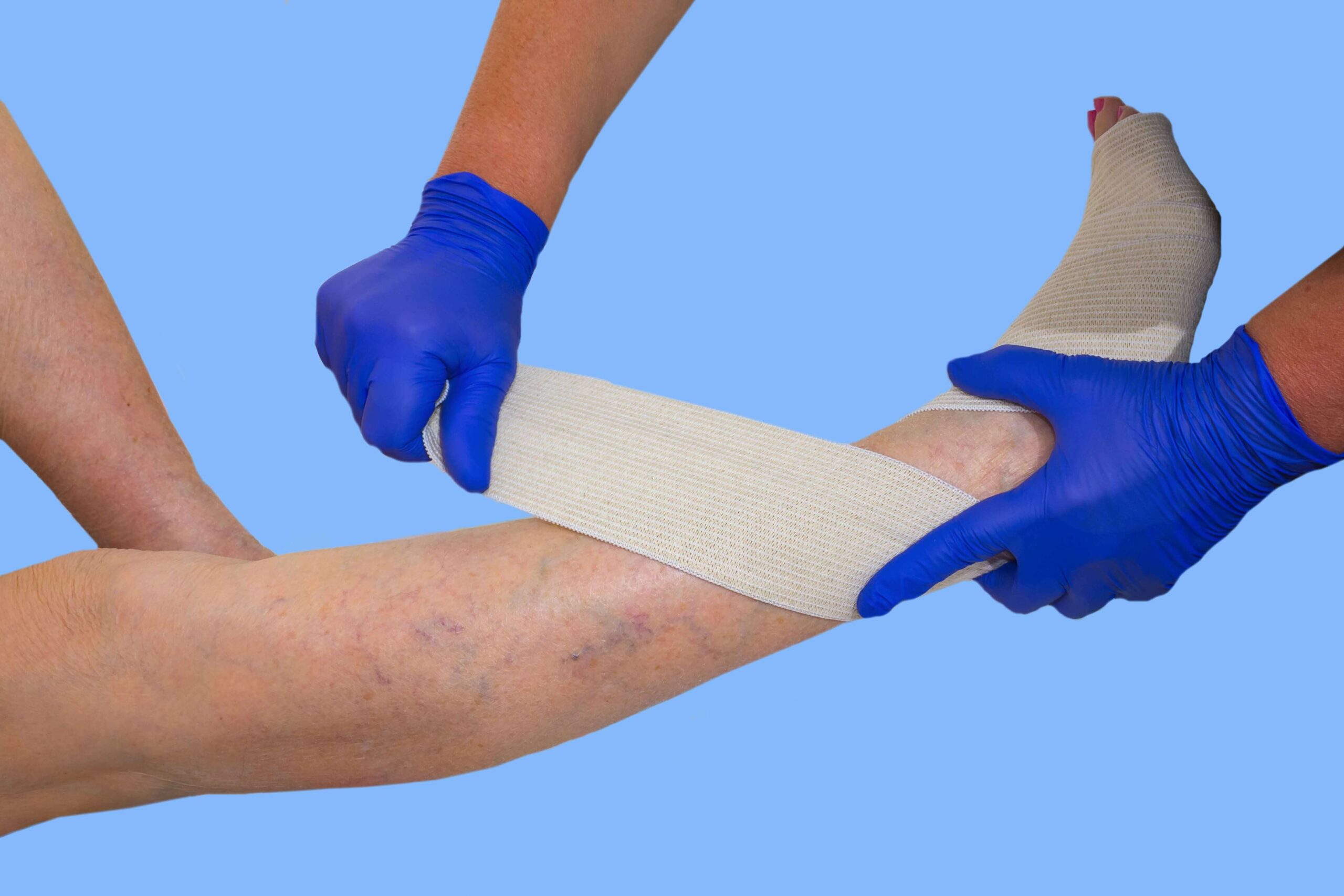
Compression therapy is a treatment approach that involves the use of bandages or other wound compression products to improve blood flow circulation in the lower legs. By adding pressure with wraps, it helps prevent fluid buildup, reduce venous pressure and edema, and aids the body in moving blood around.
A wound care specialist may recommend compression therapy for a number of different injuries caused by poor circulation such as:
Let’s take a look at each of these conditions and how compression therapy can help the healing process.
There are a number of reasons why healthcare professionals might utilize compression therapy for circulatory wounds. Some of the major benefits associated with this form of therapy include:
Chronic venous insufficiency is a common condition. Our leg veins contain valves that help ensure blood moves back up to the heart. When these valves become damaged or weakened it impairs the process, resulting in blood to build up in the legs. If left untreated, the added pressure and decreased range of motion can result in venous ulcers.
By applying appropriate pressure to the leg muscles, compression therapy can help push blood back toward the heart and reduce chronic venous insufficiency.
Compression therapy can also help relieve inflammation and pain associated with varicose veins; a condition that often results from chronic venous insufficiency.
Sitting or standing for a prolonged period of time for example after a long flight or forced to stand for work, can impact how blood flows back to the heart. Compression therapy squeezes the leg to help blood flow faster and go where it’s supposed to.
By helping your body absorb extra fluid in your legs compression therapy can be helpful in treating edema, where fluid builds up resulting in inflammation throughout the legs and ankles. Compression wrapping can also help reduce swelling if you have had leg or knee surgery.
Orthostatic hypotension is a condition that results from poor blood flow to the heart when you stand up. This can lead to symptoms such as feeling dizzy, lightheaded, or nauseous. In some cases, wound specialists will recommend compression therapy to prevent blood from collecting in your legs (the primary cause of orthostatic hypotension) and avoid these symptoms.
Deep vein thrombosis (DVT) is a condition caused when a blood clot develops in the veins resulting in inflammation and blood to build up. If left untreated, DVT can result in serious complications. Fortunately, compression therapy can also lower the risk of blood clots forming.
Additionally, those that travel long distances can also be at greater risk of blood clots. Wearing compression socks can lower your risk.
Leg ulcers are open wounds that can take a long time to heal. There are a number of conditions where leg ulcers are common including:
Compression therapy is one of the most common approaches to treating leg ulcers. By improving blood flow, compression therapy helps wounds heal more effectively, reduces symptoms including pain and itching, and can help prevent new ones from forming.
Compression therapy has also shown promise in:
There is no one type of compression therapy that works for everyone and it should be avoided for some types of wounds. For example, it isn’t recommended if you are suffering from peripheral arterial disease, heart failure as well as other conditions. Your wound care specialist will assess your condition to determine if it’s the right choice and help ensure no complications arise.
There are several types of compression products that may be used for wound healing. These products are typically broken down by the level of compression they offer. The type you need will depend on your injury and how much compression is required. Generally, less severe conditions such as before a long flight or aching legs require lower levels of pressure, while a higher level of pressure is used to treat acute issues including edema or addressing wounds and ulcers.
Compression bandages are typically broken down into Short Stretch Bandages, Long Stretch Bandages, and Multi-Layer Bandages. Long stretch bandages tend to be more elastic and capable of being stretched.
One of the major advantages of utilizing compression bandages is they can be fitted to a wide range of patients. While both short and long term bandages have unique benefits and uses, both have been shown to achieve similar results in terms of healing. Rather, how effective they are will largely depend on how they are wrapped. That’s why it’s so important to consult a trained specialist to gauge how much pressure is needed.
Once your wound has healed, your specialist may recommend compression stockings or socks to help prevent it from coming back. They will measure your legs and recommend an appropriate length (stockings usually reach the knee or thigh).
Although not as common as bandages and stockings, an intermittent pneumatic compression (IPC) system is another method of compression. IPCs utilize a pump and bladder system that are inflated and deflated on a set schedule.
Compression therapy can aid in treating certain chronic wounds, improve healing time and significantly improve overall quality of life. If you or a loved one have suffered a wound and believe you might be a good candidate for compression therapy the expert team at West Coast Wound Center can help. We provide a full spectrum of wound and skin care services, including advanced therapies such as compression devices, and have advanced knowledge in treating a wide range of wound types and skin concerns. Book an appointment today and let us help you heal.
[/fusion_text][/fusion_builder_column][fusion_builder_column type=”1_3″ layout=”1_3″ spacing=”” center_content=”no” link=”” target=”_self” min_height=”” hide_on_mobile=”small-visibility,medium-visibility,large-visibility” class=”” id=”” hover_type=”none” border_color=”” border_style=”solid” border_position=”all” border_radius=”” box_shadow=”no” dimension_box_shadow=”” box_shadow_blur=”0″ box_shadow_spread=”0″ box_shadow_color=”” box_shadow_style=”” padding_top=”” padding_right=”” padding_bottom=”” padding_left=”” margin_top=”” margin_bottom=”” background_type=”single” gradient_start_color=”” gradient_end_color=”” gradient_start_position=”0″ gradient_end_position=”100″ gradient_type=”linear” radial_direction=”center center” linear_angle=”180″ background_color=”” background_image=”” background_image_id=”” background_position=”left top” background_repeat=”no-repeat” background_blend_mode=”none” animation_type=”” animation_direction=”left” animation_speed=”0.3″ animation_offset=”” filter_type=”regular” filter_hue=”0″ filter_saturation=”100″ filter_brightness=”100″ filter_contrast=”100″ filter_invert=”0″ filter_sepia=”0″ filter_opacity=”100″ filter_blur=”0″ filter_hue_hover=”0″ filter_saturation_hover=”100″ filter_brightness_hover=”100″ filter_contrast_hover=”100″ filter_invert_hover=”0″ filter_sepia_hover=”0″ filter_opacity_hover=”100″ filter_blur_hover=”0″ last=”true” border_sizes_top=”0″ border_sizes_bottom=”0″ border_sizes_left=”0″ border_sizes_right=”0″ first=”false” spacing_left=”1.3333333333333333%”][fusion_widget_area name=”avada-blog-sidebar” title_size=”” title_color=”” background_color=”” padding_top=”” padding_right=”” padding_bottom=”” padding_left=”” hide_on_mobile=”small-visibility,medium-visibility,large-visibility” class=”” id=”” /][/fusion_builder_column][/fusion_builder_row][/fusion_builder_container]
[fusion_builder_container hundred_percent=”no” equal_height_columns=”no” menu_anchor=”” hide_on_mobile=”small-visibility,medium-visibility,large-visibility” class=”” id=”” background_color=”” background_image=”” background_position=”center center” background_repeat=”no-repeat” fade=”no” background_parallax=”none” parallax_speed=”0.3″ video_mp4=”” video_webm=”” video_ogv=”” video_url=”” video_aspect_ratio=”16:9″ video_loop=”yes” video_mute=”yes” overlay_color=”” video_preview_image=”” border_color=”” border_style=”solid” padding_top=”” padding_bottom=”” padding_left=”” padding_right=”” type=”legacy” admin_toggled=”no”][fusion_builder_row][fusion_builder_column type=”2_3″ layout=”1_1″ background_position=”left top” background_color=”” border_color=”” border_style=”solid” border_position=”all” spacing=”yes” background_image=”” background_repeat=”no-repeat” padding_top=”” padding_right=”” padding_bottom=”” padding_left=”” margin_top=”0px” margin_bottom=”0px” class=”” id=”” animation_type=”” animation_speed=”0.3″ animation_direction=”left” hide_on_mobile=”small-visibility,medium-visibility,large-visibility” center_content=”no” last=”false” min_height=”” hover_type=”none” link=”” border_sizes_top=”” border_sizes_bottom=”” border_sizes_left=”” border_sizes_right=”” first=”true” spacing_right=”2.6666666666666665%”][fusion_text columns=”” column_min_width=”” column_spacing=”” rule_style=”default” rule_size=”” rule_color=”” content_alignment_medium=”” content_alignment_small=”” content_alignment=”” hide_on_mobile=”small-visibility,medium-visibility,large-visibility” sticky_display=”normal,sticky” class=”” id=”” margin_top=”” margin_right=”” margin_bottom=”” margin_left=”” font_size=”” fusion_font_family_text_font=”” fusion_font_variant_text_font=”” line_height=”” letter_spacing=”” text_color=”” animation_type=”” animation_direction=”left” animation_speed=”0.3″ animation_offset=””]
Scars are a natural part of the body’s healing process that form in the final stage of wound healing referred to as the remodeling phase. Whether it’s from an accident, disease, or skin condition; there are a number of injuries that can result in a scar forming. While scars are a part of the body’s natural response and some can’t completely disappear, many wonder if there is anything that can be done to minimize their appearance.
It turns out, wound care and management can have a direct impact on how the skin recovers after an injury. By educating yourself on proper wound care techniques it is possible to minimize scarring and in some cases even prevent it entirely.
When a wound damages the deeper level of the skin (also referred to as the dermis), your body grows tissue thicker than the surrounding skin, which in turn often results in a scar forming. Let’s dig a little deeper into this biological reaction.
After suffering an injury, the tissues in the skin brake and release a protein called collagen. As collagen builds up around the injury, it works to help strengthen and heal the wound. This process continues and blood supply increases causing a visible scar to form. The newly formed scar tissue will have a different texture than the skin around it. Unlike normal skin, scars consisting of collagen fiber are organized in a single direction. Over time, as collagen levels decrease the scar eventually becomes softer and less visible. While scars are permanent they can continue to fade over a couple of years.
Whether you get a scar can depend on a number of factors including:
There are several different types of scars depending on the cause of the injury and the response from the body. Some of the most common types of scars include:
How your scar appears will often depend on how effectively the wound heals. Although scars caused by a wound near your joints or after surgery might be difficult to avoid, for more minor injuries you can help make scars less visible through proper wound care and management. Your wound care specialist can also help offer recommendations to treat your wound as a scar is forming.
While complete scar removal might not be possible, there are a few treatment approaches for less serious wounds that can help make scars less noticeable:
While the above can be helpful for more minor wounds, for more serious skin injuries it’s better to play it safe and see a wound and skin specialist. In many cases, early intervention can be essential to healing wounds and influencing how a scar heals. A few examples of more serious skin injuries you might want to seek professional help for include:
Over the past few years, there have been a number of advances in the treatment and prevention of scarring. A recent article published in Advances in Wound Care details the effectiveness of these options in greater depth. The paper concludes that the “treatment of scars with current individual or combination therapy can improve the appearance of scars”. For example, in some cases depending on the type of scar, you can ask a specialist about integrating alternative approaches with other treatments such as:
Although not always recommended, in some severe cases, surgical options have been known to help depending on the type of scar.
If you have a scar that won’t fade over time or an injury you’re concerned might result in one, a healthcare professional that specializes in wound and skin care can help.
No matter how careful you are scars can happen and are common. While some scars might never completely disappear you can make sure your wound is healing effectively and reduce their appearance by consulting with the expert team at West Coast Wound Center. We provide a full suite of integrated wound and dermatology services for every patient that walks through our doors.
If you or a loved one have suffered a serious wound and are concerned about scarring, book an appointment today and find out how we can help restore your quality of life.
[/fusion_text][/fusion_builder_column][fusion_builder_column type=”1_3″ layout=”1_3″ spacing=”” center_content=”no” link=”” target=”_self” min_height=”” hide_on_mobile=”small-visibility,medium-visibility,large-visibility” class=”” id=”” hover_type=”none” border_color=”” border_style=”solid” border_position=”all” border_radius=”” box_shadow=”no” dimension_box_shadow=”” box_shadow_blur=”0″ box_shadow_spread=”0″ box_shadow_color=”” box_shadow_style=”” padding_top=”” padding_right=”” padding_bottom=”” padding_left=”” margin_top=”” margin_bottom=”” background_type=”single” gradient_start_color=”” gradient_end_color=”” gradient_start_position=”0″ gradient_end_position=”100″ gradient_type=”linear” radial_direction=”center center” linear_angle=”180″ background_color=”” background_image=”” background_image_id=”” background_position=”left top” background_repeat=”no-repeat” background_blend_mode=”none” animation_type=”” animation_direction=”left” animation_speed=”0.3″ animation_offset=”” filter_type=”regular” filter_hue=”0″ filter_saturation=”100″ filter_brightness=”100″ filter_contrast=”100″ filter_invert=”0″ filter_sepia=”0″ filter_opacity=”100″ filter_blur=”0″ filter_hue_hover=”0″ filter_saturation_hover=”100″ filter_brightness_hover=”100″ filter_contrast_hover=”100″ filter_invert_hover=”0″ filter_sepia_hover=”0″ filter_opacity_hover=”100″ filter_blur_hover=”0″ last=”true” border_sizes_top=”0″ border_sizes_bottom=”0″ border_sizes_left=”0″ border_sizes_right=”0″ first=”false” spacing_left=”1.3333333333333333%”][fusion_widget_area name=”avada-blog-sidebar” title_size=”” title_color=”” background_color=”” padding_top=”” padding_right=”” padding_bottom=”” padding_left=”” hide_on_mobile=”small-visibility,medium-visibility,large-visibility” class=”” id=”” /][/fusion_builder_column][/fusion_builder_row][/fusion_builder_container]
[fusion_builder_container hundred_percent=”no” equal_height_columns=”no” menu_anchor=”” hide_on_mobile=”small-visibility,medium-visibility,large-visibility” class=”” id=”” background_color=”” background_image=”” background_position=”center center” background_repeat=”no-repeat” fade=”no” background_parallax=”none” parallax_speed=”0.3″ video_mp4=”” video_webm=”” video_ogv=”” video_url=”” video_aspect_ratio=”16:9″ video_loop=”yes” video_mute=”yes” overlay_color=”” video_preview_image=”” border_color=”” border_style=”solid” padding_top=”” padding_bottom=”” padding_left=”” padding_right=”” type=”legacy” admin_toggled=”no”][fusion_builder_row][fusion_builder_column type=”2_3″ layout=”1_1″ background_position=”left top” background_color=”” border_color=”” border_style=”solid” border_position=”all” spacing=”yes” background_image=”” background_repeat=”no-repeat” padding_top=”” padding_right=”” padding_bottom=”” padding_left=”” margin_top=”0px” margin_bottom=”0px” class=”” id=”” animation_type=”” animation_speed=”0.3″ animation_direction=”left” hide_on_mobile=”small-visibility,medium-visibility,large-visibility” center_content=”no” last=”false” min_height=”” hover_type=”none” link=”” border_sizes_top=”” border_sizes_bottom=”” border_sizes_left=”” border_sizes_right=”” first=”true” spacing_right=”2.6666666666666665%”][fusion_text columns=”” column_min_width=”” column_spacing=”” rule_style=”default” rule_size=”” rule_color=”” content_alignment_medium=”” content_alignment_small=”” content_alignment=”” hide_on_mobile=”small-visibility,medium-visibility,large-visibility” sticky_display=”normal,sticky” class=”” id=”” margin_top=”” margin_right=”” margin_bottom=”” margin_left=”” font_size=”” fusion_font_family_text_font=”” fusion_font_variant_text_font=”” line_height=”” letter_spacing=”” text_color=”” animation_type=”” animation_direction=”left” animation_speed=”0.3″ animation_offset=””]
Wounds and injuries are an everyday occurrence. With proper care and treatment, most of them go away in no time. But what happens if bacteria gain access to the site of injury? Wound infections are common and minor ones can generally be treated at home. On the contrary, persistent or severe infections warrant medical attention.
If left untreated, infections may spread from their site of origin; potentially resulting in cellulitis if it reaches the deep tissues underlying the wound, or osteomyelitis if it spreads to the bone. These diseases manifest as swelling, redness, and pain in the area and can affect quality of life if not checked in time.
What you want to avoid is having the infection spread through your bloodstream. This extreme immune reaction, known as sepsis, can be life-threatening, and cause multiple organ failures if the infection reaches them. Therefore, proper wound care and management must be a top priority so that it doesn’t develop an infection.
Most wounds heal within a couple of weeks, but if your wound starts to get worse rather than better, that is the hallmark sign of wound infection. There is usually a contributing factor playing a part in why your wound isn’t healing such as poor blood circulation, malnutrition, or an infection.
As the wound worsens, the injury becomes more painful and starts looking red around the edges – the redness being wider than the person’s thumb. Other signs of an infected wound may include:
If the infection spreads beyond the wound, you may experience systemic symptoms such as fever (high temperature) and chills, nausea, vomiting, pains, and aches.
As discussed above, an infection arises when pathogens such as bacteria enter the skin of your wound and colonize. This includes bacteria such as Staphylococcus aureus, Escherichia coli, and Streptococcus among others.
Any of these may come from your skin as there are thousands of germs on you at all times or from the external environment such as soil or water. The cause of injury may result in an infection as well. For example, if the object that caused the wound was dirty or rusty, the chances of transmission are high. Similarly, a human or animal mouth is riddled with bacteria, which is why wounds from bite injuries are prone to infection.
If your wound is deep, large, has jagged edges, or resulted from a puncture (through a nail or glass), it needs special care to prevent infection. Moreover, wounds in your limbs or groin are also more susceptible to pathogen growth.
To sum up, bacteria can come from anywhere – even in the most sterile environments such as an operating room as surgical infections are also a common occurrence. Even with proper care, many comorbidities can make you more vulnerable to infectious growth. This includes:
While old age slows skin healing and poor hygiene is self-explanatory, other factors are mostly associated with poor blood circulation. If the wound doesn’t receive adequate oxygen and nutrients, recovery is slow and the chances of infection are high.
Wounds are common but what you do while caring for that wound determines if an infection develops. Before anything else, it is important for you to thoroughly wash your hands with warm water and soap before you touch the wound. Similarly, anything that contacts the injury must be carefully sterilized such as rubbing alcohol on tweezers before using them.
A clean gauze or bandage can be used to apply pressure and stop any bleeding. If the edges are not holding together, you may need to get stitches. Either way, start by cleaning the wound and the skin around it by running it under warm, boiled water. You may also use soapy water for the skin around the site and if none of this is possible, alcohol wipes work as well.
If there is any debris like dirt, grass, hair, or gravel, gently remove that with tweezers. You may also apply petroleum jelly or antibiotic cream to keep the bacteria out. However, do not use hydrogen peroxide or iodine to prevent skin irritation.
The next step is to let the skin air-dry, before covering it with a suitable dressing at all times. This can be a bandage or plaster, but avoid using something that may stick to the wound, and try to change this dressing at least once daily. Avoid making it damp or dirty, and keep an eye out for any signs of infection.
To prevent wound infection, keep it secure from external factors such as urine, stool, body drainage, animal hair or feces, or even scabs from your fingernails. All of these factors slow healing and raise infection risk.
Instead of self-medicating a wound infection, the best course of action is to visit a wound care specialist or primary care physician. A professional can assess the issue and provide you with appropriate treatment to promote healing and recovery. If you spot any of the following signs it’s crucial to seek medical attention:
The recommended treatment plan will vary from injury to injury, depending on cause and severity. However, most treatment plans typically involve a process called wound debridement. This is the removal of any dirty or dead tissue to promote healing and prevent spread. The specialist may also flush the wound with an antibiotic solution and apply an ointment. If the wound has pus (dead inflammatory cells), the site may be opened to drain the fluid as well.
Since bacteria are the cause of most wound infections, oral or IV antibiotics are the primary way to go. Your doctor will prescribe something and you must complete the course of treatment to prevent antibiotic resistance. This, coupled with wound care prescribed by your doctor, is usually enough to solve the issue.
If the wound is deep or large, stitches may be required to close it. Similarly, if the cause of injury was something rusty or dirty or an animal bite, you may need a tetanus injection as well. Tetanus is a life-threatening condition in which bacteria release harmful toxins inside your body that damages the central nervous system.
Everyone gets wounds from time to time but wound infections are something you want to avoid at all costs, as they not only delay healing but may also transform into something life-threatening. Infection can be prevented through efficient wound care and management by running your wound under clean water, removing any debris, applying antibiotic ointment, and covering it with a dressing that needs regular changing.
If it still develops into an infection identifiable by redness, swelling, and worsening of other symptoms, it’s imperative to contact a wound care center as soon as possible. If identified early, wound infection is nothing but a minor blip in your long life.
If you or someone you care for has suffered a serious wound that might be infected, the specialized staff at West Coast Wound Center is here to help. We healed wounds 30% faster than the national average and help improve our patient’s quality of life through our full spectrum of wound care services. Make an appointment at our Fresno center and find out how we can get you on the path to healing and recovery.
[/fusion_text][/fusion_builder_column][fusion_builder_column type=”1_3″ layout=”1_3″ spacing=”” center_content=”no” link=”” target=”_self” min_height=”” hide_on_mobile=”small-visibility,medium-visibility,large-visibility” class=”” id=”” hover_type=”none” border_color=”” border_style=”solid” border_position=”all” border_radius=”” box_shadow=”no” dimension_box_shadow=”” box_shadow_blur=”0″ box_shadow_spread=”0″ box_shadow_color=”” box_shadow_style=”” padding_top=”” padding_right=”” padding_bottom=”” padding_left=”” margin_top=”” margin_bottom=”” background_type=”single” gradient_start_color=”” gradient_end_color=”” gradient_start_position=”0″ gradient_end_position=”100″ gradient_type=”linear” radial_direction=”center center” linear_angle=”180″ background_color=”” background_image=”” background_image_id=”” background_position=”left top” background_repeat=”no-repeat” background_blend_mode=”none” animation_type=”” animation_direction=”left” animation_speed=”0.3″ animation_offset=”” filter_type=”regular” filter_hue=”0″ filter_saturation=”100″ filter_brightness=”100″ filter_contrast=”100″ filter_invert=”0″ filter_sepia=”0″ filter_opacity=”100″ filter_blur=”0″ filter_hue_hover=”0″ filter_saturation_hover=”100″ filter_brightness_hover=”100″ filter_contrast_hover=”100″ filter_invert_hover=”0″ filter_sepia_hover=”0″ filter_opacity_hover=”100″ filter_blur_hover=”0″ last=”true” border_sizes_top=”0″ border_sizes_bottom=”0″ border_sizes_left=”0″ border_sizes_right=”0″ first=”false” spacing_left=”1.3333333333333333%”][fusion_widget_area name=”avada-blog-sidebar” title_size=”” title_color=”” background_color=”” padding_top=”” padding_right=”” padding_bottom=”” padding_left=”” hide_on_mobile=”small-visibility,medium-visibility,large-visibility” class=”” id=”” /][/fusion_builder_column][/fusion_builder_row][/fusion_builder_container]
[fusion_builder_container hundred_percent=”no” equal_height_columns=”no” menu_anchor=”” hide_on_mobile=”small-visibility,medium-visibility,large-visibility” class=”” id=”” background_color=”” background_image=”” background_position=”center center” background_repeat=”no-repeat” fade=”no” background_parallax=”none” parallax_speed=”0.3″ video_mp4=”” video_webm=”” video_ogv=”” video_url=”” video_aspect_ratio=”16:9″ video_loop=”yes” video_mute=”yes” overlay_color=”” video_preview_image=”” border_color=”” border_style=”solid” padding_top=”” padding_bottom=”” padding_left=”” padding_right=”” type=”legacy” admin_toggled=”no”][fusion_builder_row][fusion_builder_column type=”2_3″ layout=”1_1″ background_position=”left top” background_color=”” border_color=”” border_style=”solid” border_position=”all” spacing=”yes” background_image=”” background_repeat=”no-repeat” padding_top=”” padding_right=”” padding_bottom=”” padding_left=”” margin_top=”0px” margin_bottom=”0px” class=”” id=”” animation_type=”” animation_speed=”0.3″ animation_direction=”left” hide_on_mobile=”small-visibility,medium-visibility,large-visibility” center_content=”no” last=”false” min_height=”” hover_type=”none” link=”” border_sizes_top=”” border_sizes_bottom=”” border_sizes_left=”” border_sizes_right=”” first=”true” spacing_right=”2.6666666666666665%”][fusion_text columns=”” column_min_width=”” column_spacing=”” rule_style=”default” rule_size=”” rule_color=”” content_alignment_medium=”” content_alignment_small=”” content_alignment=”” hide_on_mobile=”small-visibility,medium-visibility,large-visibility” sticky_display=”normal,sticky” class=”” id=”” margin_top=”” margin_right=”” margin_bottom=”” margin_left=”” font_size=”” fusion_font_family_text_font=”” fusion_font_variant_text_font=”” line_height=”” letter_spacing=”” text_color=”” animation_type=”” animation_direction=”left” animation_speed=”0.3″ animation_offset=””]
We all deal with stress at times during our lives. Whether it’s worrying about relationships, work or family, it’s a common human experience that affects us all. With the pandemic and health concerns in the news recently the situation has only gotten worse. While some level of stress is normal and manageable, when it lasts for a long time or becomes chronic it can become a serious issue and even manifest in physical complications. What you might not know is that psychological stress can also have an impact on the immune system and the wound healing process.
It has become widely recognized that psychological stress can affect how the immune system functions and a healthy immune system plays a crucial role in effective wound healing. To understand how this works it’s important to first explore how the body reacts to stress.
When we are in a stressful situation, a small part of the brain (also known as the hypothalamus) puts the body on alert. Our body then releases epinephrine and norepinephrine; the chemicals responsible for our ‘fight or flight’ response. While in certain situations this can be helpful, for example when we are in danger, in others, these chemicals can result in physical complications such as an increase in blood pressure and heart rate.
Another chemical called cortisol is also released which provides the body with additional energy and adrenaline in these situations. Cortisol provides sugar for energy and other substances that help repair tissue while suppressing other systems so the body can focus on responding to stress.
Unfortunately, over time elevations in cortisol can affect the immune system and interfere with the body’s ability to produce cytokines which can be integral during the early stages of the healing process. If stress continues, the body has a more difficult time fighting off toxins and controlling inflammation which is a necessary element to wound healing. This effect was further supported by a clinical study that assessed wound healing progress and cortisol levels in 24 individuals after a small punch biopsy was made.
Although multiple factors can impair wound healing, these (and other) studies clearly indicate the potential impact of stress on the body and its ability to recover efficiently.
The impact of psychological stress can be particularly relevant when someone requires surgery; as depression, anxiety, and pain are common and can result in even more stress. In fact, several studies have uncovered that higher levels of anxiety and depression even before surgery have been associated with poorer outcomes and can affect wound healing.
Further, chronic or slow healing wounds that aren’t properly treated can get worse; resulting in infection and longer hospital stays.
Individuals struggling with diabetes often suffer from slow healing wounds like diabetic foot ulcers. If these are not addressed, these types of wounds can result in serious complications such as amputation. It’s estimated that diabetic foot ulcers are a leading cause of about 80% of lower limb amputations.
A study published in the Journal of Diabetes Science and Technology found an association between stress and relaxation and wound healing in patients with diabetic foot ulcers. They went on to note that while the impact of physiological stress on wound healing hasn’t been explored within the diabetes population specifically, studies have shown that managing stress has a positive effect on those with diabetes.
Another factor to consider here is often people adopt unhealthy ways to cope with psychological stress which can make the situation even worse. Unhealthy behaviors such as smoking, poor diet, and less sleep can certainly play a role in increasing stress levels and impairing the healing process.
Fortunately, including healthy habits and coping strategies in your life when you come across stress can help in preventing it from escalating into a much larger issue. Here are a few tips for dealing with stress and triggers:
At West Coast Wound Center, we understand the potential impact of chronic stress and an unhealthy lifestyle can have on the healing process. Our holistic approach to wound and skin care considers the whole person — body, mind, spirit, and emotions — in the quest for optimal health and wellness. We believe proper healing requires not just treating the wound but the whole person. We work to restore our patients’ quality of life with each healed wound!
[/fusion_text][/fusion_builder_column][fusion_builder_column type=”1_3″ layout=”1_3″ spacing=”” center_content=”no” link=”” target=”_self” min_height=”” hide_on_mobile=”small-visibility,medium-visibility,large-visibility” class=”” id=”” hover_type=”none” border_color=”” border_style=”solid” border_position=”all” border_radius=”” box_shadow=”no” dimension_box_shadow=”” box_shadow_blur=”0″ box_shadow_spread=”0″ box_shadow_color=”” box_shadow_style=”” padding_top=”” padding_right=”” padding_bottom=”” padding_left=”” margin_top=”” margin_bottom=”” background_type=”single” gradient_start_color=”” gradient_end_color=”” gradient_start_position=”0″ gradient_end_position=”100″ gradient_type=”linear” radial_direction=”center center” linear_angle=”180″ background_color=”” background_image=”” background_image_id=”” background_position=”left top” background_repeat=”no-repeat” background_blend_mode=”none” animation_type=”” animation_direction=”left” animation_speed=”0.3″ animation_offset=”” filter_type=”regular” filter_hue=”0″ filter_saturation=”100″ filter_brightness=”100″ filter_contrast=”100″ filter_invert=”0″ filter_sepia=”0″ filter_opacity=”100″ filter_blur=”0″ filter_hue_hover=”0″ filter_saturation_hover=”100″ filter_brightness_hover=”100″ filter_contrast_hover=”100″ filter_invert_hover=”0″ filter_sepia_hover=”0″ filter_opacity_hover=”100″ filter_blur_hover=”0″ last=”true” border_sizes_top=”0″ border_sizes_bottom=”0″ border_sizes_left=”0″ border_sizes_right=”0″ first=”false” spacing_left=”1.3333333333333333%”][fusion_widget_area name=”avada-blog-sidebar” title_size=”” title_color=”” background_color=”” padding_top=”” padding_right=”” padding_bottom=”” padding_left=”” hide_on_mobile=”small-visibility,medium-visibility,large-visibility” class=”” id=”” /][/fusion_builder_column][/fusion_builder_row][/fusion_builder_container]
[fusion_builder_container hundred_percent=”no” equal_height_columns=”no” menu_anchor=”” hide_on_mobile=”small-visibility,medium-visibility,large-visibility” class=”” id=”” background_color=”” background_image=”” background_position=”center center” background_repeat=”no-repeat” fade=”no” background_parallax=”none” parallax_speed=”0.3″ video_mp4=”” video_webm=”” video_ogv=”” video_url=”” video_aspect_ratio=”16:9″ video_loop=”yes” video_mute=”yes” overlay_color=”” video_preview_image=”” border_color=”” border_style=”solid” padding_top=”” padding_bottom=”” padding_left=”” padding_right=”” type=”legacy” admin_toggled=”no”][fusion_builder_row][fusion_builder_column type=”2_3″ layout=”1_1″ background_position=”left top” background_color=”” border_color=”” border_style=”solid” border_position=”all” spacing=”yes” background_image=”” background_repeat=”no-repeat” padding_top=”” padding_right=”” padding_bottom=”” padding_left=”” margin_top=”0px” margin_bottom=”0px” class=”” id=”” animation_type=”” animation_speed=”0.3″ animation_direction=”left” hide_on_mobile=”small-visibility,medium-visibility,large-visibility” center_content=”no” last=”false” min_height=”” hover_type=”none” link=”” border_sizes_top=”” border_sizes_bottom=”” border_sizes_left=”” border_sizes_right=”” first=”true” spacing_right=”2.6666666666666665%”][fusion_text columns=”” column_min_width=”” column_spacing=”” rule_style=”default” rule_size=”” rule_color=”” content_alignment_medium=”” content_alignment_small=”” content_alignment=”” hide_on_mobile=”small-visibility,medium-visibility,large-visibility” sticky_display=”normal,sticky” class=”” id=”” margin_top=”” margin_right=”” margin_bottom=”” margin_left=”” font_size=”” fusion_font_family_text_font=”” fusion_font_variant_text_font=”” line_height=”” letter_spacing=”” text_color=”” animation_type=”” animation_direction=”left” animation_speed=”0.3″ animation_offset=””]
As you grow older you may start to notice that wounds or injuries don’t heal as quickly as they once did. This is no coincidence. The impact of age on the body’s ability to heal itself is well documented.
Not only are older adults more likely to have to deal with injuries but the healing process can also take longer and the results of these chronic wounds can have an even more profound impact on overall quality of life. Fortunately, staying educated on how to control underlying conditions and being able to know when it’s time to reach out to a professional for help can go a long way toward prevention and healing.
Let’s take a look at why age can play a role in how quickly and effectively our body heals and why it’s even more important for the older population to seek professional care from a wound care specialist after an injury.
Aging affects every part of the body, including the structure and function of the skin. When you age, wound healing slows down because the skin is thinner. However, age isn’t the only factor that can affect wound healing and recovery. Some of the other factors can include:
In order to understand the impact of aging on the healing process, it’s important to first explore how wounds heal in general. While the process can vary depending on several factors such as the severity and location of the wound as well as preexisting medical conditions, typically wound healing takes place in three main stages.
Inflammatory Phase
Proliferation Phase
Maturation Phase
Each phase of the wound healing process is affected among the elderly, resulting in a more delayed recovery time. In fact, any interference with the wound healing phases is said to delay healing by 20-60%. Let’s break down why older adults are more prone to injuries and why age can play a role in how effectively wounds heal.
Not only do wounds tend to heal more slowly with age but many chronic wounds such as diabetic or venous ulcers, arterial insufficiency, and pressure ulcers have been known to be associated with conditions that often occur in older individuals. Further, surgery is also common among older adults, increasing the risk of potential wound complications.
One example of these age-related diseases that can impair wound healing is diabetes. As we age our risk of developing diabetes dramatically increases. Those suffering from diabetic wounds often have circulation problems and necessary nutrients and oxygen don’t reach the wound site resulting in slow healing.
Changes to the skin are one of the most obvious signs of aging and can have a direct impact on wound healing. In fact, it’s said that skin injuries in older adults can take up to four times longer to recover compared to younger individuals.
This is partly due to the effect of aging on the cells within the body. In many elderly patients, cells divide more slowly or in some cases not at all (a condition referred to as senescence). The body also has a more difficult time producing fat cells under the skin. These effects are one of the reasons why the elderly have thin skin and are more prone to wounds or injuries.
Additionally, after a wound, the skin doesn’t heal as quickly or properly. These aging cells take longer to regrow skin and won’t be able to guard the body against bacteria, increasing the risk of infection. Research also indicates that cells that don’t divide may also increase inflammation and damage surrounding tissue; impeding the healing process.
These changes also increase the risk of pressure wounds because:
Lack of physical activity and poor nutrition can also play a role in wound healing and risk of injury. Elderly people with poor nutrition are typically at higher risk of bone fractures, more likely to need extended hospitalization stays, and have lower success rates of treatments. While everyone requires energy to heal this is especially crucial for elderly patients who are at greater risk of malnutrition and tend to heal more slowly.
If you are seeking help from a wound care specialist ask them for dietary and nutrition recommendations. The top professionals will work closely with each patient’s nutritionist and physical therapist to coordinate care and optimize healing.
While in many cases, serious wounds should be treated by a wound care specialist or healthcare professional – especially if you are an older adult – there are a few things you can do to help minor wounds heal more effectively. Below are a few tips:
Any opening in the skin can become infected, which is why it’s imperative that you are aware of the signs of an infection and check for them often. If you notice any of the following signs, contact a doctor or medical professional immediately.
If you have suffered a serious wound or have a wound that won’t heal the specialists at West Coast Wound and Skin Care are here to help. We know it can be difficult for older patients to leave home for the care they need, that is why we provide our full range of high-quality, full-spectrum wound care services to patients from the convenience of their homes.
Whether you are in an assisted living facility, skilled nursing home, or at your own residence our skilled medical professionals can help manage your wound and ensure it heals correctly. We also invite you to visit our new wound care center where our physicians provide the full spectrum of wound care and treatments.
Don’t wait until your wound gets worse, contact us and book an appointment today.
[/fusion_text][/fusion_builder_column][fusion_builder_column type=”1_3″ layout=”1_3″ spacing=”” center_content=”no” link=”” target=”_self” min_height=”” hide_on_mobile=”small-visibility,medium-visibility,large-visibility” class=”” id=”” hover_type=”none” border_color=”” border_style=”solid” border_position=”all” border_radius=”” box_shadow=”no” dimension_box_shadow=”” box_shadow_blur=”0″ box_shadow_spread=”0″ box_shadow_color=”” box_shadow_style=”” padding_top=”” padding_right=”” padding_bottom=”” padding_left=”” margin_top=”” margin_bottom=”” background_type=”single” gradient_start_color=”” gradient_end_color=”” gradient_start_position=”0″ gradient_end_position=”100″ gradient_type=”linear” radial_direction=”center center” linear_angle=”180″ background_color=”” background_image=”” background_image_id=”” background_position=”left top” background_repeat=”no-repeat” background_blend_mode=”none” animation_type=”” animation_direction=”left” animation_speed=”0.3″ animation_offset=”” filter_type=”regular” filter_hue=”0″ filter_saturation=”100″ filter_brightness=”100″ filter_contrast=”100″ filter_invert=”0″ filter_sepia=”0″ filter_opacity=”100″ filter_blur=”0″ filter_hue_hover=”0″ filter_saturation_hover=”100″ filter_brightness_hover=”100″ filter_contrast_hover=”100″ filter_invert_hover=”0″ filter_sepia_hover=”0″ filter_opacity_hover=”100″ filter_blur_hover=”0″ last=”true” border_sizes_top=”0″ border_sizes_bottom=”0″ border_sizes_left=”0″ border_sizes_right=”0″ first=”false” spacing_left=”1.3333333333333333%”][fusion_widget_area name=”avada-blog-sidebar” title_size=”” title_color=”” background_color=”” padding_top=”” padding_right=”” padding_bottom=”” padding_left=”” hide_on_mobile=”small-visibility,medium-visibility,large-visibility” class=”” id=”” /][/fusion_builder_column][/fusion_builder_row][/fusion_builder_container]