[fusion_builder_container hundred_percent=”no” equal_height_columns=”no” menu_anchor=”” hide_on_mobile=”small-visibility,medium-visibility,large-visibility” class=”” id=”” background_color=”” background_image=”” background_position=”center center” background_repeat=”no-repeat” fade=”no” background_parallax=”none” parallax_speed=”0.3″ video_mp4=”” video_webm=”” video_ogv=”” video_url=”” video_aspect_ratio=”16:9″ video_loop=”yes” video_mute=”yes” overlay_color=”” video_preview_image=”” border_color=”” border_style=”solid” padding_top=”” padding_bottom=”” padding_left=”” padding_right=”” type=”legacy” admin_toggled=”no”][fusion_builder_row][fusion_builder_column type=”2_3″ layout=”1_1″ background_position=”left top” background_color=”” border_color=”” border_style=”solid” border_position=”all” spacing=”yes” background_image=”” background_repeat=”no-repeat” padding_top=”” padding_right=”” padding_bottom=”” padding_left=”” margin_top=”0px” margin_bottom=”0px” class=”” id=”” animation_type=”” animation_speed=”0.3″ animation_direction=”left” hide_on_mobile=”small-visibility,medium-visibility,large-visibility” center_content=”no” last=”false” min_height=”” hover_type=”none” link=”” border_sizes_top=”” border_sizes_bottom=”” border_sizes_left=”” border_sizes_right=”” first=”true” spacing_right=”2.6666666666666665%”][fusion_text columns=”” column_min_width=”” column_spacing=”” rule_style=”default” rule_size=”” rule_color=”” content_alignment_medium=”” content_alignment_small=”” content_alignment=”” hide_on_mobile=”small-visibility,medium-visibility,large-visibility” sticky_display=”normal,sticky” class=”” id=”” margin_top=”” margin_right=”” margin_bottom=”” margin_left=”” font_size=”” fusion_font_family_text_font=”” fusion_font_variant_text_font=”” line_height=”” letter_spacing=”” text_color=”” animation_type=”” animation_direction=”left” animation_speed=”0.3″ animation_offset=””]
Necrotic wounds are a serious and challenging type of injury characterized by dead or devitalized tissue. These wounds can arise from various causes, such as severe infections, vascular disorders, pressure ulcers, and complications following surgical procedures. Effective treatment and care are crucial for promoting healing, preventing complications, and restoring the affected area. Throughout this article, we will explore the key aspects of necrotic wounds and the essential steps for providing optimal treatment and care.
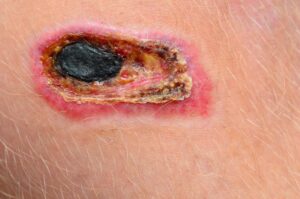 Necrotic wounds occur when tissue dies due to various underlying causes, such as poor blood supply, infection, or trauma. These wounds can manifest as eschar (dry, leathery), slough (yellow, fibrous), or gangrene (black and foul-smelling). Common risk factors for necrosis development can include diabetes, peripheral artery disease, and immobility.
As referenced above, necrotic wounds can have a number of different underlying causes. Understanding the factors contributing to their development is essential for appropriate treatment and prevention. Some of the potential causes may include:
 Timely Assessment and Diagnosis
Early identification and assessment of necrotic wounds are vital to appropriate treatment. Would care specialists will thoroughly evaluate the wound’s characteristics, including size, depth, location, and the extent of tissue damage. They may also perform diagnostic tests, such as wound cultures, to identify any underlying infections or organisms contributing to the necrotic process.
Wound debridement is a crucial step in the management of necrotic wounds as it involves the removal of dead or devitalized tissue to promote healing. According to a recent publication; “The clinical significance of wound debridement and ulcers with necrotic tissue, regardless of the infection status, cannot be overstated and should not be underestimated.” Several methods of wound debridement are available, each with its advantages and considerations. Some of the different types of wound debridement commonly used for necrotic wounds include:
The debridement method used can depend on several factors, including the extent and type of necrotic tissue, wound characteristics and patient preferences. A wound care specialist will typically conduct a comprehensive assessment of the wound to help determine the most suitable debridement approach for each individual case.
Necrotic wounds are highly susceptible to infection, which can further delay healing and lead to severe complications. Effective infection management can involve the use of antimicrobial agents, such as topical or systemic antibiotics, to target the specific pathogens identified in wound cultures. Additionally, wound specialists will ensure appropriate wound dressings are utilized and provide instructions for proper wound care to minimize the risk of infection.
Creating an optimal wound environment is essential for necrotic wound healing. Moist wound healing, which involves maintaining a moist but not overly wet environment, has shown great efficacy. It promotes angiogenesis, the formation of new blood vessels, and enhances the migration of cells necessary for tissue regeneration. Advanced wound dressings are often used to provide moisture balance and protect the wound from external contaminants.
Choosing appropriate dressings is essential for successful necrotic wound healing. Various types of wound dressings are available, including hydrogels, foams, alginates, and more. Factors such as wound exudate levels, size, and location are considered when selecting the most suitable dressing. Regular dressing changes maintain a clean wound environment, support healing, and facilitate the removal of necrotic tissue. Your wound specialist can help determine the appropriate dressing for your circumstances.
Proper nutrition and hydration play a vital role in wound healing. A well-balanced diet rich in protein, vitamins, and minerals is necessary to provide the body with the essential building blocks for tissue repair. Adequate hydration is equally important as it supports blood circulation, delivery of nutrients to the wound site, and the removal of waste products.
Necrotic wounds can cause significant pain and discomfort, impacting the patient’s quality of life. Effective pain management strategies may be employed to alleviate suffering and enhance the patient’s overall well-being. A combination of pharmacological interventions and non-pharmacological approaches may be suggested to provide optimal pain relief.
Continual monitoring of the necrotic wound’s progress is crucial to ensure appropriate healing. Wound specialists will often schedule regular follow-up appointments to assess the wound’s condition, evaluate the effectiveness of the treatment plan, and make adjustments as needed. Patient education regarding wound care, signs of infection, and potential complications should also be an integral part of the follow-up process.
While treating necrotic wounds is essential, preventing their occurrence in the first place can be just as important. Here are some strategies for preventing necrotic wounds:
Necrotic wounds pose significant challenges in terms of treatment and care, but with proper management, healing and recovery are achievable. By employing a multidisciplinary approach and tailoring treatment plans to individual patient needs, wound care specialists can optimize necrotic wound care and support patients on their path to recovery.
At West Coast Wound Center, we understand the challenges posed by necrotic wounds and the importance of providing proper treatment and care. Our specialized team possesses the knowledge, experience, and advanced resources necessary to effectively manage necrotic wounds. From thorough assessment and debridement to infection control, dressing selection, and patient education, our specialists ensure the highest quality of care for every patient that walks through our doors. Book an appointment today.
[/fusion_text][/fusion_builder_column][fusion_builder_column type=”1_3″ layout=”1_3″ spacing=”” center_content=”no” link=”” target=”_self” min_height=”” hide_on_mobile=”small-visibility,medium-visibility,large-visibility” class=”” id=”” hover_type=”none” border_color=”” border_style=”solid” border_position=”all” border_radius=”” box_shadow=”no” dimension_box_shadow=”” box_shadow_blur=”0″ box_shadow_spread=”0″ box_shadow_color=”” box_shadow_style=”” padding_top=”” padding_right=”” padding_bottom=”” padding_left=”” margin_top=”” margin_bottom=”” background_type=”single” gradient_start_color=”” gradient_end_color=”” gradient_start_position=”0″ gradient_end_position=”100″ gradient_type=”linear” radial_direction=”center center” linear_angle=”180″ background_color=”” background_image=”” background_image_id=”” background_position=”left top” background_repeat=”no-repeat” background_blend_mode=”none” animation_type=”” animation_direction=”left” animation_speed=”0.3″ animation_offset=”” filter_type=”regular” filter_hue=”0″ filter_saturation=”100″ filter_brightness=”100″ filter_contrast=”100″ filter_invert=”0″ filter_sepia=”0″ filter_opacity=”100″ filter_blur=”0″ filter_hue_hover=”0″ filter_saturation_hover=”100″ filter_brightness_hover=”100″ filter_contrast_hover=”100″ filter_invert_hover=”0″ filter_sepia_hover=”0″ filter_opacity_hover=”100″ filter_blur_hover=”0″ last=”true” border_sizes_top=”0″ border_sizes_bottom=”0″ border_sizes_left=”0″ border_sizes_right=”0″ first=”false” spacing_left=”1.3333333333333333%”][fusion_widget_area name=”avada-blog-sidebar” title_size=”” title_color=”” background_color=”” padding_top=”” padding_right=”” padding_bottom=”” padding_left=”” hide_on_mobile=”small-visibility,medium-visibility,large-visibility” class=”” id=”” /][/fusion_builder_column][/fusion_builder_row][/fusion_builder_container]
[fusion_builder_container hundred_percent=”no” equal_height_columns=”no” menu_anchor=”” hide_on_mobile=”small-visibility,medium-visibility,large-visibility” class=”” id=”” background_color=”” background_image=”” background_position=”center center” background_repeat=”no-repeat” fade=”no” background_parallax=”none” parallax_speed=”0.3″ video_mp4=”” video_webm=”” video_ogv=”” video_url=”” video_aspect_ratio=”16:9″ video_loop=”yes” video_mute=”yes” overlay_color=”” video_preview_image=”” border_color=”” border_style=”solid” padding_top=”” padding_bottom=”” padding_left=”” padding_right=”” type=”legacy” admin_toggled=”no”][fusion_builder_row][fusion_builder_column type=”2_3″ layout=”1_1″ background_position=”left top” background_color=”” border_color=”” border_style=”solid” border_position=”all” spacing=”yes” background_image=”” background_repeat=”no-repeat” padding_top=”” padding_right=”” padding_bottom=”” padding_left=”” margin_top=”0px” margin_bottom=”0px” class=”” id=”” animation_type=”” animation_speed=”0.3″ animation_direction=”left” hide_on_mobile=”small-visibility,medium-visibility,large-visibility” center_content=”no” last=”false” min_height=”” hover_type=”none” link=”” border_sizes_top=”” border_sizes_bottom=”” border_sizes_left=”” border_sizes_right=”” first=”true” spacing_right=”2.6666666666666665%”][fusion_text columns=”” column_min_width=”” column_spacing=”” rule_style=”default” rule_size=”” rule_color=”” content_alignment_medium=”” content_alignment_small=”” content_alignment=”” hide_on_mobile=”small-visibility,medium-visibility,large-visibility” sticky_display=”normal,sticky” class=”” id=”” margin_top=”” margin_right=”” margin_bottom=”” margin_left=”” font_size=”” fusion_font_family_text_font=”” fusion_font_variant_text_font=”” line_height=”” letter_spacing=”” text_color=”” animation_type=”” animation_direction=”left” animation_speed=”0.3″ animation_offset=””]Heart health is a crucial aspect of overall well-being. The heart, being the central organ of the circulatory system, plays a pivotal role in maintaining a healthy body. While its primary function is to pump oxygen-rich blood to different parts of the body, it also influences various physiological processes, including wound healing. In this article, we will explore why heart health is important and how it affects the body’s ability to heal wounds efficiently.
 The heart’s primary function is to circulate oxygenated blood throughout the body, supplying vital nutrients and removing waste products. Effective blood circulation is essential for wound healing as it ensures an adequate supply of oxygen and nutrients to the injured tissues. A healthy heart promotes optimal blood flow, enabling a faster and more efficient healing process.
Oxygen is vital for the healing process as it supports the growth and functioning of new cells. When a wound occurs, oxygenated blood carries oxygen to the affected area, promoting the formation of new blood vessels (angiogenesis) and stimulating the production of collagen, a crucial protein for tissue repair. A strong and healthy heart ensures a steady oxygen supply to the wound site, facilitating tissue regeneration and reducing healing time.
In addition to oxygen, the blood transported by the heart also carries essential nutrients required for wound healing, such as vitamins, minerals, and amino acids. These nutrients provide the building blocks for cellular repair and the synthesis of new tissues. Moreover, the circulatory system removes waste products and toxins from the wound site, preventing the buildup of harmful substances that could hinder the healing process. Optimal heart function guarantees efficient nutrient delivery and waste removal, supporting the body’s natural healing abilities.
Wound healing involves an intricate interplay between inflammation, immune response, and tissue repair. The heart contributes to this process by regulating inflammation levels in the body. Chronic conditions like cardiovascular disease can lead to systemic inflammation, impairing wound healing and prolonging the recovery time. By maintaining a healthy heart, individuals can reduce the risk of chronic inflammation, promoting a balanced immune response and facilitating the healing process.
High blood pressure, or hypertension, can negatively impact wound healing. Elevated blood pressure can strain the cardiovascular system, reducing blood flow to the wound site. A diminished blood supply hampers the delivery of vital nutrients and oxygen, slowing down the healing process. Moreover, hypertension increases the risk of vascular complications, which can impede wound healing further. By prioritizing heart health and managing blood pressure levels, individuals can enhance the body’s ability to heal wounds effectively.
 Below are a few tips for maintaining a healthy heart, however, these are more general considerations. It’s important to first consult with a wound care specialist for personalized advice based on your individual circumstances and type of wound.
Eat a Heart-Healthy Diet:
Engage in Regular Physical Activity:
Maintain a Healthy Weight:
Manage Stress:
Don’t Smoke and Limit Alcohol Intake:
Get Quality Sleep:
Regularly Monitor Blood Pressure and Cholesterol Levels:
Stay Hydrated:
Regular Health Check-ups:
Maintaining a healthy heart is crucial for overall well-being, and it can significantly impact wound healing. A robust cardiovascular system ensures optimal blood circulation, facilitating oxygen and nutrient delivery to the wound site. Additionally, it helps control inflammation levels, supports a balanced immune response, and contributes to effective tissue repair. By prioritizing heart health through regular exercise, a nutritious diet, stress management, and routine medical check-ups, you can promote faster healing, reduce complications, and enhance your overall quality of life. Remember, a healthy heart is not only essential for wound healing but also for a healthy and fulfilling life.
If you or someone you know has suffered a serious wound or have questions about heart health book an appointment at West Coast Wound Center today.[/fusion_text][/fusion_builder_column][fusion_builder_column type=”1_3″ layout=”1_3″ spacing=”” center_content=”no” link=”” target=”_self” min_height=”” hide_on_mobile=”small-visibility,medium-visibility,large-visibility” class=”” id=”” hover_type=”none” border_color=”” border_style=”solid” border_position=”all” border_radius=”” box_shadow=”no” dimension_box_shadow=”” box_shadow_blur=”0″ box_shadow_spread=”0″ box_shadow_color=”” box_shadow_style=”” padding_top=”” padding_right=”” padding_bottom=”” padding_left=”” margin_top=”” margin_bottom=”” background_type=”single” gradient_start_color=”” gradient_end_color=”” gradient_start_position=”0″ gradient_end_position=”100″ gradient_type=”linear” radial_direction=”center center” linear_angle=”180″ background_color=”” background_image=”” background_image_id=”” background_position=”left top” background_repeat=”no-repeat” background_blend_mode=”none” animation_type=”” animation_direction=”left” animation_speed=”0.3″ animation_offset=”” filter_type=”regular” filter_hue=”0″ filter_saturation=”100″ filter_brightness=”100″ filter_contrast=”100″ filter_invert=”0″ filter_sepia=”0″ filter_opacity=”100″ filter_blur=”0″ filter_hue_hover=”0″ filter_saturation_hover=”100″ filter_brightness_hover=”100″ filter_contrast_hover=”100″ filter_invert_hover=”0″ filter_sepia_hover=”0″ filter_opacity_hover=”100″ filter_blur_hover=”0″ last=”true” border_sizes_top=”0″ border_sizes_bottom=”0″ border_sizes_left=”0″ border_sizes_right=”0″ first=”false” spacing_left=”1.3333333333333333%”][fusion_widget_area name=”avada-blog-sidebar” title_size=”” title_color=”” background_color=”” padding_top=”” padding_right=”” padding_bottom=”” padding_left=”” hide_on_mobile=”small-visibility,medium-visibility,large-visibility” class=”” id=”” /][/fusion_builder_column][/fusion_builder_row][/fusion_builder_container]
[fusion_builder_container hundred_percent=”no” equal_height_columns=”no” menu_anchor=”” hide_on_mobile=”small-visibility,medium-visibility,large-visibility” class=”” id=”” background_color=”” background_image=”” background_position=”center center” background_repeat=”no-repeat” fade=”no” background_parallax=”none” parallax_speed=”0.3″ video_mp4=”” video_webm=”” video_ogv=”” video_url=”” video_aspect_ratio=”16:9″ video_loop=”yes” video_mute=”yes” overlay_color=”” video_preview_image=”” border_color=”” border_style=”solid” padding_top=”” padding_bottom=”” padding_left=”” padding_right=”” type=”legacy” admin_toggled=”no”][fusion_builder_row][fusion_builder_column type=”2_3″ layout=”1_1″ background_position=”left top” background_color=”” border_color=”” border_style=”solid” border_position=”all” spacing=”yes” background_image=”” background_repeat=”no-repeat” padding_top=”” padding_right=”” padding_bottom=”” padding_left=”” margin_top=”0px” margin_bottom=”0px” class=”” id=”” animation_type=”” animation_speed=”0.3″ animation_direction=”left” hide_on_mobile=”small-visibility,medium-visibility,large-visibility” center_content=”no” last=”false” min_height=”” hover_type=”none” link=”” border_sizes_top=”” border_sizes_bottom=”” border_sizes_left=”” border_sizes_right=”” first=”true” spacing_right=”2.6666666666666665%”][fusion_text columns=”” column_min_width=”” column_spacing=”” rule_style=”default” rule_size=”” rule_color=”” content_alignment_medium=”” content_alignment_small=”” content_alignment=”” hide_on_mobile=”small-visibility,medium-visibility,large-visibility” sticky_display=”normal,sticky” class=”” id=”” margin_top=”” margin_right=”” margin_bottom=”” margin_left=”” font_size=”” fusion_font_family_text_font=”” fusion_font_variant_text_font=”” line_height=”” letter_spacing=”” text_color=”” animation_type=”” animation_direction=”left” animation_speed=”0.3″ animation_offset=””]
Obesity is a growing epidemic around the world, affecting millions of people. The World Health Organization (WHO) reports that since 1975, the global rate of obesity has tripled. Over 1.9 billion adults were overweight in 2016, with over 650 million classified as obese.
This condition not only increases the risk of chronic diseases such as diabetes and heart disease but also can have a significant impact on wound healing. Obesity can delay wound healing, increase the risk of infection, and lead to other complications. In this article, we’ll explore the effects of obesity on wound healing and provide tips for how to help manage wounds in obese patients.
 Obesity is characterized by a surplus of body fat to the point where it severely impacts health. The BMI (body mass index), a measurement of body fat based on weight and height, is used to calculate the condition. According to the Centers for Disease Control and Prevention (CDC), a BMI of 30.0 or higher classifies someone as within the obesity range.
Obesity is a significant threat to the community’s health because of its link to a higher risk of many chronic diseases, including stroke, heart disease, diabetes, and multiple kinds of cancer. It can also cause psychological suffering, physical limitations, and a lower overall quality of life.
Genetic, environmental, and behavioral variables among other root causes are all involved in the risk of developing obesity. Sedentary behavior, a calorie-dense diet, heredity, particular drugs, and underlying medical disorders are just a few of the prevalent causes.
Millions of people around the world are affected by obesity, which makes it a serious public health issue. This condition has an impact on both wound healing as well as general health. Before we delve into the impact of obesity on the body’s ability to heal, let’s first explore the physiology of wound healing and why it’s relevant.
Hemostasis, inflammation, proliferation, and remodeling are typically used to classify the stages involved in the wound healing process. As immune cells remove pathogens and debris during inflammation, platelets form clots to stop bleeding during hemostasis. The proliferation stage is characterized by the growth of new tissue, whereas the maturation and remodeling of new tissue characterize the remodeling stage.
Obesity as an inflammatory condition is one of many factors that can easily upset the delicate balance that the wound-healing process depends on.
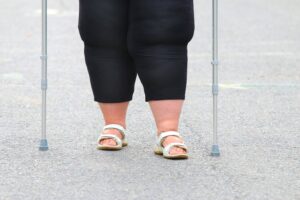 Obesity affects wound healing in various ways. The excess fat tissue in the body can lead to chronic inflammation, which can slow down the healing process. Inflammation can also impair the immune response, which serves to further delay wound healing. Moreover, body fat or adipose tissue can cause poor circulation, leading to limited blood supply to the wound site. This can reduce the delivery of much needed nutrients and oxygen to the wound, thereby increasing the risk of infection and other complications.
Obesity can also result in other comorbidities, including diabetes and cardiovascular disease, which can impair wound healing. Let’s further break down how obesity can affect some of the physiological processes essential for proper wound healing:
Vascular insufficiency can negatively affect wound healing and play a major role in the development of certain chronic wounds. As adipose tissue grows in those struggling with obesity, it puts added stress on the circulatory system, resulting in vascular insufficiency, inflammation, delayed angiogenesis, and poor oxygenation. All of which can slow wound healing.
The immune system may be compromised by obesity, making it more challenging for the body to fight illnesses. This raises the possibility of wound infections, which can slow healing and cause further problems.
Chronic low-grade inflammation linked to obesity slows the healing of wounds. Overproduction of cytokines because of chronic inflammation can obstruct the healing process.
Obesity decreases blood flow to the wound site, which hinders the delivery of nutrients and oxygen. As a result, the healing process is slowed down, and problems are more likely.
Poor nutrition and malnutrition are frequently linked to obesity, which has been associated with slower wound healing. The healing process depends on proper nutrition, and vitamin and mineral deficits slow down the process.
Recent research has shed further light on the impact of obesity on wound healing.
Obesity and diabetes are closely linked, and both can have a significant impact on wound healing. Obesity can increase the risk of developing type 2 diabetes, a condition characterized by high blood sugar levels. Diabetes can further complicate wound healing, leading to delayed healing, infections, and other complications. In fact, diabetic patients are more likely to develop chronic wounds than non-diabetic patients. The combination of obesity and diabetes can also affect the immune system, making it more challenging for the body to fight infections.
Managing wounds in obese patients with diabetes requires a comprehensive approach that addresses the underlying conditions. Wound care specialists work closely with patients to manage their weight, blood sugar levels, and other underlying conditions such as hypertension and high cholesterol. This may involve dietary changes, medication management, and regular physical activity.
 Despite the challenges posed by obesity, several strategies can improve wound healing outcomes in obese patients. Your wound specialist can help outline a treatment plan and lifestyle changes for you to follow.
Unlike other practices, at West Coast Wound Center, we don’t just focus on the wound, but take into consideration the most important factors that affect healing including overall health. We understand the crucial impact obesity and poor nutrition can have on healing and take a holistic and integrated approach to your wound care. We also work closely with each patient’s nutritionist to help optimize the wound healing process.
By addressing the challenges of managing wounds in obese patients, we can improve quality of life and reduce the burden of obesity-related complications. Book an appointment with our specialized team today.
[/fusion_text][/fusion_builder_column][fusion_builder_column type=”1_3″ layout=”1_3″ spacing=”” center_content=”no” link=”” target=”_self” min_height=”” hide_on_mobile=”small-visibility,medium-visibility,large-visibility” class=”” id=”” hover_type=”none” border_color=”” border_style=”solid” border_position=”all” border_radius=”” box_shadow=”no” dimension_box_shadow=”” box_shadow_blur=”0″ box_shadow_spread=”0″ box_shadow_color=”” box_shadow_style=”” padding_top=”” padding_right=”” padding_bottom=”” padding_left=”” margin_top=”” margin_bottom=”” background_type=”single” gradient_start_color=”” gradient_end_color=”” gradient_start_position=”0″ gradient_end_position=”100″ gradient_type=”linear” radial_direction=”center center” linear_angle=”180″ background_color=”” background_image=”” background_image_id=”” background_position=”left top” background_repeat=”no-repeat” background_blend_mode=”none” animation_type=”” animation_direction=”left” animation_speed=”0.3″ animation_offset=”” filter_type=”regular” filter_hue=”0″ filter_saturation=”100″ filter_brightness=”100″ filter_contrast=”100″ filter_invert=”0″ filter_sepia=”0″ filter_opacity=”100″ filter_blur=”0″ filter_hue_hover=”0″ filter_saturation_hover=”100″ filter_brightness_hover=”100″ filter_contrast_hover=”100″ filter_invert_hover=”0″ filter_sepia_hover=”0″ filter_opacity_hover=”100″ filter_blur_hover=”0″ last=”true” border_sizes_top=”0″ border_sizes_bottom=”0″ border_sizes_left=”0″ border_sizes_right=”0″ first=”false” spacing_left=”1.3333333333333333%”][fusion_widget_area name=”avada-blog-sidebar” title_size=”” title_color=”” background_color=”” padding_top=”” padding_right=”” padding_bottom=”” padding_left=”” hide_on_mobile=”small-visibility,medium-visibility,large-visibility” class=”” id=”” /][/fusion_builder_column][/fusion_builder_row][/fusion_builder_container]
[fusion_builder_container hundred_percent=”no” equal_height_columns=”no” menu_anchor=”” hide_on_mobile=”small-visibility,medium-visibility,large-visibility” class=”” id=”” background_color=”” background_image=”” background_position=”center center” background_repeat=”no-repeat” fade=”no” background_parallax=”none” parallax_speed=”0.3″ video_mp4=”” video_webm=”” video_ogv=”” video_url=”” video_aspect_ratio=”16:9″ video_loop=”yes” video_mute=”yes” overlay_color=”” video_preview_image=”” border_color=”” border_style=”solid” padding_top=”” padding_bottom=”” padding_left=”” padding_right=”” type=”legacy” admin_toggled=”no”][fusion_builder_row][fusion_builder_column type=”2_3″ layout=”1_1″ background_position=”left top” background_color=”” border_color=”” border_style=”solid” border_position=”all” spacing=”yes” background_image=”” background_repeat=”no-repeat” padding_top=”” padding_right=”” padding_bottom=”” padding_left=”” margin_top=”0px” margin_bottom=”0px” class=”” id=”” animation_type=”” animation_speed=”0.3″ animation_direction=”left” hide_on_mobile=”small-visibility,medium-visibility,large-visibility” center_content=”no” last=”false” min_height=”” hover_type=”none” link=”” border_sizes_top=”” border_sizes_bottom=”” border_sizes_left=”” border_sizes_right=”” first=”true” spacing_right=”2.6666666666666665%”][fusion_text columns=”” column_min_width=”” column_spacing=”” rule_style=”default” rule_size=”” rule_color=”” content_alignment_medium=”” content_alignment_small=”” content_alignment=”” hide_on_mobile=”small-visibility,medium-visibility,large-visibility” sticky_display=”normal,sticky” class=”” id=”” margin_top=”” margin_right=”” margin_bottom=”” margin_left=”” font_size=”” fusion_font_family_text_font=”” fusion_font_variant_text_font=”” line_height=”” letter_spacing=”” text_color=”” animation_type=”” animation_direction=”left” animation_speed=”0.3″ animation_offset=””]
When it comes to minor wounds and scratches, the body can start healing within minutes as blood cells clump together to form a barrier in the skin. However, deeper or more serious wounds take more time and energy to heal.
Treating chronic wounds requires a multifaceted and holistic approach. While treatments such as wound debridement and preventing infection strategies are more widely known, evaluating and optimizing nutritional status should also be a part of a comprehensive treatment plan.
While not all wounds are the same, nutrition must be taken into account in the treatment of all types of wounds. But what happens when the body doesn’t receive the nutrition it needs? How does malnutrition impact the healing process? And what can you do to ensure you are giving your body what it needs to recover? This guide has everything you need to know.
Article Contents
 There is a well-established link between nutrition and wound management. Nutrition can be essential throughout each stage of wound healing.
When a person is malnourished the body lacks sufficient nutrients to build, maintain and repair tissue, which can result in issues such as reduced fatty tissue, less resistant skin, oedema, and other potential complications that interfere with healing. Additionally, suboptimal nutrition can impair the healing process by interfering with the immune system, collagen synthesis as well as wound tensile strength.
During the wound healing process, the body works to replace the damaged tissue with new tissue. This response requires increased use of energy and specific nutrients. Most notably protein.
During the catabolic phase which occurs after a wound, the body prioritizes supplying the area with the nutrients it needs to heal by releasing stress hormones and altering metabolism. If the body doesn’t receive enough nutrients or this phase takes too long, a condition known as protein energy malnutrition (PEM) can occur.
Protein energy malnutrition may be directly linked to slow healing wounds. When the body is suffering from PEM, it breaks down the amino acids it needs to heal; resulting in a reduction of lean body mass. As lean body mass goes down, the body breaks down the protein from muscles and is more likely to suppress the immune system and impair healing. This can be especially detrimental for patients with comorbidity such as those suffering from diabetes.
Unfortunately, nutrition is often neglected in the management of chronic wounds. This is particularly relevant in the older population who are at higher risk of chronic wounds and often suffer from nutritional deficiencies. As referenced above, wounds can increase the metabolic and protein demands of the body.
According to a review published in Advances in Wound Care, “the presence of a chronic wound can increase protein requirements by 250% and calorie requirements by 50%”. The review went on to mention that in some cases, administering more than the usual nutrients may aid in the healing process.
This was further discussed in a later paper on improving clinical outcomes for chronic wounds through proper nutrition published by the Journal of the American Society of Plastic Surgeons.
That’s why many wound care specialists will work with a nutritionist to conduct a nutritional screening and follow up assessment as part of their treatment plan for chronic wounds.
 Nutritional screening is a strategy utilized by wound specialists to help identify nutritional disorders as well as any signs of malnutrition that could impair wound healing. During the assessment, a specialist will evaluate a patient’s food and medical history and determine whether specific nutritional interventions might be needed.
The Mini Nutritional Assessment (MNA) is a type of tool a specialist may utilize to identify a patient’s potential for malnutrition; especially among older individuals. The MNA evaluates a number of parameters such as body mass index, mobility, and food intake to better understand nutritional risk.
Being able to spot the most common signs of malnutrition can help a specialist know whether a nutritional assessment might be needed and what actions should be taken moving forward. Here are a few common indicators of malnutrition a specialist might be on the lookout for:
Because less food intake can cause blood pressure and blood sugar to decrease, some patients might also feel dizzy, tired, or cold for most of the day.
It’s also important to note that malnutrition does not only apply to underweight individuals. Rather, it can also include those who eat too much, eat the wrong things, and/or are overweight.
 Wound healing is a complex, multi-phase process that relies on specific macro and micronutrients in order to progress through each stage. Additionally, caloric intake should be assessed on an individual basis based on factors such as weight, age, comorbidities, and what type of calories might be needed. The severity of the wound and where in the healing process the patient is should also be evaluated.
Let’s explore some of these nutrients essential to wound healing in greater depth:
Proteins
Proteins are the main nutrients needed for repair, tissue regrowth, and cell renewal throughout the healing process. Because protein is directly linked to the body’s ability to produce collagen it plays a major role in how effectively wounds heal.
Protein also plays other roles in the healing process. It has been shown to impact immune function, wound contraction, and fibroblast proliferation. It can also help maintain oncotic pressure which can be valuable in treating venous insufficiency wounds.
Additionally, as discussed above, deficiencies in calories can result in the body utilizing protein for other functions instead of the wound site. Making it all the more important to make sure you’re getting enough protein.
Some of the foods known to be a good supply of protein include whole grains, eggs, cheese, meat, fish, and chicken.
Carbohydrates
If the body doesn’t receive enough energy, it will use the protein it should be using to help the healing process. The bigger and more severe the wound, the more carbohydrates are needed to avoid this from happening.
Carbohydrates provide a major fuel source for the body. They encourage metabolic activity, stimulate insulin production, and facilitate collagen synthesis as well as tissue regeneration. Making sure you get enough carbohydrates can also aid in fibroblast production.
Lipids and essential fatty acids
Many of the benefits of carbohydrates also apply to lipids and fatty acids. They provide energy to the body to support the healing process and aid in wound remodeling.
Getting enough fats in your diet can also help absorb fat soluble nutrients such as Vitamin A, and omega-3 and omega-6 fatty acids that help the body heal.
Water and Fluids
In addition to caloric intake, dehydration is another important factor to consider. Dehydrated skin is more fragile and easier to injure. It can also interfere with the supply of nutrients to the wound site by affecting blood circulation. It’s imperative to regularly monitor hydration levels after a wound for signs of dehydration. It’s also a good idea to make sure you are drinking plenty of water throughout the day.
Amino Acids
Amino acids such as arginine and glutamine can also contribute to recovery after an injury. Arginine plays a crucial role in the inflammatory stage of wound healing. It can also aid in collagen synthesis as well as lymphocyte mitogenesis.
While similar to arginine, glutamine can also impact how effectively wounds heal. It can serve as an energy source, lower risk of infection, and increase insulin sensitivity.
Vitamins
Ensuring you are getting adequate Vitamins in your diet can also facilitate healing and improve outcomes. For example:
Zinc
Zinc plays a role in how the body metabolizes carbs and proteins and helps maintain cell membrane integrity. A diet too low in zinc can put you at added risk of oxidative damage. In fact, a recent study that explored the effects of zinc on wound healing among patients with diabetic foot ulcers found zinc supplementation helped reduce ulcer size and improve metabolic profiles. If you are looking for diets high in zinc, consider incorporating animal based foods into your diet.
Your body needs all of the nutrients available to heal chronic wounds. Unfortunately, poor nutrition and an unhealthy diet can prolong the process and are too often neglected until it’s too late. Don’t let this happen to you
Like wound care itself, there are different components to proper nutrition and it can play a number of roles in wound healing. Incorporating a variety of healthy foods into your diet that includes the right macro and micronutrients before and during healing can help. That said, the best way to ensure your body has everything it needs to heal properly after a wound is to consult with a wound care specialist and nutritionist. Working on your nutritional status in conjunction with proper wound care treatments can help you heal.
Unlike most other practices, at West Coast Wound Center, we value the whole patient’s health and not just the wound. We consider the most important extrinsic and intrinsic factors that affect healing including nutritional health. Our team works closely with each patient’s nutritionist to help optimize one’s wound healing.
Book an appointment today and let us help restore your quality of life.
[/fusion_text][/fusion_builder_column][fusion_builder_column type=”1_3″ layout=”1_3″ spacing=”” center_content=”no” link=”” target=”_self” min_height=”” hide_on_mobile=”small-visibility,medium-visibility,large-visibility” class=”” id=”” hover_type=”none” border_color=”” border_style=”solid” border_position=”all” border_radius=”” box_shadow=”no” dimension_box_shadow=”” box_shadow_blur=”0″ box_shadow_spread=”0″ box_shadow_color=”” box_shadow_style=”” padding_top=”” padding_right=”” padding_bottom=”” padding_left=”” margin_top=”” margin_bottom=”” background_type=”single” gradient_start_color=”” gradient_end_color=”” gradient_start_position=”0″ gradient_end_position=”100″ gradient_type=”linear” radial_direction=”center center” linear_angle=”180″ background_color=”” background_image=”” background_image_id=”” background_position=”left top” background_repeat=”no-repeat” background_blend_mode=”none” animation_type=”” animation_direction=”left” animation_speed=”0.3″ animation_offset=”” filter_type=”regular” filter_hue=”0″ filter_saturation=”100″ filter_brightness=”100″ filter_contrast=”100″ filter_invert=”0″ filter_sepia=”0″ filter_opacity=”100″ filter_blur=”0″ filter_hue_hover=”0″ filter_saturation_hover=”100″ filter_brightness_hover=”100″ filter_contrast_hover=”100″ filter_invert_hover=”0″ filter_sepia_hover=”0″ filter_opacity_hover=”100″ filter_blur_hover=”0″ last=”true” border_sizes_top=”0″ border_sizes_bottom=”0″ border_sizes_left=”0″ border_sizes_right=”0″ first=”false” spacing_left=”1.3333333333333333%”][fusion_widget_area name=”avada-blog-sidebar” title_size=”” title_color=”” background_color=”” padding_top=”” padding_right=”” padding_bottom=”” padding_left=”” hide_on_mobile=”small-visibility,medium-visibility,large-visibility” class=”” id=”” /][/fusion_builder_column][/fusion_builder_row][/fusion_builder_container][fusion_builder_container type=”flex” hundred_percent=”no” equal_height_columns=”no” menu_anchor=”” hide_on_mobile=”small-visibility,medium-visibility,large-visibility” class=”” id=”” background_color=”” background_image=”” background_position=”center center” background_repeat=”no-repeat” fade=”no” background_parallax=”none” parallax_speed=”0.3″ video_mp4=”” video_webm=”” video_ogv=”” video_url=”” video_aspect_ratio=”16:9″ video_loop=”yes” video_mute=”yes” overlay_color=”” video_preview_image=”” border_color=”” border_style=”solid” padding_top=”” padding_bottom=”” padding_left=”” padding_right=””][fusion_builder_row][fusion_builder_column type=”1_1″ layout=”1_1″ background_position=”left top” background_color=”” border_color=”” border_style=”solid” border_position=”all” spacing=”yes” background_image=”” background_repeat=”no-repeat” padding_top=”” padding_right=”” padding_bottom=”” padding_left=”” margin_top=”0px” margin_bottom=”0px” class=”” id=”” animation_type=”” animation_speed=”0.3″ animation_direction=”left” hide_on_mobile=”small-visibility,medium-visibility,large-visibility” center_content=”no” last=”true” min_height=”” hover_type=”none” link=”” border_sizes_top=”” border_sizes_bottom=”” border_sizes_left=”” border_sizes_right=”” first=”true”][fusion_text]
[/fusion_text][/fusion_builder_column][/fusion_builder_row][/fusion_builder_container]