[fusion_builder_container hundred_percent=”no” equal_height_columns=”no” menu_anchor=”” hide_on_mobile=”small-visibility,medium-visibility,large-visibility” class=”” id=”” background_color=”” background_image=”” background_position=”center center” background_repeat=”no-repeat” fade=”no” background_parallax=”none” parallax_speed=”0.3″ video_mp4=”” video_webm=”” video_ogv=”” video_url=”” video_aspect_ratio=”16:9″ video_loop=”yes” video_mute=”yes” overlay_color=”” video_preview_image=”” border_color=”” border_style=”solid” padding_top=”” padding_bottom=”” padding_left=”” padding_right=”” type=”legacy” admin_toggled=”no”][fusion_builder_row][fusion_builder_column type=”2_3″ layout=”1_1″ background_position=”left top” background_color=”” border_color=”” border_style=”solid” border_position=”all” spacing=”yes” background_image=”” background_repeat=”no-repeat” padding_top=”” padding_right=”” padding_bottom=”” padding_left=”” margin_top=”0px” margin_bottom=”0px” class=”” id=”” animation_type=”” animation_speed=”0.3″ animation_direction=”left” hide_on_mobile=”small-visibility,medium-visibility,large-visibility” center_content=”no” last=”false” min_height=”” hover_type=”none” link=”” border_sizes_top=”” border_sizes_bottom=”” border_sizes_left=”” border_sizes_right=”” first=”true” spacing_right=”2.6666666666666665%”][fusion_text columns=”” column_min_width=”” column_spacing=”” rule_style=”default” rule_size=”” rule_color=”” content_alignment_medium=”” content_alignment_small=”” content_alignment=”” hide_on_mobile=”small-visibility,medium-visibility,large-visibility” sticky_display=”normal,sticky” class=”” id=”” margin_top=”” margin_right=”” margin_bottom=”” margin_left=”” font_size=”” fusion_font_family_text_font=”” fusion_font_variant_text_font=”” line_height=”” letter_spacing=”” text_color=”” animation_type=”” animation_direction=”left” animation_speed=”0.3″ animation_offset=””]

For many individuals, wound healing is a natural process, however, for others, it’s not that easy. Non-healing wounds are a common occurrence that impact the health and quality of life for many. In fact, it’s estimated that in the U.S. about 6.5 million patients suffer from chronic wounds. Without proper treatment, these slow-healing wounds can result in difficult and long-term health problems including extreme pain, loss of function and mobility, and prolonged hospitalization.

What Are Chronic Non-Healing Wounds?

specialist treating a non-healing leg woundA non-healing wound also referred to as a ‘chronic wound’ is a wound that won’t heal after several weeks or months despite adhering to recommended treatments. In most cases, there is a physiologic impairment that slows or prevents healing. Chronic wounds can quickly escalate and become infected. In some cases, if not properly addressed these types of wounds can result in serious conditions and potentially amputation. That is why it is imperative to educate yourself about the nature of non-healing wounds, who is most at risk, and the proper way to treat them.

Types of Non-Healing Wounds

Although many non-healing wounds share common characteristics; there are four main categories of chronic injuries:

1. Pressure ulcers

These types of wounds affect the skin and underlying tissue and are most often a result of prolonged pressure on the skin. For example, if someone is in bed or a chair for an extended amount of time. Pressure ulcers develop gradually and can affect any part of the body. These types of wounds only get worse if not tended to so if you suspect that you or someone you are caring for has a pressure ulcer it’s important to speak to a healthcare professional or wound care specialist as soon as possible.

2. Diabetic ulcers

Diabetes makes a person more susceptible to wounds and ulcers. These open wounds are most often found on the legs or bottom of the feet. Research suggests that 15% of those with diabetes will experience diabetic foot ulcers in their lifetime. Due to the effect diabetes can have on the wound healing process this can be very dangerous and lead to serious infection and in some cases even gangrene. In fact, about 6% of those with a diabetic foot ulcer will be hospitalized because of infection or other related issues. Fortunately, diabetic ulcers can be treated by a wound care specialist and in many cases prevented entirely.

3. Venous ulcers

These leg ulcers most often form around the ankles and are caused by damage-related issues with blood circulation in your leg veins. Valves in our legs control blood pressure inside the veins. However, if the blood flow in these veins can’t drop as you walk it causes ulcers to form on the ankles. Other issues with leg veins can also cause venous ulcers such as varicose veins or chronic venous insufficiency. Like other non-healing wounds, venous ulcers require proper care to avoid infection and recover. Healthy habits that encourage blood flow and lifestyle changes can sometimes help prevent the vein problems responsible.

4. Arterial ulcers

Arterial ulcers also referred to as ischemic ulcers are typically caused by damage to the arteries. Our arteries deliver nutrients and oxygen to tissues in the body. When they become blocked, nutrients are unable to flow to the extremities resulting in an open wound that can continue to grow and become infected. Treatment for arterial ulcers involves restoring blood circulation to the injured area.

Non-healing surgical wounds are another type of injury and can occur after surgery when an incision doesn’t heal as expected. Although rare, this can be caused by infection.

What Causes Non-Healing Wounds?

Impaired wound healing is rarely due to one single cause, rather it’s a combination of factors responsible. Some of those contributing factors that can cause non-healing wounds include:

Non-healing wounds can happen to anyone but some are more at risk than others. Those who might be more prone to chronic wounds include:

Symptoms of Non-Healing Wounds

As we discussed, it’s essential to be able to identify the symptoms of non-healing wounds. If you experience any of the below signs make sure to contact a wound care specialist as soon as possible:

Treatment for Non-Healing Wounds

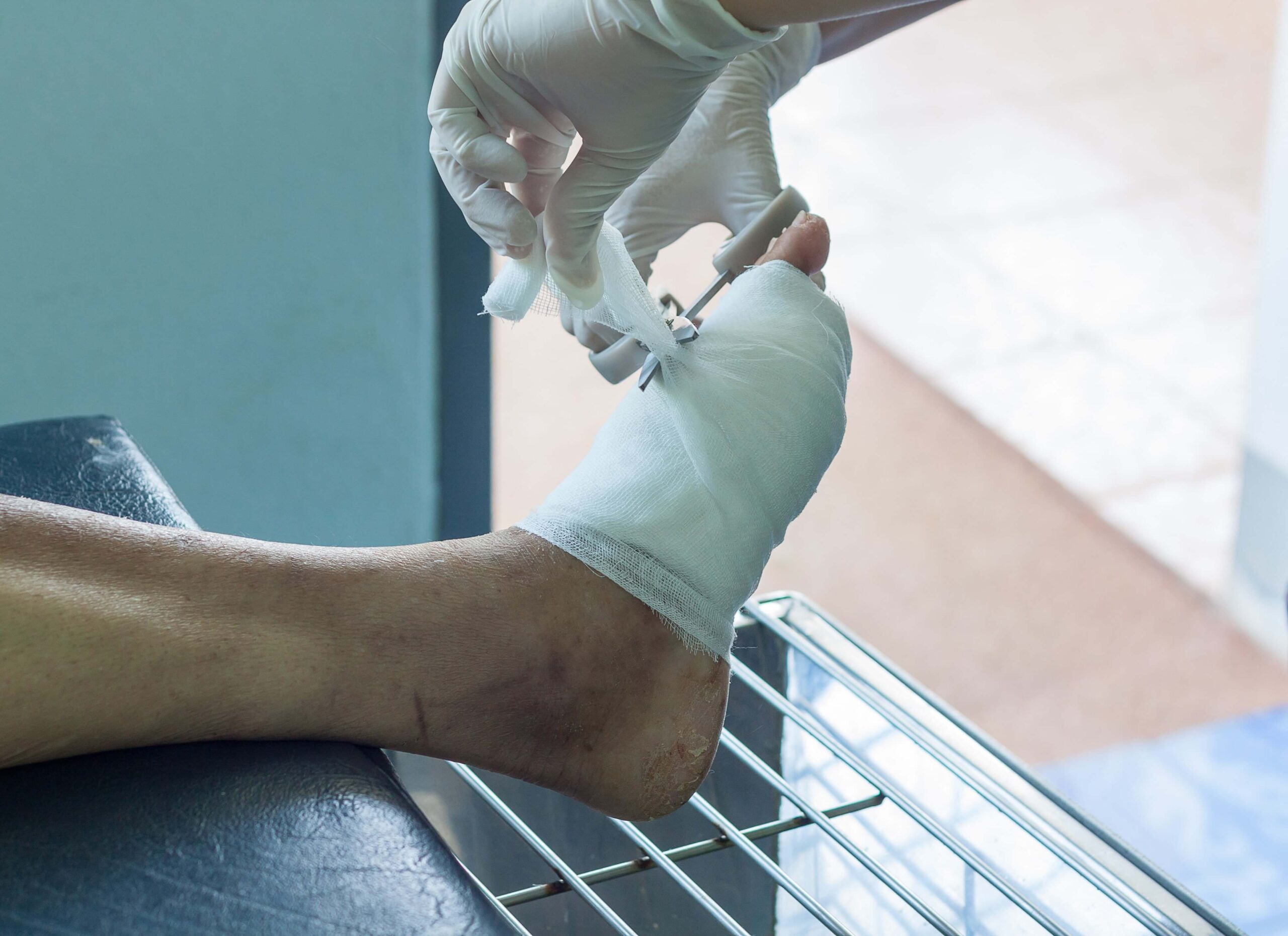
specialist dressing chronic foot woundYour wound care specialist will work with you and recommend the ideal way to treat your non-healing wound or ulcer depending on the severity and type of injury. Treatment typically begins by gathering information about the patient and their wound history. This can help determine the appropriate course of treatment. In many cases, the underlying causes of the wound would first need to be addressed before healing can begin.

That said, below are a few general treatment approaches a wound care specialist might use that can help:

Dressing Non-Healing Wounds

Wound dressing can be especially important to prepare the area for healing and control moisture levels. There are several different types of dressings and each one has unique properties that can impact how fast the wound heals. Unfortunately, there is no one dressing for every type of wound. Your wound care specialist can help determine the right type of dressing based on your individual circumstances, characteristics of the wound as well as the stage of healing.

Specialized Care for Chronic Wounds and Injuries

At our wound care center in Fresno, we are committed to providing high quality care to the patients we serve. From pressure and diabetic ulcers to vascular ulcers and more, our specialized wound care physicians and medical staff are equipped with the expertise in treating the full range of wound types and skin issues.

We pride ourselves in providing the full spectrum of wound care, including advanced therapies, such as debridement, biopsies, skin scrapings, cryotherapy, destruction of tissue, skin substitutes, compression devices, and more. Make an appointment at Wound Coast Wound and Skin Care today and let us help you heal and restore your quality of life.

If you are unable to come to our wound care center, our specialized staff will come to you wherever you reside.

[/fusion_text][/fusion_builder_column][fusion_builder_column type=”1_3″ layout=”1_3″ spacing=”” center_content=”no” link=”” target=”_self” min_height=”” hide_on_mobile=”small-visibility,medium-visibility,large-visibility” class=”” id=”” hover_type=”none” border_color=”” border_style=”solid” border_position=”all” border_radius=”” box_shadow=”no” dimension_box_shadow=”” box_shadow_blur=”0″ box_shadow_spread=”0″ box_shadow_color=”” box_shadow_style=”” padding_top=”” padding_right=”” padding_bottom=”” padding_left=”” margin_top=”” margin_bottom=”” background_type=”single” gradient_start_color=”” gradient_end_color=”” gradient_start_position=”0″ gradient_end_position=”100″ gradient_type=”linear” radial_direction=”center center” linear_angle=”180″ background_color=”” background_image=”” background_image_id=”” background_position=”left top” background_repeat=”no-repeat” background_blend_mode=”none” animation_type=”” animation_direction=”left” animation_speed=”0.3″ animation_offset=”” filter_type=”regular” filter_hue=”0″ filter_saturation=”100″ filter_brightness=”100″ filter_contrast=”100″ filter_invert=”0″ filter_sepia=”0″ filter_opacity=”100″ filter_blur=”0″ filter_hue_hover=”0″ filter_saturation_hover=”100″ filter_brightness_hover=”100″ filter_contrast_hover=”100″ filter_invert_hover=”0″ filter_sepia_hover=”0″ filter_opacity_hover=”100″ filter_blur_hover=”0″ last=”true” border_sizes_top=”0″ border_sizes_bottom=”0″ border_sizes_left=”0″ border_sizes_right=”0″ first=”false” spacing_left=”1.3333333333333333%”][fusion_widget_area name=”avada-blog-sidebar” title_size=”” title_color=”” background_color=”” padding_top=”” padding_right=”” padding_bottom=”” padding_left=”” hide_on_mobile=”small-visibility,medium-visibility,large-visibility” class=”” id=”” /][/fusion_builder_column][/fusion_builder_row][/fusion_builder_container]

[fusion_builder_container hundred_percent=”no” equal_height_columns=”no” menu_anchor=”” hide_on_mobile=”small-visibility,medium-visibility,large-visibility” class=”” id=”” background_color=”” background_image=”” background_position=”center center” background_repeat=”no-repeat” fade=”no” background_parallax=”none” parallax_speed=”0.3″ video_mp4=”” video_webm=”” video_ogv=”” video_url=”” video_aspect_ratio=”16:9″ video_loop=”yes” video_mute=”yes” overlay_color=”” video_preview_image=”” border_color=”” border_style=”solid” padding_top=”” padding_bottom=”” padding_left=”” padding_right=”” type=”legacy” admin_toggled=”no”][fusion_builder_row][fusion_builder_column type=”2_3″ layout=”1_1″ background_position=”left top” background_color=”” border_color=”” border_style=”solid” border_position=”all” spacing=”yes” background_image=”” background_repeat=”no-repeat” padding_top=”” padding_right=”” padding_bottom=”” padding_left=”” margin_top=”0px” margin_bottom=”0px” class=”” id=”” animation_type=”” animation_speed=”0.3″ animation_direction=”left” hide_on_mobile=”small-visibility,medium-visibility,large-visibility” center_content=”no” last=”false” min_height=”” hover_type=”none” link=”” border_sizes_top=”” border_sizes_bottom=”” border_sizes_left=”” border_sizes_right=”” first=”true” spacing_right=”2.6666666666666665%”][fusion_text columns=”” column_min_width=”” column_spacing=”” rule_style=”default” rule_size=”” rule_color=”” content_alignment_medium=”” content_alignment_small=”” content_alignment=”” hide_on_mobile=”small-visibility,medium-visibility,large-visibility” sticky_display=”normal,sticky” class=”” id=”” margin_top=”” margin_right=”” margin_bottom=”” margin_left=”” font_size=”” fusion_font_family_text_font=”” fusion_font_variant_text_font=”” line_height=”” letter_spacing=”” text_color=”” animation_type=”” animation_direction=”left” animation_speed=”0.3″ animation_offset=””]

As you grow older you may start to notice that wounds or injuries don’t heal as quickly as they once did. This is no coincidence. The impact of age on the body’s ability to heal itself is well documented.

Not only are older adults more likely to have to deal with injuries but the healing process can also take longer and the results of these chronic wounds can have an even more profound impact on overall quality of life. Fortunately, staying educated on how to control underlying conditions and being able to know when it’s time to reach out to a professional for help can go a long way toward prevention and healing.

Let’s take a look at why age can play a role in how quickly and effectively our body heals and why it’s even more important for the older population to seek professional care from a wound care specialist after an injury.

Factors that Affect Wound Healing

older patient getting his wound dressed by specialistAging affects every part of the body, including the structure and function of the skin. When you age, wound healing slows down because the skin is thinner. However, age isn’t the only factor that can affect wound healing and recovery. Some of the other factors can include:

Stages of Wound Healing

In order to understand the impact of aging on the healing process, it’s important to first explore how wounds heal in general. While the process can vary depending on several factors such as the severity and location of the wound as well as preexisting medical conditions, typically wound healing takes place in three main stages.

Inflammatory Phase

Proliferation Phase

Maturation Phase

Why Older Adults Heal More Slowly

elderly woman seeing a wound care specialistEach phase of the wound healing process is affected among the elderly, resulting in a more delayed recovery time. In fact, any interference with the wound healing phases is said to delay healing by 20-60%. Let’s break down why older adults are more prone to injuries and why age can play a role in how effectively wounds heal.

Diabetes and Age-Related Disorders

Not only do wounds tend to heal more slowly with age but many chronic wounds such as diabetic or venous ulcers, arterial insufficiency, and pressure ulcers have been known to be associated with conditions that often occur in older individuals. Further, surgery is also common among older adults, increasing the risk of potential wound complications.

One example of these age-related diseases that can impair wound healing is diabetes. As we age our risk of developing diabetes dramatically increases. Those suffering from diabetic wounds often have circulation problems and necessary nutrients and oxygen don’t reach the wound site resulting in slow healing.

Aging Skin and Pressure Wounds

Changes to the skin are one of the most obvious signs of aging and can have a direct impact on wound healing. In fact, it’s said that skin injuries in older adults can take up to four times longer to recover compared to younger individuals.

This is partly due to the effect of aging on the cells within the body. In many elderly patients, cells divide more slowly or in some cases not at all (a condition referred to as senescence). The body also has a more difficult time producing fat cells under the skin. These effects are one of the reasons why the elderly have thin skin and are more prone to wounds or injuries.

Additionally, after a wound, the skin doesn’t heal as quickly or properly. These aging cells take longer to regrow skin and won’t be able to guard the body against bacteria, increasing the risk of infection. Research also indicates that cells that don’t divide may also increase inflammation and damage surrounding tissue; impeding the healing process.

These changes also increase the risk of pressure wounds because:

Poor Nutrition and Wound Healing

Lack of physical activity and poor nutrition can also play a role in wound healing and risk of injury. Elderly people with poor nutrition are typically at higher risk of bone fractures, more likely to need extended hospitalization stays, and have lower success rates of treatments. While everyone requires energy to heal this is especially crucial for elderly patients who are at greater risk of malnutrition and tend to heal more slowly.

If you are seeking help from a wound care specialist ask them for dietary and nutrition recommendations. The top professionals will work closely with each patient’s nutritionist and physical therapist to coordinate care and optimize healing.

Additional Wound Care Tips For Seniors

wound care dressing and toolsWhile in many cases, serious wounds should be treated by a wound care specialist or healthcare professional – especially if you are an older adult – there are a few things you can do to help minor wounds heal more effectively. Below are a few tips:

How to Spot an Infection

Any opening in the skin can become infected, which is why it’s imperative that you are aware of the signs of an infection and check for them often. If you notice any of the following signs, contact a doctor or medical professional immediately.

Specialized Wound Care For Seniors and Older Patients

If you have suffered a serious wound or have a wound that won’t heal the specialists at West Coast Wound and Skin Care are here to help. We know it can be difficult for older patients to leave home for the care they need, that is why we provide our full range of high-quality, full-spectrum wound care services to patients from the convenience of their homes.

Whether you are in an assisted living facility, skilled nursing home, or at your own residence our skilled medical professionals can help manage your wound and ensure it heals correctly. We also invite you to visit our new wound care center where our physicians provide the full spectrum of wound care and treatments.

Don’t wait until your wound gets worse, contact us and book an appointment today.

[/fusion_text][/fusion_builder_column][fusion_builder_column type=”1_3″ layout=”1_3″ spacing=”” center_content=”no” link=”” target=”_self” min_height=”” hide_on_mobile=”small-visibility,medium-visibility,large-visibility” class=”” id=”” hover_type=”none” border_color=”” border_style=”solid” border_position=”all” border_radius=”” box_shadow=”no” dimension_box_shadow=”” box_shadow_blur=”0″ box_shadow_spread=”0″ box_shadow_color=”” box_shadow_style=”” padding_top=”” padding_right=”” padding_bottom=”” padding_left=”” margin_top=”” margin_bottom=”” background_type=”single” gradient_start_color=”” gradient_end_color=”” gradient_start_position=”0″ gradient_end_position=”100″ gradient_type=”linear” radial_direction=”center center” linear_angle=”180″ background_color=”” background_image=”” background_image_id=”” background_position=”left top” background_repeat=”no-repeat” background_blend_mode=”none” animation_type=”” animation_direction=”left” animation_speed=”0.3″ animation_offset=”” filter_type=”regular” filter_hue=”0″ filter_saturation=”100″ filter_brightness=”100″ filter_contrast=”100″ filter_invert=”0″ filter_sepia=”0″ filter_opacity=”100″ filter_blur=”0″ filter_hue_hover=”0″ filter_saturation_hover=”100″ filter_brightness_hover=”100″ filter_contrast_hover=”100″ filter_invert_hover=”0″ filter_sepia_hover=”0″ filter_opacity_hover=”100″ filter_blur_hover=”0″ last=”true” border_sizes_top=”0″ border_sizes_bottom=”0″ border_sizes_left=”0″ border_sizes_right=”0″ first=”false” spacing_left=”1.3333333333333333%”][fusion_widget_area name=”avada-blog-sidebar” title_size=”” title_color=”” background_color=”” padding_top=”” padding_right=”” padding_bottom=”” padding_left=”” hide_on_mobile=”small-visibility,medium-visibility,large-visibility” class=”” id=”” /][/fusion_builder_column][/fusion_builder_row][/fusion_builder_container]

[fusion_builder_container hundred_percent=”no” equal_height_columns=”no” menu_anchor=”” hide_on_mobile=”small-visibility,medium-visibility,large-visibility” class=”” id=”” background_color=”” background_image=”” background_position=”center center” background_repeat=”no-repeat” fade=”no” background_parallax=”none” parallax_speed=”0.3″ video_mp4=”” video_webm=”” video_ogv=”” video_url=”” video_aspect_ratio=”16:9″ video_loop=”yes” video_mute=”yes” overlay_color=”” video_preview_image=”” border_color=”” border_style=”solid” padding_top=”” padding_bottom=”” padding_left=”” padding_right=”” type=”legacy” admin_toggled=”no”][fusion_builder_row][fusion_builder_column type=”2_3″ layout=”1_1″ background_position=”left top” background_color=”” border_color=”” border_style=”solid” border_position=”all” spacing=”yes” background_image=”” background_repeat=”no-repeat” padding_top=”” padding_right=”” padding_bottom=”” padding_left=”” margin_top=”0px” margin_bottom=”0px” class=”” id=”” animation_type=”” animation_speed=”0.3″ animation_direction=”left” hide_on_mobile=”small-visibility,medium-visibility,large-visibility” center_content=”no” last=”false” min_height=”” hover_type=”none” link=”” border_sizes_top=”” border_sizes_bottom=”” border_sizes_left=”” border_sizes_right=”” first=”true” spacing_right=”2.6666666666666665%”][fusion_text columns=”” column_min_width=”” column_spacing=”” rule_style=”default” rule_size=”” rule_color=”” content_alignment_medium=”” content_alignment_small=”” content_alignment=”” hide_on_mobile=”small-visibility,medium-visibility,large-visibility” sticky_display=”normal,sticky” class=”” id=”” margin_top=”” margin_right=”” margin_bottom=”” margin_left=”” font_size=”” fusion_font_family_text_font=”” fusion_font_variant_text_font=”” line_height=”” letter_spacing=”” text_color=”” animation_type=”” animation_direction=”left” animation_speed=”0.3″ animation_offset=””]

If you are a smoker you are probably aware that it can have a devastating effect on your heart and lungs as well as your skin. But many don’t realize that tobacco can also prevent or slow down wound healing. In fact, according to the World Health Organization, tobacco smokers are at significantly higher risk for impaired wound healing than non-smokers.

Whether you have a serious wound, suffer from diabetes, or are scheduled for surgery, having a better understanding of how smoking can affect how the body heals can make the difference between a full recovery and serious complications.

Why is Smoking So Bad for You?

doctor holding a no smoking signWe know that smoking is known to cause most cases of lung cancer, but there is more evidence than that as to why it is horrible for you. Smoking has been shown to harm almost every single organ in the body, including the skin. Additionally, chronic exposure to tobacco can also result in dangerous physiological changes in cardiovascular and pulmonary function as well as tissue healing. All of which play a role in wound healing.

According to the Centers for Disease Control and Prevention, more than 16 million Americans have a disease caused by smoking and it is the leading cause of preventable death. In fact, more than 480,000 deaths each year in the U.S. are attributed to smoking. Smoking can also increase the risk of problems with the immune system and has been shown to cause conditions such as:

Effect of Smoking On the Wound Healing Process

doctor telling a patient to quit smokingResearch has uncovered a strong correlation between smoking and poor wound healing. The key to this effect is largely due to oxygen and nutrients in the blood which are essential to how the body heals wounds. Smoking essentially narrows the blood vessels; slowing the supply of oxygen and nutrients which in turn can impair the healing process. What’s even worse is you are replacing the fresh oxygen your body needs with a deadly combination of chemicals.

But that isn’t the only way smoking can affect how wounds heal. Let’s explore some of these effects in greater detail.

1. Nicotine in Your Blood

Nicotine (the addictive chemical found in tobacco) can cause your arteries to spasm and become more narrow. This effect can interfere with the body’s ability to send the necessary blood and nutrients to the wound site in order to heal it.

2. Immune System Function and Risk of Infection

Having a healthy immune system plays a crucial role in helping the body fight off illness or infection. When you have a wound, you need your immune system more than ever. Smoking reduces the effectiveness of your immune system because the cells and antibodies in your body can no longer function optimally. Because these cells and antibodies help protect the body against harmful substances like bacteria; it can cause the wound to heal more slowly and increases your risk of developing an infection. Further, it can make it more difficult for the body to carry any medicine used to treat the infected area.

3. Vitamin C Deficiency

Vitamin C is known to help with immunity in the body. It is also an essential vitamin that supports healthy skin and blood flow. Vitamin C levels are commonly lower in smokers because the body is busy using it to protect against its harmful effects instead of where it needs to be.

This means the body is lacking the necessary amount of Vitamin C to support blood flow and skin health, thus leaving the body undernourished. Even with supplements, smokers show lower levels of vitamin C in the body versus nonsmokers according to multiple studies.

4. Poor Nutrition

One of the lesser known ways smoking can impair wound healing is its relation to nutrition in the body. Your body requires a significant amount of calories and energy to heal. However, because nicotine can suppress appetite, combined with smokers’ tendencies to eat poorly, drink heavily and be less active, it can impede the body’s ability to heal wounds efficiently and effectively.

5. Smoking and Diabetes

People who have diabetes are already in a position where their wounds do not heal as easily. However, one thing you might not know is that people who smoke cigarettes are 30 to 40 percent more likely to develop type 2 diabetes than people who do not smoke. This means that smokers with diabetes are at an even higher risk of having complications with their wounds.

Effect of Smoking On Healing After Surgery

Our blood contains cells that naturally fight off infection (also referred to as neutrophils). Because the chemicals found in tobacco products can limit the function of these cells it dramatically increases the risk of infection which can result in additional surgeries or the use of antibiotics. Fortunately, if you quit smoking before surgery it can decrease your chances of experiencing these effects.

In fact, one study that explored the link between smoking and adverse postoperative outcomes found that “smoking cessation at least 1 year before major surgery abolishes the increased risk of postoperative mortality and decreases the risk of arterial and respiratory events evident in current smokers“.

In addition to its effects on wound healing, smoking after surgery can disrupt the healing process by:

Tips to Help You Quit Smoking

man breaking a cigarette depicting quitting smokingWhile everyone should consider quitting smoking; if you are suffering from a serious wound or about to have surgery it is even more important to have a plan in place to stop for good. A healthcare professional can help you develop a plan and offer recommendations for lifestyle changes to help you through the process.

In the meantime, here are a few tips you can try to get you started:

You can also consider using nicotine replacement therapy for a short period of time, but as this could affect wound healing make sure to first consult with a wound care specialist or healthcare provider.

If you do relapse don’t be discouraged, rather use it as a learning opportunity to adjust your course of action.

Holistic Wound Care and Healing

Unlike most wound care centers, at West Coast Wound and Skin Care, we do not just focus on the surgical aspects of the wounds, we take into consideration the most important extrinsic and intrinsic factors that affect healing. As such, we strive to not just treat the wound but address the underlying causes as well.

Our holistic wound and dermatology services consider the whole person — body, mind, spirit, and emotions — in the quest for optimal health and wellness. We constantly discuss everything about our patients’ lives that may affect the wound healing and recovery process.

Don’t wait until your wound gets worse. Book an appointment today and let our specialists help you heal.

[/fusion_text][/fusion_builder_column][fusion_builder_column type=”1_3″ layout=”1_3″ spacing=”” center_content=”no” link=”” target=”_self” min_height=”” hide_on_mobile=”small-visibility,medium-visibility,large-visibility” class=”” id=”” hover_type=”none” border_color=”” border_style=”solid” border_position=”all” border_radius=”” box_shadow=”no” dimension_box_shadow=”” box_shadow_blur=”0″ box_shadow_spread=”0″ box_shadow_color=”” box_shadow_style=”” padding_top=”” padding_right=”” padding_bottom=”” padding_left=”” margin_top=”” margin_bottom=”” background_type=”single” gradient_start_color=”” gradient_end_color=”” gradient_start_position=”0″ gradient_end_position=”100″ gradient_type=”linear” radial_direction=”center center” linear_angle=”180″ background_color=”” background_image=”” background_image_id=”” background_position=”left top” background_repeat=”no-repeat” background_blend_mode=”none” animation_type=”” animation_direction=”left” animation_speed=”0.3″ animation_offset=”” filter_type=”regular” filter_hue=”0″ filter_saturation=”100″ filter_brightness=”100″ filter_contrast=”100″ filter_invert=”0″ filter_sepia=”0″ filter_opacity=”100″ filter_blur=”0″ filter_hue_hover=”0″ filter_saturation_hover=”100″ filter_brightness_hover=”100″ filter_contrast_hover=”100″ filter_invert_hover=”0″ filter_sepia_hover=”0″ filter_opacity_hover=”100″ filter_blur_hover=”0″ last=”true” border_sizes_top=”0″ border_sizes_bottom=”0″ border_sizes_left=”0″ border_sizes_right=”0″ first=”false” spacing_left=”1.3333333333333333%”][fusion_widget_area name=”avada-blog-sidebar” title_size=”” title_color=”” background_color=”” padding_top=”” padding_right=”” padding_bottom=”” padding_left=”” hide_on_mobile=”small-visibility,medium-visibility,large-visibility” class=”” id=”” /][/fusion_builder_column][/fusion_builder_row][/fusion_builder_container]

[fusion_builder_container hundred_percent=”no” equal_height_columns=”no” menu_anchor=”” hide_on_mobile=”small-visibility,medium-visibility,large-visibility” class=”” id=”” background_color=”” background_image=”” background_position=”center center” background_repeat=”no-repeat” fade=”no” background_parallax=”none” parallax_speed=”0.3″ video_mp4=”” video_webm=”” video_ogv=”” video_url=”” video_aspect_ratio=”16:9″ video_loop=”yes” video_mute=”yes” overlay_color=”” video_preview_image=”” border_color=”” border_style=”solid” padding_top=”” padding_bottom=”” padding_left=”” padding_right=”” type=”legacy” admin_toggled=”no”][fusion_builder_row][fusion_builder_column type=”2_3″ layout=”1_1″ background_position=”left top” background_color=”” border_color=”” border_style=”solid” border_position=”all” spacing=”yes” background_image=”” background_repeat=”no-repeat” padding_top=”” padding_right=”” padding_bottom=”” padding_left=”” margin_top=”0px” margin_bottom=”0px” class=”” id=”” animation_type=”” animation_speed=”0.3″ animation_direction=”left” hide_on_mobile=”small-visibility,medium-visibility,large-visibility” center_content=”no” last=”false” min_height=”” hover_type=”none” link=”” border_sizes_top=”” border_sizes_bottom=”” border_sizes_left=”” border_sizes_right=”” first=”true” spacing_right=”2.6666666666666665%”][fusion_text columns=”” column_min_width=”” column_spacing=”” rule_style=”default” rule_size=”” rule_color=”” content_alignment_medium=”” content_alignment_small=”” content_alignment=”” hide_on_mobile=”small-visibility,medium-visibility,large-visibility” sticky_display=”normal,sticky” class=”” id=”” margin_top=”” margin_right=”” margin_bottom=”” margin_left=”” font_size=”” fusion_font_family_text_font=”” fusion_font_variant_text_font=”” line_height=”” letter_spacing=”” text_color=”” animation_type=”” animation_direction=”left” animation_speed=”0.3″ animation_offset=””]

If you have diabetes, your body functions a bit differently than people who don’t have diabetes. As a diabetic, your body either does not produce insulin naturally, or is unable to use it properly. This may lead to the need to test your blood sugar often and use artificial insulin. However, it also means that wounds might not heal as quickly or effectively as they would in a body without diabetes.

If you or someone you know is suffering from diabetes, it’s crucial to understand how it can affect wound healing and be aware of the importance of proper wound care and management. Diabetic wounds that are not taken care of can quickly progress into an infection which can result in serious complications such as required surgery, foot ulcers, or even amputation.

Understanding How Wounds Heal

Generally, there are four stages of wound healing:

  1. Hemostasis
  2. Inflammation
  3. Proliferation
  4. Remodeling

The foundation for new tissue is red blood cells. These blood cells then create collagen, which in turn becomes new tissue. Once this new tissue is formed it leads to new skin growing over the tissue. At the point that the wound finally heals, the edges then pull inward and the wound will begin to get smaller.

How Diabetes Affects Proper Wound Healing

specialist caring for a diabetic woundUnfortunately, Diabetes is a common problem in this country. In fact, according to recent data from the Centers for Disease Control and Prevention (CDC) 28.7 million people in the United States have been diagnosed with diabetes. Due to the nature of the disease, many of these individuals will develop wounds that heal slowly, improperly, or won’t heal at all. Without proper medical attention, this can result in wound infection among other serious health issues.

Let’s take a look at how diabetes impacts wound healing, how the disease makes the recovery process more difficult, and what you can do to help if you or a loved one is diabetic and has suffered a serious wound.

1. Diabetics Often Suffer from Chronic Inflammation

During the second stage of healing, wounds are inflamed. However, when diabetic wounds heal, sometimes this stage can take too long; resulting in the wound becoming “chronic”. A wound is considered chronic when it lasts for six months or longer.

2. Elevated Blood Sugar Levels

Because diabetes limits the body from handling glucose, one of the most important things that diabetics need to worry about is maintaining a healthy blood sugar level. Blood sugar levels are a major determining factor in how efficiently your wounds heal. When these levels are too high, in people with diabetes, for example, it can interfere with how the immune system functions, prevent nutrients and oxygen from energizing cells, and increase inflammation. All of which, can interfere with efficient wound healing.

3. Diabetic Neuropathy

High blood glucose can also cause the arteries to become stiff, which can lead to narrow blood vessels and diabetic neuropathy. Diabetic neuropathy occurs when nerves become damaged all over the body. It causes tingling and numbness in the limbs, which makes it difficult to be aware of whether or not you are injured. This can lead to new wounds and complications in overall healing.

In light of that, it’s important for diabetics to check their skin often, especially the bottom of the feet. The legs and feet are most commonly affected by diabetic neuropathy.

Additional Tip: People who suffer from diabetic neuropathy should ensure they wear shoes that fit properly and avoid cuts, blisters, and any type of activity that may cause ulcers.

4. Circulation Problems

Wounds heal much quicker when there is a good circulation of blood throughout the body. Diabetics typically have poor circulation due to narrowed blood vessels and are more likely to develop poor circulation conditions like peripheral vascular disease. The reduced oxygen in those suffering from diabetes can result in slower tissue development and in turn, wound healing.

5. Poor Immune System Function

High blood sugar levels decrease red and white blood cell function, which reduces nutrients being sent to the wound site to fight infections. This is also due to a diabetic body producing certain hormones that make the immune system less effective. If your immune system isn’t functioning correctly, it can slow wound healing and because the body can have a difficult time fighting off bacteria it can put you at greater risk of infection.

Additional Tip: Some doctors recommend wearing white socks at all times in order to be able to see any blood or pus if an injury occurs. This can help alert you if there are cuts, blisters, or another type of wound.

6. Increased Risk of Infection

Diabetic patients have a slower movement of white blood cells than the average person. This means that there is less of an immune response, which leaves wounds to be more inflamed. This combined with numbness from neuropathy can lead to the wound getting worse.

As referenced above, with an open wound that heals slower than it normally would, there is an increased chance of infection. This often leads to higher rates of gangrene, sepsis, and infections like osteomyelitis. Out of all of the limbs amputated each year, diabetic ulcers are the number one cause.

Treating and Preventing Diabetic Wounds

wound care specialist dressing for a diabetic ulcerIf not carefully monitored and treated, wounds can be very serious and quickly lead to infection. Fortunately, wound care specialists are trained and equipped with the expertise to help ensure wounds are cared for properly and healed efficiently. If you get a diabetic ulcer or are unsure of a wound it’s important to see a medical professional as soon as possible. Especially if the wound isn’t healing or infection has started to spread.

Your wound care specialist will work with you to help prevent the wound from getting bigger and avoid potential infection. They may also conduct debridement which helps remove unhealthy tissue from the wound and facilitate healing.

While most diabetic wounds are better addressed through a specialist, there are a few steps you can take to help the recovery process and even prevent wounds from surfacing:

Specialized Care to Help You Heal

Wounds can become serious for anyone but it’s even more important for those with diabetes to stay vigilant and ensure you are caring for them properly. If you or a loved one believes they might have a diabetic wound, the wound care specialists at West Coast Wound & Skin Care are here to help. We provide high quality, full spectrum wound care services to patients wherever they reside.

We Heal Diabetic Ulcers 25% Quicker Than Other Practices!

We also welcome you to come visit our new Wound Center in Fresno where our wound care physicians help treat the complete range of wound types and skin concerns including diabetic wounds and ulcers. Contact us today to book an appointment and let us help you get on the path to recovery.

[/fusion_text][/fusion_builder_column][fusion_builder_column type=”1_3″ layout=”1_3″ spacing=”” center_content=”no” link=”” target=”_self” min_height=”” hide_on_mobile=”small-visibility,medium-visibility,large-visibility” class=”” id=”” hover_type=”none” border_color=”” border_style=”solid” border_position=”all” border_radius=”” box_shadow=”no” dimension_box_shadow=”” box_shadow_blur=”0″ box_shadow_spread=”0″ box_shadow_color=”” box_shadow_style=”” padding_top=”” padding_right=”” padding_bottom=”” padding_left=”” margin_top=”” margin_bottom=”” background_type=”single” gradient_start_color=”” gradient_end_color=”” gradient_start_position=”0″ gradient_end_position=”100″ gradient_type=”linear” radial_direction=”center center” linear_angle=”180″ background_color=”” background_image=”” background_image_id=”” background_position=”left top” background_repeat=”no-repeat” background_blend_mode=”none” animation_type=”” animation_direction=”left” animation_speed=”0.3″ animation_offset=”” filter_type=”regular” filter_hue=”0″ filter_saturation=”100″ filter_brightness=”100″ filter_contrast=”100″ filter_invert=”0″ filter_sepia=”0″ filter_opacity=”100″ filter_blur=”0″ filter_hue_hover=”0″ filter_saturation_hover=”100″ filter_brightness_hover=”100″ filter_contrast_hover=”100″ filter_invert_hover=”0″ filter_sepia_hover=”0″ filter_opacity_hover=”100″ filter_blur_hover=”0″ last=”true” border_sizes_top=”0″ border_sizes_bottom=”0″ border_sizes_left=”0″ border_sizes_right=”0″ first=”false” spacing_left=”1.3333333333333333%”][fusion_widget_area name=”avada-blog-sidebar” title_size=”” title_color=”” background_color=”” padding_top=”” padding_right=”” padding_bottom=”” padding_left=”” hide_on_mobile=”small-visibility,medium-visibility,large-visibility” class=”” id=”” /][/fusion_builder_column][/fusion_builder_row][/fusion_builder_container]

[fusion_builder_container hundred_percent=”no” equal_height_columns=”no” menu_anchor=”” hide_on_mobile=”small-visibility,medium-visibility,large-visibility” class=”” id=”” background_color=”” background_image=”” background_position=”center center” background_repeat=”no-repeat” fade=”no” background_parallax=”none” parallax_speed=”0.3″ video_mp4=”” video_webm=”” video_ogv=”” video_url=”” video_aspect_ratio=”16:9″ video_loop=”yes” video_mute=”yes” overlay_color=”” video_preview_image=”” border_color=”” border_style=”solid” padding_top=”” padding_bottom=”” padding_left=”” padding_right=”” type=”legacy” admin_toggled=”no”][fusion_builder_row][fusion_builder_column type=”2_3″ layout=”1_1″ background_position=”left top” background_color=”” border_color=”” border_style=”solid” border_position=”all” spacing=”yes” background_image=”” background_repeat=”no-repeat” padding_top=”” padding_right=”” padding_bottom=”” padding_left=”” margin_top=”0px” margin_bottom=”0px” class=”” id=”” animation_type=”” animation_speed=”0.3″ animation_direction=”left” hide_on_mobile=”small-visibility,medium-visibility,large-visibility” center_content=”no” last=”false” min_height=”” hover_type=”none” link=”” border_sizes_top=”” border_sizes_bottom=”” border_sizes_left=”” border_sizes_right=”” first=”true” spacing_right=”2.6666666666666665%”][fusion_text columns=”” column_min_width=”” column_spacing=”” rule_style=”default” rule_size=”” rule_color=”” content_alignment_medium=”” content_alignment_small=”” content_alignment=”” hide_on_mobile=”small-visibility,medium-visibility,large-visibility” sticky_display=”normal,sticky” class=”” id=”” margin_top=”” margin_right=”” margin_bottom=”” margin_left=”” font_size=”” fusion_font_family_text_font=”” fusion_font_variant_text_font=”” line_height=”” letter_spacing=”” text_color=”” animation_type=”” animation_direction=”left” animation_speed=”0.3″ animation_offset=””]

Cuts and scrapes are a natural part of life but what do you do if you have a more serious wound or one that won’t heal? Properly addressing these types of wounds can make the difference between efficient recovery and potentially life-threatening complications.

If you have just had surgery or have suffered a serious wound; you might be referred to a wound care specialist. So how can a person tell if a wound warrants a visit with a specialist?

Let’s delve deep into what a wound care specialist is, what sets them apart from other healthcare providers and how can you tell when it’s time to seek specialized help for your wound.

What is a Wound Care Specialist?

Some wounds are surface-level and easy to handle on your own, while others might have you consider a doctor’s visit. Although some wounds can be taken care of by your primary care doctor, more complex or non-healing wounds may need the help of a wound care specialist.

These specialists have gone through additional training in wound care and are uniquely qualified to care for acute, chronic, and non-healing wounds.

What Happens During a Visit with a Wound Care Specialist

Whether you have a new wound or a wound that just won’t heal, your first visit with a wound care specialist usually begins with a diagnosis. They may ask questions regarding:

They will then use the information gathered to identify the type of wound, create a customized treatment plan, and determine whether you might need additional forms of treatment. To further evaluate your progress and whether any adjustments might be needed to your care plan; your specialist may suggest scheduling follow up visits as well.

Who Should Visit a Wound Care Specialist?

man seeing a wound care specialist for an arm injuryAlthough most serious wounds should be treated by a professional, not every wound is serious enough to be treated by a specialist. That said, certain types of wounds are better addressed through a wound care specialist or visiting a wound care center.

Infected Wounds

While some wounds might start off as a minor cut or scrape, without proper treatment it can become infected. An infected wound can be serious and require help from a specialist. That’s why it’s important to be able to recognize the signs of an infected wound and when to seek help. Some of the more common signs to watch out for include:

Complex Wounds

Complex wounds can be difficult to treat and because they defy conventional methods pose a challenge for health care providers. Complex wounds can be either chronic or acute and may manifest as:

Some examples of the most common complex wounds include:

These types of non-healing wounds often lead to infection and without advanced care can result in serious complications. If a complex wound is related to an underlying condition such as diabetes or a weakened immune system; it’s important to address those through treatment as well.

Health Conditions

As referenced above, certain health conditions make it more difficult for the body to heal and are also better suited to be helped by a wound care specialist. Your medical history should also play a role in how proactive you should seek out a wound specialist. For example, if you have a previous history of non-healing wounds or chronic conditions such as:

Benefits of Treatment from a Wound Care Specialist

wound care specialist wrapping injured ankleIf you have experienced a serious wound, consulting with a specialist can have a range of benefits. Let’s explore some of these benefits and what you can expect when seeking the help of a wound care specialist.

Reduced Risk of Complications

Wounds are nothing to mess around with. If treated incorrectly, many wounds can have dire consequences and risks. For example without proper support, non-healing wounds can easily become infected and lead to potentially life-threatening medical conditions. Additionally, conditions such as diabetic foot ulcers can result in amputations if not properly addressed.

Although these may sound terrifying, they are treatable. Working with a wound specialist is the best way to reduce risk and ensure you are receiving the treatment you need for optimal healing. Wound specialists will develop an individualized care plan customized to your unique needs and help facilitate an ideal environment for healing and recovery.

Wound Care Education

Educating patients and their families about proper wound care is perhaps one of the most important benefits of seeing a specialist. Wound care specialists will work directly with you and ensure you are equipped with the knowledge of how to care for and manage your wound as well as what lifestyle changes you should make to speed up your recovery and transition back into daily life. Their better understanding of how the body works and a holistic approach to recovery sets wound specialists apart from other healthcare options.

Individualized Approach to Treatment

Going to a general doctor can prove helpful, but a wound care specialist has the expertise to develop highly personalized care plans to address your specific circumstances and help speed up your recovery. For many patients, it can be difficult to follow a one-size-fits-all approach you might receive from a regular clinician but having an individualized plan just for you can make the process easier. And because wound care specialists base your treatment plan on your wound, medical history, and personal preferences they know what you are capable of and how to ensure you are comfortable throughout the process.

Advanced Technology and New Treatments

Wound care specialists also have access to more advanced technologies than other standard healthcare professionals. They are generally more up to date on current approaches to treatment and research in the industry; which translates to reduced healing time and a more pleasant patient experience. Some of the more advanced technologies and treatments wound care specialists have access to include:

Convenience of Treatment

While you can receive all of the above benefits by visiting a wound care center; in some cases, it’s not an option or could be difficult for patients. Fortunately, many wound care specialists will travel to where you are. That way you can receive the care and attention your wound needs from the convenience and comfort of your home.

Getting Help from a Specialist

Overall, wound care specialists take an approach that is focused on caring for wounds and improving quality of life. Not only do they take into account new medical therapies, but they are always looking for ways to reduce recovery time and improve the healing process.

At West Coast Wound and Skin Care, we combine cutting-edge technology with evidence-based medicine to provide high quality, full spectrum wound care services to patients wherever they reside. We value the whole patient’s health, not just the wound, and are available to get you on the right track to recovery.

We are also open for patients at our new, state of the article Wound Care Center in Fresno where we provide the full spectrum of wound care and advanced therapies.

If you are suffering from a wound that won’t heal or have a new wound you want to take care of right away, please contact us. We restore our patient’s quality of life with each healed wound.

[/fusion_text][/fusion_builder_column][fusion_builder_column type=”1_3″ layout=”1_3″ spacing=”” center_content=”no” link=”” target=”_self” min_height=”” hide_on_mobile=”small-visibility,medium-visibility,large-visibility” class=”” id=”” hover_type=”none” border_color=”” border_style=”solid” border_position=”all” border_radius=”” box_shadow=”no” dimension_box_shadow=”” box_shadow_blur=”0″ box_shadow_spread=”0″ box_shadow_color=”” box_shadow_style=”” padding_top=”” padding_right=”” padding_bottom=”” padding_left=”” margin_top=”” margin_bottom=”” background_type=”single” gradient_start_color=”” gradient_end_color=”” gradient_start_position=”0″ gradient_end_position=”100″ gradient_type=”linear” radial_direction=”center center” linear_angle=”180″ background_color=”” background_image=”” background_image_id=”” background_position=”left top” background_repeat=”no-repeat” background_blend_mode=”none” animation_type=”” animation_direction=”left” animation_speed=”0.3″ animation_offset=”” filter_type=”regular” filter_hue=”0″ filter_saturation=”100″ filter_brightness=”100″ filter_contrast=”100″ filter_invert=”0″ filter_sepia=”0″ filter_opacity=”100″ filter_blur=”0″ filter_hue_hover=”0″ filter_saturation_hover=”100″ filter_brightness_hover=”100″ filter_contrast_hover=”100″ filter_invert_hover=”0″ filter_sepia_hover=”0″ filter_opacity_hover=”100″ filter_blur_hover=”0″ last=”true” border_sizes_top=”0″ border_sizes_bottom=”0″ border_sizes_left=”0″ border_sizes_right=”0″ first=”false” spacing_left=”1.3333333333333333%”][fusion_widget_area name=”avada-blog-sidebar” title_size=”” title_color=”” background_color=”” padding_top=”” padding_right=”” padding_bottom=”” padding_left=”” hide_on_mobile=”small-visibility,medium-visibility,large-visibility” class=”” id=”” /][/fusion_builder_column][/fusion_builder_row][/fusion_builder_container]

[fusion_builder_container hundred_percent=”no” hundred_percent_height=”no” hundred_percent_height_scroll=”no” hundred_percent_height_center_content=”yes” equal_height_columns=”no” menu_anchor=”” hide_on_mobile=”small-visibility,medium-visibility,large-visibility” status=”published” publish_date=”” class=”” id=”” link_color=”” link_hover_color=”” border_color=”” border_style=”solid” margin_top=”” margin_bottom=”” padding_top=”” padding_right=”” padding_bottom=”” padding_left=”” gradient_start_color=”” gradient_end_color=”” gradient_start_position=”0″ gradient_end_position=”100″ gradient_type=”linear” radial_direction=”center center” linear_angle=”180″ background_color=”” background_image=”” background_position=”center center” background_repeat=”no-repeat” fade=”no” background_parallax=”none” enable_mobile=”no” parallax_speed=”0.3″ background_blend_mode=”none” video_mp4=”” video_webm=”” video_ogv=”” video_url=”” video_aspect_ratio=”16:9″ video_loop=”yes” video_mute=”yes” video_preview_image=”” filter_hue=”0″ filter_saturation=”100″ filter_brightness=”100″ filter_contrast=”100″ filter_invert=”0″ filter_sepia=”0″ filter_opacity=”100″ filter_blur=”0″ filter_hue_hover=”0″ filter_saturation_hover=”100″ filter_brightness_hover=”100″ filter_contrast_hover=”100″ filter_invert_hover=”0″ filter_sepia_hover=”0″ filter_opacity_hover=”100″ filter_blur_hover=”0″ type=”legacy”][fusion_builder_row][fusion_builder_column type=”1_1″ layout=”1_1″ spacing=”” center_content=”no” link=”” target=”_self” min_height=”” hide_on_mobile=”small-visibility,medium-visibility,large-visibility” class=”” id=”” hover_type=”none” border_color=”” border_style=”solid” border_position=”all” border_radius=”” box_shadow=”no” dimension_box_shadow=”” box_shadow_blur=”0″ box_shadow_spread=”0″ box_shadow_color=”” box_shadow_style=”” padding_top=”” padding_right=”” padding_bottom=”” padding_left=”” margin_top=”” margin_bottom=”” background_type=”single” gradient_start_color=”” gradient_end_color=”” gradient_start_position=”0″ gradient_end_position=”100″ gradient_type=”linear” radial_direction=”center center” linear_angle=”180″ background_color=”” background_image=”” background_image_id=”” background_position=”left top” background_repeat=”no-repeat” background_blend_mode=”none” animation_type=”” animation_direction=”left” animation_speed=”0.3″ animation_offset=”” filter_type=”regular” filter_hue=”0″ filter_saturation=”100″ filter_brightness=”100″ filter_contrast=”100″ filter_invert=”0″ filter_sepia=”0″ filter_opacity=”100″ filter_blur=”0″ filter_hue_hover=”0″ filter_saturation_hover=”100″ filter_brightness_hover=”100″ filter_contrast_hover=”100″ filter_invert_hover=”0″ filter_sepia_hover=”0″ filter_opacity_hover=”100″ filter_blur_hover=”0″ last=”true” border_sizes_top=”0″ border_sizes_bottom=”0″ border_sizes_left=”0″ border_sizes_right=”0″ first=”true” type=”1_1″][/fusion_builder_column][fusion_builder_column type=”2_3″ layout=”2_3″ spacing=”” center_content=”no” link=”” target=”_self” min_height=”” hide_on_mobile=”small-visibility,medium-visibility,large-visibility” class=”” id=”” hover_type=”none” border_color=”” border_style=”solid” border_position=”all” border_radius=”” box_shadow=”no” dimension_box_shadow=”” box_shadow_blur=”0″ box_shadow_spread=”0″ box_shadow_color=”” box_shadow_style=”” padding_top=”” padding_right=”” padding_bottom=”” padding_left=”” margin_top=”” margin_bottom=”” background_type=”single” gradient_start_color=”” gradient_end_color=”” gradient_start_position=”0″ gradient_end_position=”100″ gradient_type=”linear” radial_direction=”center center” linear_angle=”180″ background_color=”” background_image=”” background_image_id=”” background_position=”left top” background_repeat=”no-repeat” background_blend_mode=”none” animation_type=”” animation_direction=”left” animation_speed=”0.3″ animation_offset=”” filter_type=”regular” filter_hue=”0″ filter_saturation=”100″ filter_brightness=”100″ filter_contrast=”100″ filter_invert=”0″ filter_sepia=”0″ filter_opacity=”100″ filter_blur=”0″ filter_hue_hover=”0″ filter_saturation_hover=”100″ filter_brightness_hover=”100″ filter_contrast_hover=”100″ filter_invert_hover=”0″ filter_sepia_hover=”0″ filter_opacity_hover=”100″ filter_blur_hover=”0″ last=”false” border_sizes_top=”0″ border_sizes_bottom=”0″ border_sizes_left=”0″ border_sizes_right=”0″ first=”true” spacing_right=”” type=”2_3″][fusion_text columns=”” column_min_width=”” column_spacing=”” rule_style=”default” rule_size=”” rule_color=”” content_alignment_medium=”” content_alignment_small=”” content_alignment=”left” hide_on_mobile=”small-visibility,medium-visibility,large-visibility” sticky_display=”normal,sticky” class=”” id=”” font_size=”” fusion_font_family_text_font=”” fusion_font_variant_text_font=”” line_height=”” letter_spacing=”” text_color=”” animation_type=”” animation_direction=”left” animation_speed=”0.3″ animation_offset=””]

WOUND HEALING TRAINING VIDEO

[/fusion_text][fusion_video video=”https://westcoastwound.com/wcw-training-videos/wound-healing.mp4″ video_webm=”” width=”” controls=”yes” preload=”metadata” loop=”no” autoplay=”no” mute=”no” preview_image=”https://westcoastwound.com/wp-content/uploads/2020/07/video-thumbnails.jpg” hide_on_mobile=”small-visibility,medium-visibility,large-visibility” class=”” css_id=”” overlay_color=”” border_radius_top_left=”” border_radius_top_right=”” border_radius_bottom_right=”” border_radius_bottom_left=”” box_shadow=”no” box_shadow_vertical=”” box_shadow_horizontal=”” box_shadow_blur=”0″ box_shadow_spread=”0″ box_shadow_color=”” alignment=”” margin_top=”” margin_bottom=”” /][/fusion_builder_column][fusion_global id=”1431″][/fusion_builder_row][/fusion_builder_container]