Wound healing is a process that, unfortunately,  many people unknowingly sabotage by making common mistakes. Whether it’s a minor cut or a more complex chronic wound, improper care can worsen the situation, prolong healing, and even lead to severe complications. Understanding what is the wound healing function and avoiding common errors can make all the difference in achieving a faster, healthier recovery. 

At West Coast Wound Center, we specialize in providing accessible and personalized care for wounds of all types. By addressing the whole person and offering state-of-the-art treatments, we empower patients to heal properly. 

Here’s what you need to know about how wounds heal, what you might be doing wrong, and how we can help. 

Common Mistakes That Worsen Wounds 

When caring for a wound, even well-intentioned actions can sometimes cause more harm than good. Here are some of the most frequent missteps that hinder the healing process. 

Ignoring Proper Cleaning 

Failing to clean a wound properly is one of the most common mistakes. Dirt, bacteria, and debris left in the wound can lead to delayed healing or even infection. While it might be tempting to rinse it quickly and move on, proper cleaning with a gentle antiseptic solution is necessary to prevent complications. That, obviously, won’t fully heal a wide range of wounds. But, it’s an important early, initial step. 

Undressing Wounds Too Soon 

Peeking under a dressing to check how a wound is healing disrupts the environment necessary for recovery. Wounds heal best in a moist and covered setting. Removing the dressing prematurely can expose the wound to bacteria and delay progress. 

Overusing Antibiotics or Creams 

Antibiotic ointments can be helpful, but overuse may irritate the wound or cause further skin issues. Some individuals also apply heavy creams indiscriminately, which can block oxygen flow, critical for healing. 

Avoiding Medical Attention 

Sometimes, people underestimate the severity of their wounds. Not seeking professional medical care leads to untreated infections, chronic wounds, or complications like cellulitis or sepsis. 

Continuing to Irritate the Wound 

Activities that irritate the wound, such as scratching or failing to rest an injured body part, prolong healing time. Even small repetitive injuries to the area can prevent repair. 

Mismanaging Chronic Conditions 

Underlying conditions like diabetes, poor circulation, or a weakened immune system can delay or even prevent healing. Failing to manage blood sugars, for instance, can result in non-healing diabetic ulcers. 

Now that we’ve identified these common pitfalls, it’s important to understand how wounds actually heal and what steps you can take to support that natural process. 

The Science of Wound Healing Function

The human body has an incredible ability to repair itself, but wound healing function involves a complex series of steps. Here’s a breakdown of how it works. 

Hemostasis 

This is the immediate response to a wound. Your body forms a clot to stop the bleeding and create a barrier against bacteria. This clot consists of platelets and fibrin, which kickstart the healing process. 

The Inflammatory Phase 

Once the wound is sealed, your body activates immune cells to clean out bacteria and debris. This is why wounds often appear red, warm, and slightly swollen during the first days. While inflammation is part of the process, excessive inflammation can signal infection. 

Proliferation 

Now, your body begins to create new tissue to repair the damage. Fibroblasts produce collagen to close the wound, and new blood vessels form to deliver oxygen and nutrients. This phase is essential for rebuilding strength in the affected tissue. 

Maturation or Remodeling 

Finally, your body strengthens the newly formed tissue by reorganizing the collagen. While this phase can last weeks for small wounds, larger or chronic wounds may take much longer to fully heal, resulting in scars. 

How West Coast Wound Center Can Help 

At West Coast Wound Center, we understand that each wound is unique. Our comprehensive approach focuses on the entire person, not just the injury, to provide tailored solutions for optimal healing. Here’s how we can support you. 

Expert Treatment Options 

We offer advanced, evidence-based treatments designed to promote faster and more effective recovery. Some of our services include surgical debridement to remove damaged tissue, compression therapy for conditions like venous ulcers, and skin grafting for severe injuries or burns. 

Personalized Care Plans 

No two wounds are the same, and our specialists understand that healing requires a personalized approach. We consider not only the wound itself but also underlying factors such as medical history, nutrition, and circulation to design a care plan just for you. 

Holistic Support for Chronic Wounds 

Many of our patients struggle with chronic wounds resulting from conditions like diabetes, pressure sores, or venous insufficiency. Our expertise in managing complex wounds ensures that you receive the specialized care your condition requires. 

Tapping into Cutting-Edge Technology 

Our team uses state-of-the-art technology to assess and treat wounds. From cryotherapy to reduce inflammation and promote faster healing to telemedicine options for follow-up care, we integrate innovation into everything we do. 

Education and Prevention Strategies 

We don’t just treat your wounds; we help you avoid future complications. Our team educates patients on proper wound care techniques, lifestyle adjustments, and strategies for managing underlying health conditions. 

Access to Care Wherever You Are 

With both mobile services and clinic locations, we make wound care accessible and convenient. Whether you need a home visit or can visit us in Fresno, Northridge, or Inglewood, we ensure you get the care you deserve without unnecessary hassle. 

Wound Healing Function 

By focusing on proper care, avoiding preventable mistakes, and working with experienced wound care specialists, you can significantly improve your healing outcomes. 

West Coast Wound Center is here to guide you every step of the way. Don’t wait for wounds to worsen or become unmanageable. Contact us today to book an appointment and take another step of healing. 

Improving Wound Healing Rates in Long-Term Care Facilities

Long-term care facilities play a crucial role in supporting aging populations and those with complex medical needs. However, when it comes to improving wound healing, even the most well-equipped and managed facilities face significant challenges. Chronic wounds and pressure injuries are particularly common in these settings, often requiring specialized care that extends beyond the general capabilities of in-house staff. We’re here to assist. Our techs can make sure patients receive high-quality, effective treatment tailored to their individual needs.

Wound Healing in Long-Term Care Facilities: A Critical Concern

Residents of long-term care facilities are particularly vulnerable to wounds due to preexisting conditions, limited mobility, and extended bed or chair use. Pressure ulcers, diabetic foot ulcers, and venous or arterial wounds are among the most common issues faced in these environments.

Several factors make managing wound healing a unique challenge in these settings:

Despite sincere efforts, these barriers can make it difficult for long-term care facilities to achieve optimal wound healing outcomes. We can help make those outcomes a reality. 

Collaborative Expertise for Better Wound Healing 

When skilled nursing staff and specialized wound care teams collaborate, it creates a system where every resident benefits. Here, at West Coast Wound Center, we can bring a mobile network of wound care specialists directly to care facilities, offering a highly effective way to address these challenges.

Comprehensive, On-Site Wound Care Assessments

West Coast Wound Center begins each patient interaction with a thorough, on-site evaluation. This process ensures that each resident’s wounds are carefully assessed within the context of their overall health. 

Underlying health factors, such as circulation issues or diabetes, are taken into account to tailor a personalized care plan. Diagnosing the root cause of a wound—not just treating its symptoms—is key to promoting faster and more efficient healing.

Customized, Advanced Treatments Delivered with Compassion

Wound care is an art as much as a science. West Coast Wound Center takes a multi-pronged approach in treating wounds to ensure thorough and effective healing:

Regular Follow-Up and Real-Time Adjustments

Consistency is critical for wound care. West Coast Wound Center ensures that patients are seen on a  schedule that aligns with their individual needs. Follow-up visits allow providers to monitor progress and make real-time adjustments to care plans, optimizing outcomes at every stage of healing.

Our flexibility to coordinate schedules with facility staff means minimal disruption to residents’ routines and ensures clear communication among all stakeholders involved in care.

Enhancing Efficiency in Long-Term Care Facilities

Collaborating with West Coast Wound Center doesn’t just help residents. Facility staff also benefit in myriad ways, with expertise and resources that enhance operational efficiency:

This support ultimately allows facility staff to dedicate more time to addressing residents’ well-being.

Success in Healing Rates and Resident Satisfaction

When facilities invest in improving wound care outcomes, the impact is measurable. Residents experience quicker healing, leading to fewer complications, reduced pain, and improved quality of life. Healthier residents mean fewer emergency hospitalizations, improving the facility’s overall performance metrics and reputation.

Additionally, family members and caregivers feel reassured knowing that their loved ones are receiving expert-level treatment tailored to their individual needs. This kind of peace of mind translates into higher satisfaction with the facility overall.

By focusing on holistic care, improved processes, and compassionate treatment, West Coast Wound Center fosters outcomes that benefit every stakeholder involved, from patients and family members to care staff and administrators.

Wound Healing Solutions 

When administrators prioritize collaboration, innovation, and expert-led solutions, they signal to staff, residents, and families that healing matters.

We can bring a new level of expertise, efficiency, and results-driven care to long-term care communities. Our model ensures that geographic location isn’t a barrier, making expert wound care accessible to facilities in even the most underserved regions.

Improving wound healing is never a one-size-fits-all solution. It requires a combination of expert services, attention to detail, and collaboration. By closing gaps in wound care and providing advanced treatments tailored to each resident’s unique needs, we create a future where healing doesn’t just happen faster but happens better.

We very well may be able to elevate the quality of care your residents receive. Together, we can make healing accessible, holistic, and above all, effective. Reach out today and see how we can help. 

The new year often brings a renewed focus on health and well-being. If you’re in the Riverside area and dealing with a wound that just won’t heal, it’s time to seek expert care. West Coast Wound and Skin Care provides a comprehensive range of wound care services in Riverside, ensuring that you receive the appropriate treatment for your specific needs.

Is West Coast Wound and Skin Care your Best Option?

At West Coast Wound and Skin Care, we believe in a patient-centered approach to chronic wound care. We understand that each wound is unique, and we tailor our treatment plans to meet your individual needs and goals. Our team of experienced wound care specialists utilizes the latest technologies and evidence-based practices to promote optimal healing and prevent complications.

Comprehensive Wound Care Services in Riverside

Wound Care Services Riverside

Benefits of Professional Wound Care

Seeking professional wound care offers several benefits:

New Year, New Focus on Wound Care

This new year, make a resolution to prioritize your health and seek expert care for any non-healing wounds. Early intervention is key to preventing complications and achieving optimal healing.

The National Institutes of Health (NIH) reports that chronic wounds cost the U.S. healthcare system an estimated $25 billion annually.

The Wound Healing Society emphasizes the importance of early intervention and specialized care in the management of chronic wounds.

Wound Care Services in Riverside: Your Partner in Health

West Coast Wound and Skin Care is your trusted partner in wound care. Our comprehensive wound care services in Riverside are designed to promote healing, prevent complications, and improve your overall well-being. Don’t let a non-healing wound hold you back. Contact us today to schedule a consultation and start your journey towards healing.

Lymphedema is a chronic condition that impacts the lives of millions of Americans, yet it often remains undiagnosed. Characterized by swelling, pain, and changes to the skin, this disease can reduce overall quality of life and complicate daily activities. At West Coast Wound Care, we specialize in offering in-home care tailored to your specific needs so as to treat your lymphedema. Our treatments are always holistic, treating not just the lymphedema but the entire person. 

Why Treatment is Necessary 

It is important to understand that lymphedema is not “just swelling.” This condition stems from a compromised lymphatic system, which can lead to skin hardening and impaired immune function. Left untreated, these issues can affect physical health, mental well-being, and even economic stability. Early intervention and practical management strategies are critical in mitigating these challenges and improving outcomes for those living with lymphedema.

The Challenges Lymphedema Presents 

Lymphedema presents challenges for so many. However, all too often, it’s either improperly treated or even dismissed. Studies have found that patients “reported substantial delays in (lymphedema) diagnosis and treatment,” while “cancer-related and non-cancer-related lymphedema patients reported similar levels of perceived physician disinterest in lymphedema.”  [1]

Even with that, unfortunately, the world is dealing with the “rising prevalence of lymphedema” and that it “affects millions globally.” [2] Here at West Coast Wound Care, we can treat many struggling with lymphedema from the comfort of their homes. 

lymphedema

How Our Mobile Wound Care Treats Lymphedema 

At West Coast Wound Care, we have a proven track record of helping patients reduce swelling and discomfort. Through our comprehensive services, we aim to restore mobility and enhance the overall quality of life. 

Compression is an Effective Start 

Our trained techs use socks, sleeves, wraps and other garments to apply pressure that helps move fluid from the tissues back into circulation. This reduces swelling and lowers the risk of complications. These aren’t just great to wear during your treatment, either. You can wear them during daily activities and adjust as needed to maximize their effectiveness.

MLD 

Performed by certified professionals, this gentle massage technique stimulates the movement of lymph fluid through the body. 

Our techs reduce swelling by gently guiding lymph fluid from your tissues to active lymph nodes. We do this by applying light pressure to stimulate the lymphatic system, beginning with specific points in the body, such as the lymph nodes in the neck, armpits, and so forth. 

By first addressing areas without swelling, space is created to encourage the movement of congested lymph fluid to these cleared pathways.

After manual lymphatic drainage sessions, our therapists may apply multilayer compression bandages to the affected areas. These bandages use graduated pressure to promote fluid circulation and further reduce swelling.

Compression, Skincare, Exercise, and More 

On the subject of compression, we may use pneumatic compression pumps. These deliver gentle pressure through sleeves that wrap around the affected limbs, encouraging fluid movement and preventing buildup. This has proven to be effective in helping to maintain the progress achieved through other treatments. 

Moisturizing and maintaining proper hygiene can prevent dryness, cracks, and irritation that might exacerbate the condition. By keeping the skin healthy, we help patients avoid complications that could lead to more severe issues. We use specialized ointments and creams to protect the skin and reduce the risk of infection. 

Keeping the affected limb elevated whenever possible helps counteract the effects of gravity, encouraging fluid to drain from swollen areas. This simple yet effective strategy can be easily incorporated into daily routines to enhance treatment outcomes. Our techs will show you how. 

Our therapists guide patients through tailored exercise programs that focus on flexibility, strength, and cardiovascular health. Physical activity stimulates lymphatic drainage and promotes overall circulation. 

Aerobic exercises that incorporate deep breathing can further enhance lymph flow while supporting weight management and improving heart health. However, it is essential to pace physical activity appropriately to avoid overexertion. We work closely with each patient to develop a regimen that suits their individual needs and recovery timeline.

How You Can Help With Lymphedema Treatments 

Always, we make sure that patients receive comprehensive training on basic self-care techniques. We find that this is one more way we can help our patients take an active role in their recovery and maintain long-term improvements.

While the symptoms of lymphedema cannot be entirely prevented, there are practical steps individuals can take. 

For starters, protect your skin and protect yourself. Wearing gloves while gardening or cooking, using lotion to prevent dryness, and treating cuts or burns promptly with antibacterial ointments can all reduce the likelihood of infection. Keeping the affected area clean and moisturized can go a long way, too. 

Wearing recommended compression garments can help maintain progress and control swelling. These garments can be part of your daily routine, especially during periods of activity. 

Maintaining a healthy weight is another factor that can significantly impact lymphedema symptoms. Excess weight places additional strain on the lymphatic system, exacerbating swelling and discomfort. We encourage patients to adopt balanced diets and incorporate regular exercise into their lives to achieve and sustain a healthy weight. Reducing salt intake can also help, as excessive sodium can lead to fluid retention.

High temperatures can aggravate lymphedema, so wearing protective clothing and sunscreen is advised. Staying hydrated is crucial for keeping lymph fluid moving through the body, further aiding in symptom management.

Lastly, patients should avoid placing undue pressure on the affected area. Loose-fitting clothing, lightweight jewelry, and careful positioning during activities can prevent additional strain. Elevating the limb above heart level when resting can also aid in fluid drainage and reduce swelling.

Help With Lymphedema and So Much More 

At West Coast Wound Care, our goal is to empower patients to take control of their lymphedema symptoms. Through personalized treatment plans, education, and ongoing support, we strive to improve the lives of those living with this challenging condition. Whether you are seeking professional care or looking for guidance on self-management techniques, we are here to help you achieve better health and well-being. 

That said, we can do much more than just treat lymphedema. Our mobile wound care can help with many other treatments as well. We don’t believe that anyone with lymphedema should have to go to a medical facility every single time they need treatment. 

By receiving professional, experienced treatment at home, we’ve found leads to not just better treatment but better integration into the patient’s life. It’s one thing to hear about what you should do at home, it’s something else to have expressly described to you in your home. 

To see how our mobile service can treat lymphedema and much more, make an appointment today. 

References: 

    1. Bowman, C., Rockson, S.G. The lymphedema patient experience within the healthcare system: a cross-sectional epidemiologic assessment. Sci Rep 14, 12600 (2024). https://doi.org/10.1038/s41598-024-63145-1


The new year is a time for fresh starts and renewed hope. If you’re living with a chronic wound, it’s an opportunity to take charge of your health and seek the specialized care you need to heal. West Coast Wound and Skin Care offers advanced wound care treatment in San Diego, utilizing the latest technologies and evidence-based practices to help you achieve optimal healing and improve your quality of life.

Why Choose West Coast Wound and Skin Care?

At West Coast Wound and Skin Care, we understand the physical and emotional challenges that chronic wounds can present. Our compassionate team of wound care specialists is dedicated to providing personalized care and support throughout your healing journey. We combine advanced therapies with a holistic approach to address the underlying causes of your wound and promote long-term healing.

Advanced Wound Care Treatment Options

We offer a comprehensive range of wound care treatment options in San Diego, including:

Wound Care Treatment San Diego

Common Causes of Chronic Wounds

Understanding the underlying causes of chronic wounds is crucial for effective treatment. Some common causes include:

According to the Agency for Healthcare Research and Quality, chronic wounds affect 6.5 million people in the United States.

The Journal of the American Medical Association (JAMA) emphasizes the importance of a multidisciplinary approach to chronic wound care, involving specialists from various medical fields.

New Year, New Commitment to Healing

This new year, make a commitment to your health and well-being. If you’re struggling with a chronic wound, seek expert care at West Coast Wound and Skin Care in San Diego. Our advanced therapies and personalized approach can help you achieve optimal healing and improve your quality of life.

Wound Care Treatment San Diego: Your Path to Healing

West Coast Wound and Skin Care is committed to providing the highest quality wound care treatment San Diego. Our advanced therapies and personalized approach can help you achieve optimal healing and improve your quality of life.

The new year is a time for fresh starts and renewed commitments to health and well-being. For those living with chronic wounds, this can mean taking a proactive approach to wound care and seeking specialized treatment. West Coast Wound Center in Fresno offers comprehensive wound care and and skin care services in the largest city in the greater Central Valley region. Combining cutting-edge technology with evidence-based medicine, West Coast Wound and Skin Care help you reach optimal healing.  

Why Choose West Coast Wound and Skin Care?

At West Coast Wound and Skin Care, we understand the complexities of wound healing. Our team of experienced wound care specialists provides personalized treatment plans tailored to each patient’s needs. We utilize advanced wound care techniques and products to accelerate healing and prevent complications.  

Specialized Wound Care Services

New Year’s Resolutions for Wound Healing

The new year is a perfect time to re-evaluate your health habits and make positive changes that support your body’s natural healing abilities. If you’re living with a chronic wound, consider these resolutions to promote faster healing and improve your overall well-being:

Prioritize Hydration:

Proper hydration is crucial for wound healing. Water plays a vital role in cell regeneration, nutrient delivery, and waste removal. Aim to drink at least 8 glasses of water per day to keep your skin hydrated and support the healing process.
According to the National Academies of Sciences, Engineering, and Medicine, adequate daily fluid intake is about 15.5 cups (3.7 liters) of fluids for men and about 11.5 cups (2.7 liters) of fluids a day for women. *Remember that this is a general guideline, and individual needs may vary.

Extra Tip: Carry a reusable water bottle with you throughout the day as a visual reminder to stay hydrated. You can also increase your fluid intake by consuming hydrating foods like fruits and vegetables.

Wound Center Fresno

Maintain a Healthy Diet:

Eating a balanced diet rich in fruits, vegetables, and lean protein provides the essential nutrients your body needs to repair tissues and fight infection. Focus on foods high in Vitamin C (like citrus fruits and berries), Vitamin A (found in leafy greens and orange vegetables), and zinc (found in beans, nuts, and whole grains), as these nutrients play key roles in wound healing.

Extra Tip: Consider incorporating protein shakes or smoothies into your diet to ensure you’re getting enough protein for tissue repair.

Quit Smoking:

Smoking significantly impairs circulation and slows down the healing process. Nicotine constricts blood vessels, reducing blood flow to the wound site and delaying the delivery of oxygen and nutrients essential for healing. Quitting smoking is one of the best things you can do for your overall health and wound healing.

Manage Stress:

Chronic stress can negatively impact your immune system and hinder wound healing. When you’re stressed, your body releases cortisol, a hormone that can interfere with the inflammatory response necessary for healing. Practice stress management techniques like meditation, yoga, or deep breathing exercises to reduce stress levels and promote a healing environment within your body.  

Extra Tip: Set aside a few minutes each day for relaxation and mindfulness. Even short periods of deep breathing or meditation can make a significant difference in your stress levels.

Stay Active:

Regular exercise improves circulation and promotes overall health, which can aid in wound healing. Even moderate exercise can increase blood flow, delivering oxygen and nutrients to the wound site and helping to remove waste products. Consult with your doctor or physical therapist for safe exercise options that won’t put undue stress on your wound.

Extra Tip: If you have limited mobility, consider chair exercises or gentle stretching to improve circulation and maintain flexibility.

By incorporating these resolutions into your New Year’s plan, you can take a proactive approach to wound healing and improve your overall health and well-being.

Wound Center Fresno: Your Partner in Healing

West Coast Wound and Skin Care is your trusted partner in wound healing. Our wound center Fresno provides comprehensive care for all types of wounds, helping you achieve optimal healing and regain your quality of life.

[fusion_builder_container hundred_percent=”no” equal_height_columns=”no” menu_anchor=”” hide_on_mobile=”small-visibility,medium-visibility,large-visibility” class=”” id=”” background_color=”” background_image=”” background_position=”center center” background_repeat=”no-repeat” fade=”no” background_parallax=”none” parallax_speed=”0.3″ video_mp4=”” video_webm=”” video_ogv=”” video_url=”” video_aspect_ratio=”16:9″ video_loop=”yes” video_mute=”yes” overlay_color=”” video_preview_image=”” border_color=”” border_style=”solid” padding_top=”” padding_bottom=”” padding_left=”” padding_right=”” type=”legacy” admin_toggled=”no”][fusion_builder_row][fusion_builder_column type=”2_3″ layout=”1_1″ background_position=”left top” background_color=”” border_color=”” border_style=”solid” border_position=”all” spacing=”yes” background_image=”” background_repeat=”no-repeat” padding_top=”” padding_right=”” padding_bottom=”” padding_left=”” margin_top=”0px” margin_bottom=”0px” class=”” id=”” animation_type=”” animation_speed=”0.3″ animation_direction=”left” hide_on_mobile=”small-visibility,medium-visibility,large-visibility” center_content=”no” last=”false” min_height=”” hover_type=”none” link=”” border_sizes_top=”” border_sizes_bottom=”” border_sizes_left=”” border_sizes_right=”” first=”true” spacing_right=”2.6666666666666665%”][fusion_text columns=”” column_min_width=”” column_spacing=”” rule_style=”default” rule_size=”” rule_color=”” content_alignment_medium=”” content_alignment_small=”” content_alignment=”” hide_on_mobile=”small-visibility,medium-visibility,large-visibility” sticky_display=”normal,sticky” class=”” id=”” margin_top=”” margin_right=”” margin_bottom=”” margin_left=”” font_size=”” fusion_font_family_text_font=”” fusion_font_variant_text_font=”” line_height=”” letter_spacing=”” text_color=”” animation_type=”” animation_direction=”left” animation_speed=”0.3″ animation_offset=””]

Hypergranulation presents a unique challenge for both wound care specialists and patients alike. As a complication characterized by the overgrowth of granulation tissue, hypergranulation demands a nuanced understanding of its causes, distinctions from healthy granulation tissue, and effective treatment strategies. Delving into this topic unveils not only the complexities of wound healing but also the opportunities for tailored interventions that can optimize outcomes.

What is Hypergranulation?

infected wound with granulation tissueHypergranulation, also known as overgranulation or proud flesh, is an abnormal tissue response that occurs during the wound healing process. It is characterized by the excessive growth of granulation tissue above the surface level of the wound bed. Granulation tissue is essential for wound healing as it fills in the wound space with new blood vessels, collagen, and connective tissue. However, when this tissue grows excessively, it can impede the healing process and lead to complications.

Hypergranulation Tissue vs. Granulation Tissue

It’s important to understand the difference between hypergranulation and granulation tissue:

Causes of Hypergranulation

Several factors can contribute to the development of hypergranulation:

Hypergranulation Tissue Treatment

Managing hypergranulation requires a comprehensive approach aimed at addressing the underlying causes and promoting optimal wound healing. Treatment options may include:

Navigating Hypergranulation for Effective Wound Care Management

Hypergranulation is a common complication encountered in wound care but understanding the underlying causes and appropriate treatment options can help effectively manage the condition and promote optimal wound healing.

Ready to take control of your wound healing journey? Book an appointment at West Coast Wound Center today and let our expert team guide you toward optimal healing and recovery. Your journey to healthier skin starts here.

[/fusion_text][/fusion_builder_column][fusion_builder_column type=”1_3″ layout=”1_3″ spacing=”” center_content=”no” link=”” target=”_self” min_height=”” hide_on_mobile=”small-visibility,medium-visibility,large-visibility” class=”” id=”” hover_type=”none” border_color=”” border_style=”solid” border_position=”all” border_radius=”” box_shadow=”no” dimension_box_shadow=”” box_shadow_blur=”0″ box_shadow_spread=”0″ box_shadow_color=”” box_shadow_style=”” padding_top=”” padding_right=”” padding_bottom=”” padding_left=”” margin_top=”” margin_bottom=”” background_type=”single” gradient_start_color=”” gradient_end_color=”” gradient_start_position=”0″ gradient_end_position=”100″ gradient_type=”linear” radial_direction=”center center” linear_angle=”180″ background_color=”” background_image=”” background_image_id=”” background_position=”left top” background_repeat=”no-repeat” background_blend_mode=”none” animation_type=”” animation_direction=”left” animation_speed=”0.3″ animation_offset=”” filter_type=”regular” filter_hue=”0″ filter_saturation=”100″ filter_brightness=”100″ filter_contrast=”100″ filter_invert=”0″ filter_sepia=”0″ filter_opacity=”100″ filter_blur=”0″ filter_hue_hover=”0″ filter_saturation_hover=”100″ filter_brightness_hover=”100″ filter_contrast_hover=”100″ filter_invert_hover=”0″ filter_sepia_hover=”0″ filter_opacity_hover=”100″ filter_blur_hover=”0″ last=”true” border_sizes_top=”0″ border_sizes_bottom=”0″ border_sizes_left=”0″ border_sizes_right=”0″ first=”false” spacing_left=”1.3333333333333333%”][fusion_widget_area name=”avada-blog-sidebar” title_size=”” title_color=”” background_color=”” padding_top=”” padding_right=”” padding_bottom=”” padding_left=”” hide_on_mobile=”small-visibility,medium-visibility,large-visibility” class=”” id=”” /][/fusion_builder_column][/fusion_builder_row][/fusion_builder_container]

[fusion_builder_container hundred_percent=”no” equal_height_columns=”no” menu_anchor=”” hide_on_mobile=”small-visibility,medium-visibility,large-visibility” class=”” id=”” background_color=”” background_image=”” background_position=”center center” background_repeat=”no-repeat” fade=”no” background_parallax=”none” parallax_speed=”0.3″ video_mp4=”” video_webm=”” video_ogv=”” video_url=”” video_aspect_ratio=”16:9″ video_loop=”yes” video_mute=”yes” overlay_color=”” video_preview_image=”” border_color=”” border_style=”solid” padding_top=”” padding_bottom=”” padding_left=”” padding_right=”” type=”legacy” admin_toggled=”no”][fusion_builder_row][fusion_builder_column type=”2_3″ layout=”1_1″ background_position=”left top” background_color=”” border_color=”” border_style=”solid” border_position=”all” spacing=”yes” background_image=”” background_repeat=”no-repeat” padding_top=”” padding_right=”” padding_bottom=”” padding_left=”” margin_top=”0px” margin_bottom=”0px” class=”” id=”” animation_type=”” animation_speed=”0.3″ animation_direction=”left” hide_on_mobile=”small-visibility,medium-visibility,large-visibility” center_content=”no” last=”false” min_height=”” hover_type=”none” link=”” border_sizes_top=”” border_sizes_bottom=”” border_sizes_left=”” border_sizes_right=”” first=”true” spacing_right=”2.6666666666666665%”][fusion_text columns=”” column_min_width=”” column_spacing=”” rule_style=”default” rule_size=”” rule_color=”” content_alignment_medium=”” content_alignment_small=”” content_alignment=”” hide_on_mobile=”small-visibility,medium-visibility,large-visibility” sticky_display=”normal,sticky” class=”” id=”” margin_top=”” margin_right=”” margin_bottom=”” margin_left=”” font_size=”” fusion_font_family_text_font=”” fusion_font_variant_text_font=”” line_height=”” letter_spacing=”” text_color=”” animation_type=”” animation_direction=”left” animation_speed=”0.3″ animation_offset=””]

Diabetic foot ulcers are a significant complication of diabetes, representing a considerable burden on individuals’ health and healthcare systems worldwide. Understanding the stages of diabetic ulcers is crucial for timely intervention and effective management.

What is a Diabetic Ulcer?

diabetic foot ulcerA diabetic ulcer is a chronic wound that develops on the feet of individuals with diabetes. These ulcers typically occur on pressure points of the foot, such as the ball of the foot or the heel, and are often preceded by trauma or injury. Due to factors such as neuropathy, peripheral arterial disease, and impaired immune function, individuals with diabetes are more prone to developing foot ulcers. These wounds have a slow healing rate and can lead to severe complications if not properly managed.

How Serious is a Diabetic Ulcer?

Diabetic ulcers are a serious medical condition that can lead to severe complications if left untreated. These ulcers have the potential to become infected, which can result in tissue damage, gangrene, and in severe cases, amputation. Moreover, individuals with diabetes who develop foot ulcers have an increased risk of developing further complications such as osteomyelitis (bone infection) and Charcot foot (a condition characterized by weakening of the bones in the foot). As such, it is essential to take diabetic foot ulcers seriously and seek prompt medical attention at a wound care center if you believe you have one.

Stages of Diabetic Ulcers

Diabetic ulcers progress through distinct stages, each with its own characteristics and implications for treatment. Understanding these stages is essential for wound care specialists to develop appropriate treatment plans and for individuals with diabetes to recognize the severity of their condition.

Stage 1: Pre-ulcerative Lesion

At this initial stage, the skin may appear intact but is at risk of breaking down due to underlying tissue damage. Common signs may include redness, warmth, and swelling in the affected area. Individuals may also experience pain or discomfort, particularly during walking or pressure on the foot. Pre-ulcerative lesions require prompt intervention to prevent progression to a full-thickness ulcer.

Stage 2: Superficial Ulceration

In stage 2, the ulcer extends through the epidermis (outer layer of skin) and into the dermis (deeper layer of skin). The wound may appear shallow, with a pink or red base and minimal drainage. However, infection risk is present, and proper wound care is essential to prevent complications. Offloading pressure from the ulcer site and maintaining a moist wound environment are also critical at this stage.

Stage 3: Deep Ulceration

As the ulcer progresses, it extends deeper into the subcutaneous tissue, potentially exposing tendons, ligaments, or even bones. Stage 3 ulcers are characterized by a crater-like appearance with undermining of the surrounding tissue. Drainage may increase, and signs of infection, such as purulent discharge and foul odor, may be present. Aggressive wound debridement and infection control measures are necessary to facilitate healing and prevent further tissue damage.

Stage 4: Gangrene and Tissue Necrosis

In the most severe cases, diabetic ulcers can progress to stage 4, characterized by extensive tissue necrosis and gangrene. At this stage, the risk of limb loss is high, and urgent medical intervention is required. Tissue viability assessment, vascular imaging, and surgical consultation may be necessary to determine the extent of tissue loss and salvageable options.

Common Symptoms of Diabetic Foot Ulcers

As referenced above, the symptoms of diabetic foot ulcers may vary depending on the severity and stage of the ulcer. That said, a few common symptoms can include:

It is important to note that individuals with diabetic neuropathy may not experience significant pain or discomfort, even if an ulcer is present. Therefore, regular foot examinations are essential for early detection and intervention.

What Causes Diabetic Foot Ulcers?

Several factors contribute to the development of diabetic foot ulcers:

Diabetic Ulcer vs. Arterial Ulcer

While both diabetic ulcers and arterial ulcers are types of chronic wounds that commonly affect the lower extremities, there are key differences between the two conditions:

Diabetic Ulcer:

Arterial Ulcer:

Diabetic Foot Ulcer Treatment and Wound Care

specialist caring for a diabetic footThe treatment of diabetic foot ulcers requires a comprehensive approach aimed at promoting wound healing, preventing infection, and addressing underlying risk factors. The following are key components of diabetic ulcer management:

Tips For Preventing Diabetic Foot Ulcers

Prevention is key in reducing the risk of diabetic foot ulcers and their associated complications. Here are a few strategies that can help individuals with diabetes maintain optimal foot health:

The Journey to Healing and Recovery

Diabetic ulcers represent a significant challenge in the management of individuals with diabetes, requiring timely intervention and comprehensive care to prevent complications. By understanding the stages of diabetic ulcers and implementing appropriate management strategies, wound care specialists can improve outcomes and quality of life for those living with diabetes.

For personalized care and expert management of diabetic ulcers, contact West Coast Wound Center today. Our experienced team is dedicated to providing comprehensive treatment and support to individuals living with diabetes.

Don’t let diabetic ulcers impact your quality of life—reach out to us now to schedule an appointment and take the first step toward healing and recovery.

[/fusion_text][/fusion_builder_column][fusion_builder_column type=”1_3″ layout=”1_3″ spacing=”” center_content=”no” link=”” target=”_self” min_height=”” hide_on_mobile=”small-visibility,medium-visibility,large-visibility” class=”” id=”” hover_type=”none” border_color=”” border_style=”solid” border_position=”all” border_radius=”” box_shadow=”no” dimension_box_shadow=”” box_shadow_blur=”0″ box_shadow_spread=”0″ box_shadow_color=”” box_shadow_style=”” padding_top=”” padding_right=”” padding_bottom=”” padding_left=”” margin_top=”” margin_bottom=”” background_type=”single” gradient_start_color=”” gradient_end_color=”” gradient_start_position=”0″ gradient_end_position=”100″ gradient_type=”linear” radial_direction=”center center” linear_angle=”180″ background_color=”” background_image=”” background_image_id=”” background_position=”left top” background_repeat=”no-repeat” background_blend_mode=”none” animation_type=”” animation_direction=”left” animation_speed=”0.3″ animation_offset=”” filter_type=”regular” filter_hue=”0″ filter_saturation=”100″ filter_brightness=”100″ filter_contrast=”100″ filter_invert=”0″ filter_sepia=”0″ filter_opacity=”100″ filter_blur=”0″ filter_hue_hover=”0″ filter_saturation_hover=”100″ filter_brightness_hover=”100″ filter_contrast_hover=”100″ filter_invert_hover=”0″ filter_sepia_hover=”0″ filter_opacity_hover=”100″ filter_blur_hover=”0″ last=”true” border_sizes_top=”0″ border_sizes_bottom=”0″ border_sizes_left=”0″ border_sizes_right=”0″ first=”false” spacing_left=”1.3333333333333333%”][fusion_widget_area name=”avada-blog-sidebar” title_size=”” title_color=”” background_color=”” padding_top=”” padding_right=”” padding_bottom=”” padding_left=”” hide_on_mobile=”small-visibility,medium-visibility,large-visibility” class=”” id=”” /][/fusion_builder_column][/fusion_builder_row][/fusion_builder_container]

[fusion_builder_container hundred_percent=”no” equal_height_columns=”no” menu_anchor=”” hide_on_mobile=”small-visibility,medium-visibility,large-visibility” class=”” id=”” background_color=”” background_image=”” background_position=”center center” background_repeat=”no-repeat” fade=”no” background_parallax=”none” parallax_speed=”0.3″ video_mp4=”” video_webm=”” video_ogv=”” video_url=”” video_aspect_ratio=”16:9″ video_loop=”yes” video_mute=”yes” overlay_color=”” video_preview_image=”” border_color=”” border_style=”solid” padding_top=”” padding_bottom=”” padding_left=”” padding_right=”” type=”legacy” admin_toggled=”no”][fusion_builder_row][fusion_builder_column type=”2_3″ layout=”1_1″ background_position=”left top” background_color=”” border_color=”” border_style=”solid” border_position=”all” spacing=”yes” background_image=”” background_repeat=”no-repeat” padding_top=”” padding_right=”” padding_bottom=”” padding_left=”” margin_top=”0px” margin_bottom=”0px” class=”” id=”” animation_type=”” animation_speed=”0.3″ animation_direction=”left” hide_on_mobile=”small-visibility,medium-visibility,large-visibility” center_content=”no” last=”false” min_height=”” hover_type=”none” link=”” border_sizes_top=”” border_sizes_bottom=”” border_sizes_left=”” border_sizes_right=”” first=”true” spacing_right=”2.6666666666666665%”][fusion_text columns=”” column_min_width=”” column_spacing=”” rule_style=”default” rule_size=”” rule_color=”” content_alignment_medium=”” content_alignment_small=”” content_alignment=”” hide_on_mobile=”small-visibility,medium-visibility,large-visibility” sticky_display=”normal,sticky” class=”” id=”” margin_top=”” margin_right=”” margin_bottom=”” margin_left=”” font_size=”” fusion_font_family_text_font=”” fusion_font_variant_text_font=”” line_height=”” letter_spacing=”” text_color=”” animation_type=”” animation_direction=”left” animation_speed=”0.3″ animation_offset=””]

The process of wound healing often involves diverse tissue formations, with eschar and slough representing crucial stages in the recovery journey. Eschar and slough are terms frequently used in the context of wound healing, representing distinct stages and compositions. Proper comprehension of these stages can play an imperative role in effective wound care and treatment.

What is Eschar?

injured knee with a wound showing escharEschar, a hardened, dry, black or brown dead tissue, forms a scab-like covering over deep wounds, such as severe burns or ulcers. It acts as a protective barrier but can impede healing, necessitating appropriate management and removal for optimal recovery.

Eschar vs. Scabs

While both eschar and scabs are composed of dried blood and fluids, they differ significantly. Scabs, typically in minor cuts, are soft and aid in healing. In contrast, eschar forms in deeper wounds, firmly attaching to the wound bed and often requiring medical intervention from a wound care specialist for removal.

How Long Can it Take For Eschar to Heal

The healing time for eschar varies based on factors such as wound size, depth, health conditions, and the body’s healing capacity. Proper management and removal of eschar play a crucial role in initiating the healing process, which can take weeks to months for complete recovery.

Best Type of Wound Dressing When Dealing with Eschar

Choosing appropriate wound dressings when dealing with eschar is crucial. Dressings that maintain a moist wound environment while facilitating the removal of excess exudate are typically preferred. Wound specialists may recommend hydrogels, hydrocolloids, or specific foams depending on your circumstances to aid in its removal and promote healing.

Eschar Found in Pressure Ulcers

Eschar commonly develops in pressure ulcers, which result from prolonged pressure on the skin, limiting blood flow and causing tissue damage. Eschar in pressure ulcers can hinder healing and requires specific attention to prevent infection and support recovery.

Eschar Treatment and Wound Care

Slough: Exploring its Nature

Slough is a soft, yellow or white, stringy or thick substance, that overlays the wound bed. Composed of dead cells, fibrin, and other substances, it indicates an unclean or stagnant wound environment, hindering healing and increasing infection risks.

Eschar vs. Slough: What is the Difference?

Conclusion

Understanding the differences between eschar and slough is essential for proper wound care and treatment. Healthcare professionals play a pivotal role in diagnosing, assessing, and implementing suitable treatments to address these types of wounds. With the right approach, including proper debridement and appropriate wound dressings, effective wound healing can be facilitated, leading to better outcomes and quality of life.

If you or someone you know has suffered a serious wound or have questions regarding the healing process, the specialized team at West Coast Wound Center can help. Book an appointment today.

[/fusion_text][/fusion_builder_column][fusion_builder_column type=”1_3″ layout=”1_3″ spacing=”” center_content=”no” link=”” target=”_self” min_height=”” hide_on_mobile=”small-visibility,medium-visibility,large-visibility” class=”” id=”” hover_type=”none” border_color=”” border_style=”solid” border_position=”all” border_radius=”” box_shadow=”no” dimension_box_shadow=”” box_shadow_blur=”0″ box_shadow_spread=”0″ box_shadow_color=”” box_shadow_style=”” padding_top=”” padding_right=”” padding_bottom=”” padding_left=”” margin_top=”” margin_bottom=”” background_type=”single” gradient_start_color=”” gradient_end_color=”” gradient_start_position=”0″ gradient_end_position=”100″ gradient_type=”linear” radial_direction=”center center” linear_angle=”180″ background_color=”” background_image=”” background_image_id=”” background_position=”left top” background_repeat=”no-repeat” background_blend_mode=”none” animation_type=”” animation_direction=”left” animation_speed=”0.3″ animation_offset=”” filter_type=”regular” filter_hue=”0″ filter_saturation=”100″ filter_brightness=”100″ filter_contrast=”100″ filter_invert=”0″ filter_sepia=”0″ filter_opacity=”100″ filter_blur=”0″ filter_hue_hover=”0″ filter_saturation_hover=”100″ filter_brightness_hover=”100″ filter_contrast_hover=”100″ filter_invert_hover=”0″ filter_sepia_hover=”0″ filter_opacity_hover=”100″ filter_blur_hover=”0″ last=”true” border_sizes_top=”0″ border_sizes_bottom=”0″ border_sizes_left=”0″ border_sizes_right=”0″ first=”false” spacing_left=”1.3333333333333333%”][fusion_widget_area name=”avada-blog-sidebar” title_size=”” title_color=”” background_color=”” padding_top=”” padding_right=”” padding_bottom=”” padding_left=”” hide_on_mobile=”small-visibility,medium-visibility,large-visibility” class=”” id=”” /][/fusion_builder_column][/fusion_builder_row][/fusion_builder_container]

[fusion_builder_container hundred_percent=”no” equal_height_columns=”no” menu_anchor=”” hide_on_mobile=”small-visibility,medium-visibility,large-visibility” class=”” id=”” background_color=”” background_image=”” background_position=”center center” background_repeat=”no-repeat” fade=”no” background_parallax=”none” parallax_speed=”0.3″ video_mp4=”” video_webm=”” video_ogv=”” video_url=”” video_aspect_ratio=”16:9″ video_loop=”yes” video_mute=”yes” overlay_color=”” video_preview_image=”” border_color=”” border_style=”solid” padding_top=”” padding_bottom=”” padding_left=”” padding_right=”” type=”legacy” admin_toggled=”no”][fusion_builder_row][fusion_builder_column type=”2_3″ layout=”1_1″ background_position=”left top” background_color=”” border_color=”” border_style=”solid” border_position=”all” spacing=”yes” background_image=”” background_repeat=”no-repeat” padding_top=”” padding_right=”” padding_bottom=”” padding_left=”” margin_top=”0px” margin_bottom=”0px” class=”” id=”” animation_type=”” animation_speed=”0.3″ animation_direction=”left” hide_on_mobile=”small-visibility,medium-visibility,large-visibility” center_content=”no” last=”false” min_height=”” hover_type=”none” link=”” border_sizes_top=”” border_sizes_bottom=”” border_sizes_left=”” border_sizes_right=”” first=”true” spacing_right=”2.6666666666666665%”][fusion_text columns=”” column_min_width=”” column_spacing=”” rule_style=”default” rule_size=”” rule_color=”” content_alignment_medium=”” content_alignment_small=”” content_alignment=”” hide_on_mobile=”small-visibility,medium-visibility,large-visibility” sticky_display=”normal,sticky” class=”” id=”” margin_top=”” margin_right=”” margin_bottom=”” margin_left=”” font_size=”” fusion_font_family_text_font=”” fusion_font_variant_text_font=”” line_height=”” letter_spacing=”” text_color=”” animation_type=”” animation_direction=”left” animation_speed=”0.3″ animation_offset=””]

Wounds come in various forms and can pose unique challenges when it comes to proper wound care. One such challenging wound type is tunneling wounds. Whether you are a healthcare professional or an individual seeking information about tunneling wounds, this comprehensive guide will provide you with valuable insights into this specific type of wound and how to effectively manage them.

What is a Tunneling Wound?

tunneling wound on a person’s armA tunneling wound, also known as a sinus tract, is a type of chronic wound characterized by a narrow channel or tract extending from the wound’s surface into deeper tissue. This channel or tunnel can be shallow or deep and may create pockets or dead-end passages within the wound. Tunneling wounds are commonly found in pressure ulcers, diabetic foot ulcers, surgical wounds, and wounds resulting from infections.

What Causes Tunneling in Wounds?

Several factors can lead to the formation of tunneling wounds such as:

Tunneling vs. Undermining Wounds

Tunneling wounds and undermining wounds are often used interchangeably, but they actually have subtle differences:

In practice, wound care professionals may use these terms to describe wounds with similar characteristics, and the treatment approach is often similar for both.

Risk Factors Associated with Tunneling Wounds

Several risk factors increase the likelihood of developing a tunneling wound:

Treatment and Care For Tunneling Wounds

specialist treating a tunneling foot woundIf left untreated, a tunneling wound can become deeper and even result in new tunnels developing. Additionally, it can increase the risk of further tissue being destroyed and infection spreading.

That said, specific treatment approaches for a tunneling wound may vary depending on the wound’s characteristics and underlying causes. Generally, effective tunneling wound treatment combines medical interventions and meticulous wound care practices including approaches such as:

How Long Does it Take for a Tunneling Wound to Heal?

The time it takes for a tunneling wound to heal can vary significantly depending on several factors, including the wound’s size, depth, underlying causes, and the effectiveness of treatment. In general, tunneling wounds often take longer to heal compared to superficial wounds. Healing time can range from several weeks to several months. However, with proper wound care and treatment, most tunneling wounds should eventually heal.

Can a Tunneling Wound Heal on Its Own?

Tunneling wounds rarely heal completely on their own. These wounds are usually chronic or complex, and they often require specialized care at a wound care center and medical intervention. As we referenced earlier, left untreated, tunneling wounds are at risk of becoming infected, expanding further, and causing more severe complications.

In Conclusion

Tunneling wounds are complex and can be challenging to manage, but with proper wound care, treatment, and attention to underlying causes, they can heal successfully. Early intervention and a multidisciplinary approach involving professionals specializing in wound care can be essential to effective treatment and recovery.

If you or someone you know is dealing with a tunneling wound, the specialized team at West Coast Wound Center can help initiate an individualized treatment plan and ensure the best chance of healing and recovery. Book an appointment at our wound care center today.

[/fusion_text][/fusion_builder_column][fusion_builder_column type=”1_3″ layout=”1_3″ spacing=”” center_content=”no” link=”” target=”_self” min_height=”” hide_on_mobile=”small-visibility,medium-visibility,large-visibility” class=”” id=”” hover_type=”none” border_color=”” border_style=”solid” border_position=”all” border_radius=”” box_shadow=”no” dimension_box_shadow=”” box_shadow_blur=”0″ box_shadow_spread=”0″ box_shadow_color=”” box_shadow_style=”” padding_top=”” padding_right=”” padding_bottom=”” padding_left=”” margin_top=”” margin_bottom=”” background_type=”single” gradient_start_color=”” gradient_end_color=”” gradient_start_position=”0″ gradient_end_position=”100″ gradient_type=”linear” radial_direction=”center center” linear_angle=”180″ background_color=”” background_image=”” background_image_id=”” background_position=”left top” background_repeat=”no-repeat” background_blend_mode=”none” animation_type=”” animation_direction=”left” animation_speed=”0.3″ animation_offset=”” filter_type=”regular” filter_hue=”0″ filter_saturation=”100″ filter_brightness=”100″ filter_contrast=”100″ filter_invert=”0″ filter_sepia=”0″ filter_opacity=”100″ filter_blur=”0″ filter_hue_hover=”0″ filter_saturation_hover=”100″ filter_brightness_hover=”100″ filter_contrast_hover=”100″ filter_invert_hover=”0″ filter_sepia_hover=”0″ filter_opacity_hover=”100″ filter_blur_hover=”0″ last=”true” border_sizes_top=”0″ border_sizes_bottom=”0″ border_sizes_left=”0″ border_sizes_right=”0″ first=”false” spacing_left=”1.3333333333333333%”][fusion_widget_area name=”avada-blog-sidebar” title_size=”” title_color=”” background_color=”” padding_top=”” padding_right=”” padding_bottom=”” padding_left=”” hide_on_mobile=”small-visibility,medium-visibility,large-visibility” class=”” id=”” /][/fusion_builder_column][/fusion_builder_row][/fusion_builder_container]

[fusion_builder_container hundred_percent=”no” equal_height_columns=”no” menu_anchor=”” hide_on_mobile=”small-visibility,medium-visibility,large-visibility” class=”” id=”” background_color=”” background_image=”” background_position=”center center” background_repeat=”no-repeat” fade=”no” background_parallax=”none” parallax_speed=”0.3″ video_mp4=”” video_webm=”” video_ogv=”” video_url=”” video_aspect_ratio=”16:9″ video_loop=”yes” video_mute=”yes” overlay_color=”” video_preview_image=”” border_color=”” border_style=”solid” padding_top=”” padding_bottom=”” padding_left=”” padding_right=”” type=”legacy” admin_toggled=”no”][fusion_builder_row][fusion_builder_column type=”2_3″ layout=”1_1″ background_position=”left top” background_color=”” border_color=”” border_style=”solid” border_position=”all” spacing=”yes” background_image=”” background_repeat=”no-repeat” padding_top=”” padding_right=”” padding_bottom=”” padding_left=”” margin_top=”0px” margin_bottom=”0px” class=”” id=”” animation_type=”” animation_speed=”0.3″ animation_direction=”left” hide_on_mobile=”small-visibility,medium-visibility,large-visibility” center_content=”no” last=”false” min_height=”” hover_type=”none” link=”” border_sizes_top=”” border_sizes_bottom=”” border_sizes_left=”” border_sizes_right=”” first=”true” spacing_right=”2.6666666666666665%”][fusion_text columns=”” column_min_width=”” column_spacing=”” rule_style=”default” rule_size=”” rule_color=”” content_alignment_medium=”” content_alignment_small=”” content_alignment=”” hide_on_mobile=”small-visibility,medium-visibility,large-visibility” sticky_display=”normal,sticky” class=”” id=”” margin_top=”” margin_right=”” margin_bottom=”” margin_left=”” font_size=”” fusion_font_family_text_font=”” fusion_font_variant_text_font=”” line_height=”” letter_spacing=”” text_color=”” animation_type=”” animation_direction=”left” animation_speed=”0.3″ animation_offset=””]

Wound dressings play an essential role in wound care and healing. What you might not know is there are a wide variety of different types of wound dressings, each with its own unique characteristics that make them suitable for specific wounds. In fact, there are more than 3,000 different wound dressings to help address all the different aspects of wound care.

While a wound care specialist can help you determine the appropriate dressing for your wound, having a thorough understanding of the different types of dressings and when to use them can be crucial in promoting wound healing and preventing complications.

Introduction to Wound Dressings

different types of wound care dressingsWound dressings are materials applied to wounds to promote healing, protect them from infection, and prevent further injury. They come in different forms and types; each with its own purposes and benefits. That said, the primary function of wound dressings is to provide a moist environment for wound healing, which promotes the growth of healthy cells and facilitates the process of healing.

Commonly Used Wound Dressings

Let’s take a deeper look at some of the most common traditional and modern wound dressings often used in wound care. It’s important to note that some wound dressings may not be suitable for all types of wounds, and it’s always best to consult with a wound care specialist to determine the best course of treatment for a particular wound.

1. Gauze dressings

Gauze dressings are a type of traditional wound dressing made of woven cotton or synthetic fibers. They are versatile, inexpensive, and readily available, making them a popular choice for wound care. They can be used alone or in combination with other dressings to absorb wound exudate (the liquid secreted by wounds during the healing process, otherwise known as pus) and provide a protective barrier to the wound bed. However, they are not suitable for several types of serious wounds, as they can dry out and stick to the area, causing trauma and delaying the healing process.

Examples where gauze wound dressings might be used:

2. Non-adherent dressings

Non-adherent dressings are designed to minimize trauma and pain during dressing changes. They are made of materials that don’t stick to the wound, such as silicone or low-adherent fabrics. These types of dressings can be used for wounds with delicate or fragile tissue, such as burns, skin grafts, and donor sites. However, they may not be suitable for heavily exudating wounds or infected wounds, as they can create a warm and moist environment that encourages bacterial growth.

Examples where non-adherent dressings might be used:

3. Hydrocolloid dressings

Hydrocolloid dressings are absorbent pads with a strong adhesive back, often used for low to moderate exudating wounds. The gel-forming agents in these dressings are highly absorbent and help keep the area moist. They help protect the wound from contamination, reduce pain, and promote wound healing.

Examples where Hydrocolloid dressings might be used:

4. Foam dressings

Often made from polyurethane foam, foam dressings are often used for moderate to severe wounds. These dressings have a soft, cushioning effect and absorb a large amount of wound exudate, which helps reduce the risk of maceration.

Examples where foam dressings might be used:

5. Alginate dressings

Alginate dressings are made from seaweed and contain calcium and sodium ions that create a gel-like substance when in contact with a wound.

Examples where alginate dressings might be used:

6. Transparent film dressings

Transparent film dressings are thin, transparent, and waterproof, allowing for wound observation without removing the dressing. They are often made from polymer membranes that allow oxygen to reach the wound while vapor is released. Transparent film dressings can help reduce pain and protect the wound from contaminants while it’s healing.

Examples where Transparent film dressings might be used:

7. Hydrogel dressings

Hydrogel dressings are composed of water or glycerin and create a moist wound environment conducive to wound healing. Hydrogel dressings are a common choice for dry wounds with minimal drainage, as they can help prevent desiccation, promote autolysis, and reduce wound pain.

Examples where hydrogel dressings might be used:

8. Collagen dressings

This type of wound dressing contains collagen, a protein found in the human body that facilitates healing. These dressings can be derived from animal or human sources, and are available in various forms, including gels, powders, and sheets. Collagen wound dressings can help reduce inflammation, and provide a protective barrier around the wound. However, they may not be suitable for wounds with excessive exudate, as they can become saturated and lose their effectiveness. Additionally, collagen wound dressings may not be appropriate for individuals with allergies to collagen or other animal-derived products.

Examples where collagen dressings might be used:

9. Silver dressings

Silver wound dressings contain silver, a natural antimicrobial agent that can help prevent and treat wound infections. These dressings may contain silver in various forms, including ions, particles, or compounds, and are available in different applications, such as gels, foams, and films. While effective in some cases, prolonged use of silver wound dressings may lead to silver toxicity, which can cause skin discoloration, impaired wound healing, and other adverse effects. As such, it is important to use silver wound dressings under the guidance of a healthcare professional or wound care specialist.

Examples where silver dressings might be used:

10. Composites dressings

Composites wound dressings are a type of dressing that combines different materials, such as foam, hydrocolloid, and alginate, into a single dressing. These dressings are designed to provide a combination of benefits, such as absorption, moisture control, and protection, and are often used in the management of complex wounds. Composites wound dressings are particularly useful for wounds with multiple stages of healing, or for wounds that have different needs at different stages of healing. They may also be used to manage wounds with complex drainage patterns, such as fistulas or sinuses.

Specialized Wound Dressings

Specialized wound dressings are used for specific types of wounds, often during extremely serious cases. Only medical professionals administer them. Specialized wound dressings may include:

NPWT dressings are advanced dressings that use negative pressure to remove excess fluid. It uses subatomic pressure to decrease exudate caused by inflammation.

Biological dressings are made from human or animal tissue or other natural sources and are used to encourage healing in severe wounds. Bioengineered skin dressings are autografts typically grown from the skin cells of the patient and are used to replace lost skin tissue.

When to Use Specific Types of Wound Dressings

doctor dressing a woundThe appropriate wound dressing to use largely depends on various factors such as the wound type, the stage of healing, and the site of the injury. Wounds dressed at home will be far different from wounds dressed in a professional, wound care center. As referenced above, it’s always recommended to consult a wound specialist on the type of dressing and recommendations on changing them.

Additional Tips for Dressing Wounds

wound care specialist holding a wound dressingWhen you get a cut, scrape, or any other type of wound, it’s vital to take care of it properly to help it heal and prevent infection. Here are a few additional tips for proper wound care dressing:

Choose the Right Type of Wound Dressing

Choosing the right dressing is essential to ensure that your wound heals properly and to prevent the risk of infection. Factors such as the type of wound, the stage of wound healing, and the amount of fluid or exudate produced by the wound should be considered when selecting a dressing.

Clean the Wound Before Applying the Dressing

Before applying a wound dressing, it’s necessary to ensure the wound is thoroughly cleaned. You can do this with mild soap, water, or saline solution. Cleaning properly helps to remove any dirt or debris that may be present and also reduces the risk of infection. This step might be painful, so remember to be gentle.

Use Proper Application Techniques

Proper application techniques are essential for promoting healing and preventing complications. Follow the instructions provided with your wound dressing and change it as needed to ensure that your wound stays clean and protected.

Monitor the Wound for Signs of Infection

Keep an eye on the wound for any signs of infection. If you notice it before it gets worse, you’ll likely save yourself a lot of trouble in the long run. Some common signs of concern can include redness, swelling, or pus. If you notice any of these symptoms contact your wound care specialist right away.

Seek Medical Attention If Necessary

If you have a deep or severe wound, it can get worse and result in severe complications if left untreated. If you have any concerns about your wound or your wound dressing, please seek medical attention from a wound care specialist who can treat you properly.

If you have suffered from a wound or would like to learn more about what type of dressing you should be using the expert team at West Coast Wound Center is here to help. We are committed to providing high quality care to every patient we serve and can help put you on the path to healing. Book an appointment today.

[/fusion_text][/fusion_builder_column][fusion_builder_column type=”1_3″ layout=”1_3″ spacing=”” center_content=”no” link=”” target=”_self” min_height=”” hide_on_mobile=”small-visibility,medium-visibility,large-visibility” class=”” id=”” hover_type=”none” border_color=”” border_style=”solid” border_position=”all” border_radius=”” box_shadow=”no” dimension_box_shadow=”” box_shadow_blur=”0″ box_shadow_spread=”0″ box_shadow_color=”” box_shadow_style=”” padding_top=”” padding_right=”” padding_bottom=”” padding_left=”” margin_top=”” margin_bottom=”” background_type=”single” gradient_start_color=”” gradient_end_color=”” gradient_start_position=”0″ gradient_end_position=”100″ gradient_type=”linear” radial_direction=”center center” linear_angle=”180″ background_color=”” background_image=”” background_image_id=”” background_position=”left top” background_repeat=”no-repeat” background_blend_mode=”none” animation_type=”” animation_direction=”left” animation_speed=”0.3″ animation_offset=”” filter_type=”regular” filter_hue=”0″ filter_saturation=”100″ filter_brightness=”100″ filter_contrast=”100″ filter_invert=”0″ filter_sepia=”0″ filter_opacity=”100″ filter_blur=”0″ filter_hue_hover=”0″ filter_saturation_hover=”100″ filter_brightness_hover=”100″ filter_contrast_hover=”100″ filter_invert_hover=”0″ filter_sepia_hover=”0″ filter_opacity_hover=”100″ filter_blur_hover=”0″ last=”true” border_sizes_top=”0″ border_sizes_bottom=”0″ border_sizes_left=”0″ border_sizes_right=”0″ first=”false” spacing_left=”1.3333333333333333%”][fusion_widget_area name=”avada-blog-sidebar” title_size=”” title_color=”” background_color=”” padding_top=”” padding_right=”” padding_bottom=”” padding_left=”” hide_on_mobile=”small-visibility,medium-visibility,large-visibility” class=”” id=”” /][/fusion_builder_column][/fusion_builder_row][/fusion_builder_container]

[fusion_builder_container hundred_percent=”no” equal_height_columns=”no” menu_anchor=”” hide_on_mobile=”small-visibility,medium-visibility,large-visibility” class=”” id=”” background_color=”” background_image=”” background_position=”center center” background_repeat=”no-repeat” fade=”no” background_parallax=”none” parallax_speed=”0.3″ video_mp4=”” video_webm=”” video_ogv=”” video_url=”” video_aspect_ratio=”16:9″ video_loop=”yes” video_mute=”yes” overlay_color=”” video_preview_image=”” border_color=”” border_style=”solid” padding_top=”” padding_bottom=”” padding_left=”” padding_right=”” type=”legacy” admin_toggled=”no”][fusion_builder_row][fusion_builder_column type=”2_3″ layout=”1_1″ background_position=”left top” background_color=”” border_color=”” border_style=”solid” border_position=”all” spacing=”yes” background_image=”” background_repeat=”no-repeat” padding_top=”” padding_right=”” padding_bottom=”” padding_left=”” margin_top=”0px” margin_bottom=”0px” class=”” id=”” animation_type=”” animation_speed=”0.3″ animation_direction=”left” hide_on_mobile=”small-visibility,medium-visibility,large-visibility” center_content=”no” last=”false” min_height=”” hover_type=”none” link=”” border_sizes_top=”” border_sizes_bottom=”” border_sizes_left=”” border_sizes_right=”” first=”true” spacing_right=”2.6666666666666665%”][fusion_text columns=”” column_min_width=”” column_spacing=”” rule_style=”default” rule_size=”” rule_color=”” content_alignment_medium=”” content_alignment_small=”” content_alignment=”” hide_on_mobile=”small-visibility,medium-visibility,large-visibility” sticky_display=”normal,sticky” class=”” id=”” margin_top=”” margin_right=”” margin_bottom=”” margin_left=”” font_size=”” fusion_font_family_text_font=”” fusion_font_variant_text_font=”” line_height=”” letter_spacing=”” text_color=”” animation_type=”” animation_direction=”left” animation_speed=”0.3″ animation_offset=””]

From minor wounds like skinned knees to severe injuries like gunshot wounds, everyone experiences traumatic wounds at some point in their life. Traumatic wounds are defined as sudden acute (ripped or torn skin), cuts/lacerations, or puncture wounds (penetrating, stabbing, gunshot) which cause damage to the skin and underlying tissues.

While the body has a remarkable ability to generate new skin and heal minor wounds, more major wounds can develop into chronic wounds and pose a serious risk of infection. And the longer the injury stays untreated the greater the risk of infection.

specialist treating a traumatic woundThat’s why it’s imperative if you or someone you know has suffered from a traumatic injury to reach out to a wound care specialist to diagnose and treat it as soon as possible. This is even more important if you have a weakened immune system or underlying comorbidities that can impair healing like diabetes.

Let’s take a deeper look at some of the most common types of traumatic wounds and effective treatment options available to you that can promote healing.

What Is a Traumatic Wound?

According to a study of experts in the field and Emergency Physicians, published in the World Journal of Emergency Surgery, traumatic wounds can be classified by:

Types of Traumatic Wounds

patient with traumatic puncture wound on his handAccidents and violence are strongly associated with traumatic wounds. Examples can include falls, road traffic accidents, domestic accidents, trips, burns (electrical, heat, chemical, or cold), gunshot wounds, and incidents involving machinery, among other things. The type of traumatic wound primarily depends on the cause of injury and the way it presents itself on the body.

Each type of traumatic injury comes with its own set of risks. For example, Clostridium Tetani is a bacteria found in soil, dust, and metal objects. Injuries with nails and other metal objects or scraping against dirty surfaces like roads enhance your risk of contracting Tetanus. It’s also important to note, that multiple types of wounds can occur from a single source of trauma.

Abrasions

When your skin slides and rubs against a rough surface or debris like sand, metal, gravel, or glass, an abrasion may occur. Abrasions are partial thickness wounds that can range from smaller injuries like a scraped knee to scrapes that cover a large area of the body.

Although this type of skin scraping generally produces little blood, foreign contaminants can become lodged in the wound/tissue. Unless an infection develops or a large amount of skin is involved, these types of traumatic injuries are often less intensive than other wounds.

Lacerations and Skin Tears

A laceration is a tear or deep opening in the skin, often caused by metal, glass, or wood. Lacerations can be characterized by jagged, irregular edges with the severity depending on the site, cause, depth, and size. Lacerations can range from little to heavy bleeding and various levels of tissue damage.

Skin tears are an example of a specific type of laceration. Often occurring among the older population due to the increasing fragility of the skin, skin tears are caused by friction separating the skin. Skin tears can be partial thickness or full thickness where both layers of the skin become separated.

Incisions

As opposed to the rough and uneven edges of a laceration, an incision is a straight and clean-edged cut in the skin often caused by a knife. You may have heard of surgical incisions, whose clean cuts resemble injuries from razor blades, knives, broken glass, and other sharp objects. Incisions can cause quick and heavy bleeding and generally require stitches.

Puncture Wounds

Puncture wounds are characterized as a hole in the soft tissue. These wounds can range from smaller injuries such as stepping on a nail to much larger wounds like that from a gunshot. In most cases, puncture injuries are deeper than they are wide.

Nevertheless, this hole can damage deep muscles and internal organs, and depending on the source could present as significant bleeding. As you can imagine, gunshot wounds are particularly dangerous, given the sheer force they generate and the potential presence of both entry and exit wounds.

Avulsions and Bites

Forcefully tearing away skin and its underlying tissue can cause an avulsion. Avulsions are deep wounds accompanied by heavy bleeding and missing tissue. Violent accidents such as motor vehicle accidents, explosions, body-crushing injuries, and animal attacks are common causes of avulsions.

Animal bites from creatures like dogs, rodents, cats, and snakes penetrate the skin and besides the damage described above, they pose a serious threat of infection. It’s important to identify the cause of a bite wound, as different sources can result in different types of bacteria or toxins. For example, a human bite could transmit Staphylococcus Aureus and Streptococci, as well as blood-borne diseases like HIV and Hepatitis.

Signs of Infection From A Traumatic Wound

Identifying a traumatic wound can be relatively straightforward after identifying the source, with common symptoms such as redness, bleeding, and pain, but as discussed above, it’s crucial to look out for signs of infection. Bacteria accumulate on the skin’s surface, and open wounds are the perfect opportunity for them to infiltrate. Signs of an infection can include:

Treatment For Traumatic Wounds

doctor dressing a traumatic woundBecause the cause and severity of traumatic wounds can vary, treatment approaches can also differ. Depending on the injury, treatment can range from simply cleaning and dressing the wound to more severe cases that require surgical interventions. That said, generally, the treatment goals for traumatic wounds involve stopping the bleeding, preventing infection, and maximizing functional/cosmetic outcomes by repairing the damage.

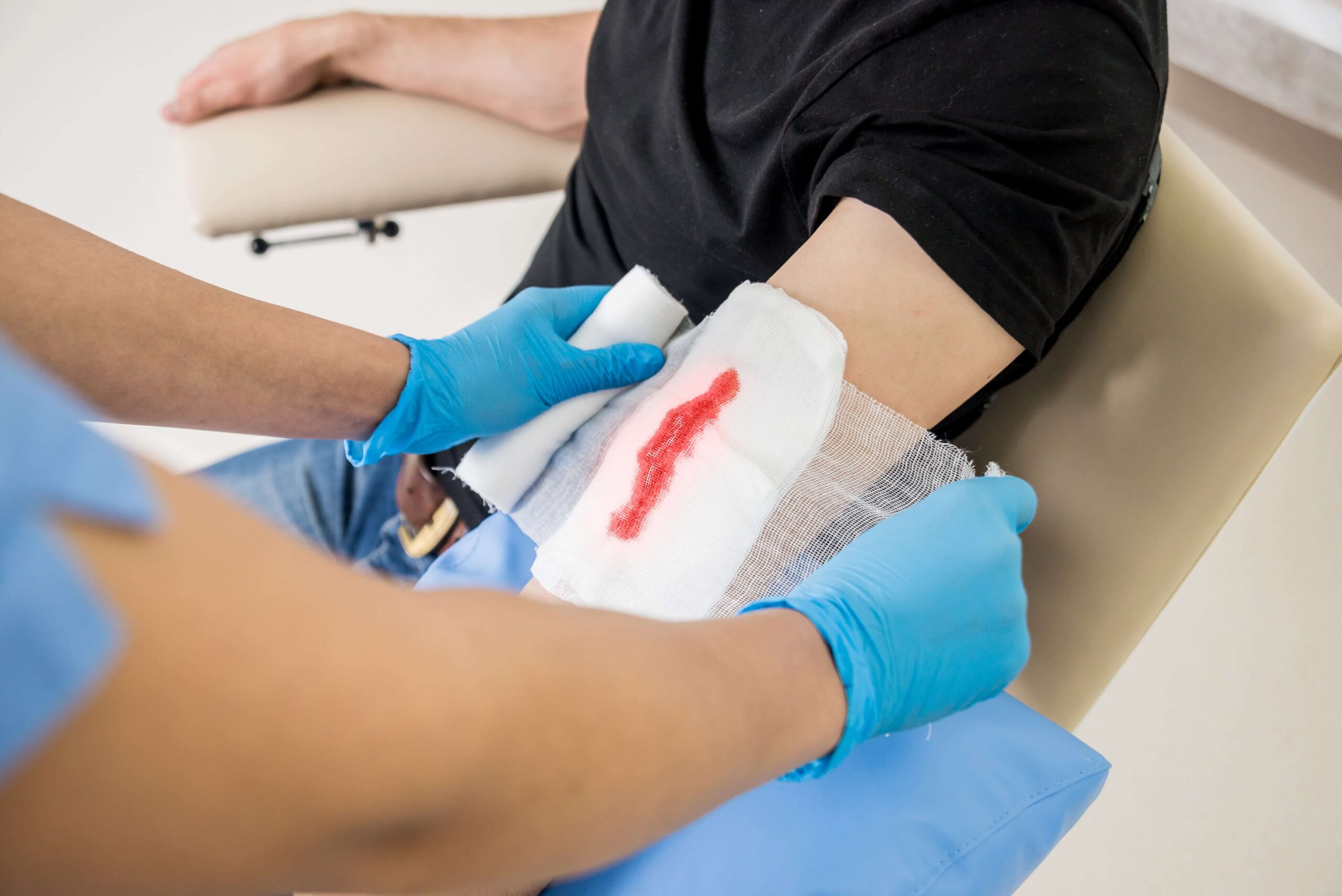
If you have suffered a minor wound and it’s bleeding the first thing to do is stop the flow of blood. Use a clean cloth or bandage to apply gentle pressure on the wound. If it’s on a limb, you can elevate it so gravity slows blood flow as well. If there is a lot of bleeding and/or it lasts longer than 20 minutes, seek immediate care from a wound care specialist.

Depending on the type of traumatic wound, your specialist may utilize different approaches. For example:

A tetanus shot is administered for most traumatic wounds to avoid tetanus infection.

Additional Tips for Caring For Traumatic Wounds

As discussed above, severe traumatic wounds should be diagnosed and treated by a trained wound specialist. However, for more minor injuries there are a few additional steps you can take to promote healing (depending on the cause):

Because traumatic wounds significantly damage skin and soft tissues, it’s always best to try to avoid them. Wear well-fitted and comfortable shoes to avoid exposure to hazardous objects, and be extra careful when working with sharp equipment like scissors, knives, and complex machinery. Adhere to safety protocols and use gloves and eyewear whenever required.

That said, accidents do happen and while some minor traumatic wounds can be taken care of at home as the body works to heal them, more severe injuries take longer to heal and may require the help of a wound care specialist.

If you or someone you know has suffered a traumatic injury the specialized team at West Coast Wound Center is here to help. Book an appointment at our wound care center in Fresno and let us put you on the path to recovery.

[/fusion_text][/fusion_builder_column][fusion_builder_column type=”1_3″ layout=”1_3″ spacing=”” center_content=”no” link=”” target=”_self” min_height=”” hide_on_mobile=”small-visibility,medium-visibility,large-visibility” class=”” id=”” hover_type=”none” border_color=”” border_style=”solid” border_position=”all” border_radius=”” box_shadow=”no” dimension_box_shadow=”” box_shadow_blur=”0″ box_shadow_spread=”0″ box_shadow_color=”” box_shadow_style=”” padding_top=”” padding_right=”” padding_bottom=”” padding_left=”” margin_top=”” margin_bottom=”” background_type=”single” gradient_start_color=”” gradient_end_color=”” gradient_start_position=”0″ gradient_end_position=”100″ gradient_type=”linear” radial_direction=”center center” linear_angle=”180″ background_color=”” background_image=”” background_image_id=”” background_position=”left top” background_repeat=”no-repeat” background_blend_mode=”none” animation_type=”” animation_direction=”left” animation_speed=”0.3″ animation_offset=”” filter_type=”regular” filter_hue=”0″ filter_saturation=”100″ filter_brightness=”100″ filter_contrast=”100″ filter_invert=”0″ filter_sepia=”0″ filter_opacity=”100″ filter_blur=”0″ filter_hue_hover=”0″ filter_saturation_hover=”100″ filter_brightness_hover=”100″ filter_contrast_hover=”100″ filter_invert_hover=”0″ filter_sepia_hover=”0″ filter_opacity_hover=”100″ filter_blur_hover=”0″ last=”true” border_sizes_top=”0″ border_sizes_bottom=”0″ border_sizes_left=”0″ border_sizes_right=”0″ first=”false” spacing_left=”1.3333333333333333%”][fusion_widget_area name=”avada-blog-sidebar” title_size=”” title_color=”” background_color=”” padding_top=”” padding_right=”” padding_bottom=”” padding_left=”” hide_on_mobile=”small-visibility,medium-visibility,large-visibility” class=”” id=”” /][/fusion_builder_column][/fusion_builder_row][/fusion_builder_container]