When you begin treatment with us, one of the first questions you may have is whether your wound healing is truly progressing. While dramatic changes can be reassuring, many positive developments are subtle. At West Coast Wound & Skin Care, we guide patients through every phase of recovery, whether they visit our clinics or receive mobile services at home.
Knowing what to look for can give you confidence that your body is responding well to care and that your treatment plan is on the right track.

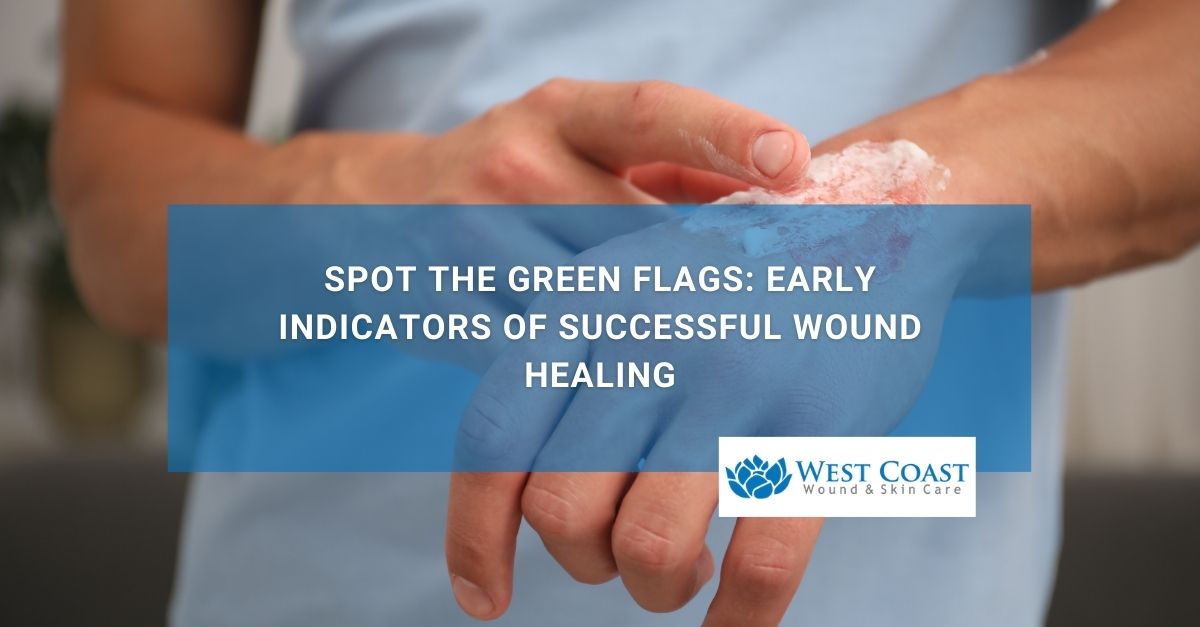
One of the most reliable indicators that treatment is working is a steady decrease in the wound’s dimensions. Even small reductions matter.
You might not see dramatic closure overnight. Instead, improvement often appears as:
Clinical research shows that measurable size reduction within the first few weeks strongly predicts positive outcomes. We can carefully track these changes to ensure consistent forward movement.
If progress slows, we adjust dressings or therapies promptly to keep the process on course.
Color shifts can reveal a great deal about tissue health. Many patients expect redness to disappear immediately, but some redness is actually a positive sign.
Healthy tissue often appears:
These transitions suggest effective healing and active tissue repair. We can monitor these visual cues closely, ensuring that new growth remains stable and well-supported.
When patients notice more uniform coloration, it typically means circulation is adequate and the body is responding to treatment.
Moisture management is critical. Too much drainage can delay recovery, while too little can dry out new tissue.
A balanced wound environment may show:
Maintaining optimal moisture supports wound healing by encouraging cell migration and reducing breakdown. Through carefully selected dressings and monitoring, we create an environment that promotes consistent improvement without excess fluid accumulation.
Pain often lessens gradually as tissues repair. A noticeable reduction in discomfort can be a reassuring green flag.
You may observe:
As inflammation decreases and healthy tissue strengthens, healing tends to progress more smoothly. We regularly assess pain levels to confirm that healing is advancing without hidden complications.
If discomfort persists or increases, we evaluate promptly to rule out infection or pressure-related concerns.
Re-epithelialization, or new skin formation, is a major milestone.
Look for:
These delicate layers signal active healing. Because new skin can be fragile, protecting it is essential. If necessary our dermatology care services address surrounding skin conditions that could interfere with this process, ensuring the area remains resilient.
The tissue around a wound plays a significant role in recovery. Healthy surrounding skin indicates that treatment is balanced and protective.
Encouraging changes include:
By preserving nearby skin integrity, we support sustained wound healing. This is particularly vital for patients with diabetes or vascular conditions, where fragile skin can complicate progress.
Better blood flow often leads to stronger tissue repair. While circulation changes may not be visible, they influence overall outcomes.
Patients sometimes notice:
Healthy circulation delivers oxygen and nutrients essential for wound healing.
As a wound stabilizes, the need for frequent dressing replacements often decreases.
When treatment is effective:
This shift is another encouraging sign of wound healing. Our holistic wound care approach considers not only the wound itself but also comfort, mobility, and skin protection.
Healing is not limited to the surface. Your general health can reflect internal progress.
Many patients report:
These factors contribute to stronger healing responses. Proper nutrition and hydration play key roles, and we provide guidance on supporting your body’s natural repair mechanisms between visits.
Recognizing green flags is only part of the equation. Maintaining momentum requires consistent care and informed habits.
Avoid unnecessary pressure or friction. Use recommended offloading techniques if directed by our team. Keeping weight off vulnerable areas helps sustain healing gains.
Timely dressing changes reduce contamination risk. If you receive mobile wound services, we demonstrate proper techniques and remain available to address concerns.
Gentle movement, when medically appropriate, encourages blood flow. Elevating limbs as directed can also minimize swelling.
Protein, vitamins, and hydration are essential building blocks for wound healing. We encourage patients to follow dietary guidance that aligns with their health profile.
Even when progress is steady, stay alert for changes such as increased drainage, new odor, or expanding redness. Early communication allows us to adjust treatment promptly.
Whether you visit one of our advanced wound care centers or receive attention at home, our services are designed to adapt to your needs. Consistency is key to healing success, and we strive to provide seamless support.
In our centers, patients benefit from:
These structured visits allow us to track measurable improvements and refine care plans efficiently.

For individuals with mobility challenges or busy schedules, our mobile wound services bring professional treatment directly to you. This continuity supports healing without the stress of travel.
Healing is rarely a solo effort. Our wound care specialist team works together to assess progress from multiple angles. By combining clinical expertise with attentive follow-up, we help ensure that every positive development builds on the last.
We evaluate tissue response, manage dressings, and incorporate dermatology care when necessary to protect skin integrity. This integrated approach strengthens healing outcomes and minimizes recurrence risks.
Long-term success often begins with small victories. Gradual size reduction, stable skin, balanced moisture, and decreasing discomfort all indicate forward momentum. Recognizing these green flags empowers you to stay engaged in your treatment plan.
Continued adherence to care instructions, routine follow-up visits, and open communication with our team make a measurable difference. By addressing both local wound conditions and overall wellness, we support durable wound healing results that enhance quality of life.
When you see these early positive indicators, you can feel reassured that your treatment is moving in the right direction. Through attentive monitoring, clinic-based services, and mobile care options, we remain committed to guiding each patient toward steady and lasting recovery.
When federal healthcare policy shifts suddenly, the impact can ripple through clinics, care providers, patients, and families alike. Recently, the Centers for Medicare & Medicaid Services (CMS) stepped in to halt a set of coverage changes that had been months in the making. For providers and patients who rely on wound care, the decision created a mix of relief as well as questions about what’s next.
On December 24, 2025, CMS announced that Medicare Administrative Contractors would withdraw the Final Local Coverage Determinations tied to skin substitute grafts and cellular- and tissue-based products. These policies were set to take effect on January 1, 2026, yet they were pulled before implementation. CMS outlined the decision in an official fact sheet, which can be reviewed directly on the CMS website.
For patients with complex or chronic wounds, this move preserved access to certain therapies that are often critical to healing.

The Final LCDs in question would have significantly altered coverage criteria for skin substitute grafts and related products under Medicare Part B. By withdrawing them before January 1, CMS prevented immediate changes that could have restricted or delayed care.
Had the LCDs taken effect, providers would have faced new documentation thresholds and narrower indications for certain treatments. While oversight and evidence-based criteria are essential, abrupt changes can disrupt established care plans.
Potential impacts would have included:
The withdrawal created a pause rather than a permanent resolution, but it avoided sudden disruption as the new year began.
CMS stated that it would continue reviewing the policies and stakeholder feedback before moving forward. This potentially signals recognition of the complexity involved in caring for patients with non-healing or high-risk wounds.
National medical associations, clinicians, and patient advocates had raised concerns about access, consistency across regions, and unintended consequences.
It is important to note that the withdrawal does not mean the topic is closed. CMS may revisit revised LCDs in the future. For now, however, existing coverage frameworks remain in place, allowing providers to continue offering therapies that align with current standards of care.
For our team, this reinforces the need to stay proactive rather than reactive, keeping our patients informed while monitoring regulatory developments closely.
The withdrawal of the LCDs means that patients already receiving certain skin substitute therapies do not face abrupt changes at the start of 2026. Continuity matters, especially when healing depends on a sequence of treatments rather than a single intervention.
Patients and caregivers benefit from:
This stability supports both physical healing and emotional well-being.
At West Coast Wound & Skin Care, we help our clients navigate the healthcare landscape as part of our commitment to comprehensive care. Regulatory shifts are not just policy issues; they affect scheduling, documentation, and coordination across care settings.
Our approach centers on clear communication and adaptability. When coverage rules evolve, we work within current guidelines while preparing for possible updates.
Our support includes:
Our wound care specialist team collaborates closely with referring providers and caregivers to reduce confusion and maintain momentum toward healing.
Skin substitutes and related products are often used when standard treatments alone are not sufficient. They can help stimulate tissue regeneration, protect the wound environment, and promote closure when healing has stalled.
Each wound is different, and treatment decisions should reflect that reality. The recent CMS action underscores the need for policies that balance clinical evidence with real-world patient needs.
In our advanced wound care centers, we evaluate each case individually, considering factors such as wound type, patient health status, and response to prior treatments. This measured approach supports effective care while respecting payer requirements.

One of the strengths of our services is flexibility. We offer mobile wound care services for patients who cannot easily travel, alongside clinic locations in specific regions for those who benefit from in-person visits.
By combining mobile and clinic-based models, we reduce barriers to care and help ensure consistency, regardless of setting.
Benefits of this approach include:
This integrated model remains especially valuable as coverage discussions continue at the national level.
For individuals managing chronic or complex wounds, policy news can add another layer of stress. While CMS reviews next steps, there are practical actions patients and families can take.
You can’t control everything. But, there are actions you can take. For example, staying engaged and informed can make a meaningful difference. Beyond that, we encourage patients to:
Family members and caregivers play a key role by helping with daily care, transportation when needed, and communication with care teams.
Our services extend beyond direct wound treatment. We recognize that skin health, circulation, nutrition, and overall wellness all influence healing outcomes.
Within our scope of services, we incorporate dermatology care when skin conditions affect healing and support holistic wound care strategies that address the whole person rather than just the wound.
This integrated perspective allows us to adapt as policies evolve while staying focused on patient-centered outcomes.
The CMS withdrawal highlights how quickly the regulatory environment can change. For providers, patients, and families, preparation and communication are essential.
We continue to monitor CMS updates and trusted clinical guidance so we can respond promptly if revised LCDs emerge. By doing so, we aim to protect access, minimize disruption, and maintain high standards across all wound care services we provide.
As CMS evaluates its next steps, the current pause offers breathing room for everyone involved. It allows providers to keep delivering evidence-based treatments and gives patients confidence that their care plans remain intact for now.
For those in need of wound care, this moment reinforces the value of partnering with a care team that stays informed, adaptable, and focused on long-term healing. Our role is to guide you through both clinical and coverage complexities, ensuring that care decisions remain centered on your health and quality of life.
Accidents, cuts, or falls happen when we least expect them. When a wound doesn’t seem to be improving, becomes painful, or begins showing unusual symptoms, professional care may be essential. At West Coast Wound Care, we offer both in-clinic and mobile wound care services to help patients recover safely and effectively. Knowing when it’s time to seek professional wound healing can make a significant difference in how quickly you recover and how well your body responds to treatment.

Minor cuts and scrapes can typically be managed at home with proper cleaning, bandaging, and over-the-counter antibiotic ointments. However, certain injuries go beyond what self-care can handle. A wound may need professional attention if it does not start healing within a reasonable timeframe or begins showing signs of infection.
The care of a professional wound specialist becomes necessary when a wound develops swelling, redness, or warmth around the area. These symptoms may indicate that bacteria have entered the wound and are multiplying under the skin.
Another sign is a foul odor or discharge, especially if the drainage is thick, yellow, or green. Persistent pain, even after cleaning the wound, may also suggest that the injury has affected deeper tissue layers.
When any of these symptoms appear, it’s a strong indication that home remedies may not be enough. Our clinical and mobile wound care services are designed to treat wounds of all types and stages, helping to prevent infections and complications before they worsen.
Some wounds are immediately recognizable as serious—deep cuts that expose fat, muscle, or bone require medical attention right away. Others, however, may seem minor at first but progress into more severe problems over time.
A simple wound usually stops bleeding within minutes and begins to scab within a day or two. It heals steadily over the course of one to two weeks. A complex wound, on the other hand, may bleed continuously, reopen easily, or fail to close altogether.
This type of wound may also result from an underlying condition such as diabetes, vascular disease, or compromised immunity, all of which slow the healing process.
In these situations, a wound care specialist can evaluate the cause, identify potential risks, and develop a treatment plan to stimulate proper recovery. By using advanced techniques and therapies, professional care can help restart the body’s natural healing cycle and protect against chronic infection.
A chronic wound is one that doesn’t heal in the expected timeframe. These wounds may linger for months or even years without the right intervention. Chronic wounds often stem from conditions that affect blood flow, like diabetes or venous insufficiency.
If you notice that a wound seems stuck in the same stage of healing—whether that’s persistent scabbing, recurring drainage, or unchanging pain—it could indicate a chronic problem. Other signs include discoloration of the surrounding skin, recurring foul odor, and excessive moisture that prevents proper scabbing.
Our wound care specialists have extensive experience identifying and treating chronic wounds. We assess the root cause of each case, using both clinical evaluation and modern wound care techniques to help your body recover more efficiently.
The first few minutes after sustaining an injury can significantly impact how well it heals. Immediate and careful response can help prevent infection and limit tissue damage.
Here are a few steps to take right away:
If pain, swelling, or drainage develops—or if the wound doesn’t begin to heal after a week—it may be time to reach out for professional care.
Whether your wound is a surgical incision that isn’t closing properly or a diabetic ulcer that refuses to heal, our team provides customized treatments designed to meet each patient’s specific needs.
Our wound care clinics are equipped with the latest treatment methods to manage both acute and chronic wounds. For patients who have difficulty traveling or who require ongoing monitoring, our mobile wound care service brings expert care directly to your location. This allows for consistent, personalized attention without disrupting your daily routine.
Professional wound healing involves much more than dressing changes—it includes monitoring for infection, promoting circulation, and supporting your body’s natural healing functions. We work closely with patients to create a plan that incorporates all these elements while addressing underlying medical factors that may be slowing recovery.
One of the biggest barriers to recovery is infection. Even a small amount of bacteria can disrupt the natural healing process and lead to long-term complications. Early detection is crucial.
A wound may be infected if it starts to emit a foul smell, becomes increasingly painful, or begins to drain pus. In severe cases, fever and fatigue can develop as the body tries to fight the infection systemically. Infections can spread quickly, especially in patients with conditions such as diabetes or poor circulation, and may lead to deeper tissue damage or sepsis if left untreated.
When infection is present, our wound care specialists can provide advanced treatment to control bacteria and reduce inflammation. This may include cleansing, specialized dressings, or other therapies designed to remove infected tissue and restore a clean environment for healing.
Not all serious wounds are visibly alarming. Sometimes, the warning signs are subtle, such as persistent soreness or swelling that refuses to fade. Continuous discomfort can signal that the underlying tissue is not repairing properly or that inflammation has become chronic.
Persistent swelling may restrict blood flow and oxygen delivery, both of which are essential for recovery. Over time, this can cause further tissue breakdown. If you find that a wound continues to ache long after the initial injury, it’s best to have it evaluated.
We can determine whether there’s an underlying issue preventing proper wound healing and recommend treatment to promote recovery.
Ignoring a wound can lead to much larger health problems than most people realize. A small untreated ulcer, for instance, can gradually deepen and expose underlying bone or muscle. In diabetic patients, this can lead to severe infections or even amputation in extreme cases.
Untreated wounds also risk scarring, deformity, and long-term discomfort. They can interfere with mobility, daily activities, and overall quality of life. By seeking professional wound care early, you not only protect the injured area but also safeguard your overall health.
At West Coast Wound Care, we’re dedicated to providing the best possible care so that each patient has the opportunity to heal fully and return to comfort and activity as quickly as possible.
When in doubt, it’s always safer to have a medical professional evaluate your wound. If a wound shows signs of infection, remains painful, doesn’t close after several weeks, or becomes larger instead of smaller, it’s time to contact us.
Our specialists at West Coast Wound Care provide effective, compassionate treatment designed to restore skin integrity and promote complete healing. Whether you visit one of our clinics or prefer care from the comfort of your home through our mobile wound care services, our team is ready to help.
If you’re unsure about the severity of your injury or think you might benefit from professional wound healing, reach out to us today. We’ll assess your condition, create a personalized treatment plan, and help you take the right steps toward recovery.