Often, rest is good for advanced wound treatment. However, you can’t stay motionless forever. Managing a serious or chronic wound requires a delicate balance between rest and daily life. Proper care often involves minimizing unnecessary movement to protect the delicate, regenerating tissues.
Movement, while a natural part of life, can introduce stress, pressure, and friction to a wound site, potentially delaying recovery or interfering with effective advanced wound treatment. At West Coast Wound Care, we prioritize healing by providing expert guidance on how to navigate daily activities safely. When movement is unavoidable, knowing the right techniques to protect your wound can contribute greatly to successful recovery.
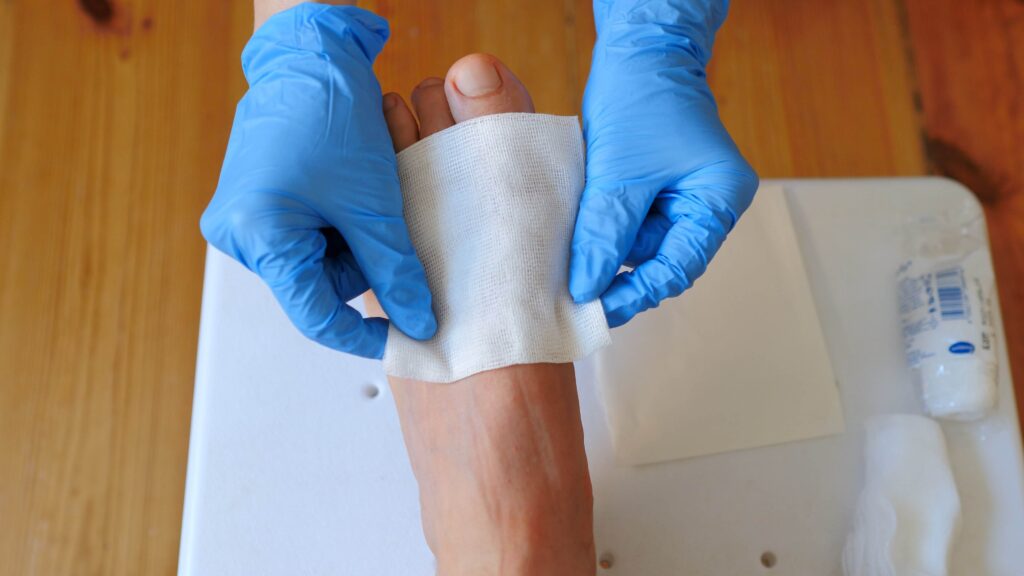
When your body sustains a wound, it initiates a sophisticated process to repair the damage. This involves several phases, from stopping the bleeding to forming new skin. During the crucial stages, new cells, blood vessels, and collagen fibers are being built. This new tissue is extremely fragile.
Any excessive movement, stretching, or pressure can tear these delicate structures, essentially forcing the body to restart the repair process. This is why a primary goal in managing a significant wound is to create a stable, protected environment.
Limiting motion reduces the physical stress on the wound area, allowing the body’s natural healing mechanisms to work efficiently and without interruption. Constant disruption (or too much disruption) can worsen your condition, leading to a much longer and more complicated recovery journey.
Friction from clothing or surfaces can irritate the wound and surrounding skin, causing inflammation and pain. It can also dislodge dressings, exposing the wound to bacteria and increasing the risk of infection.
For wounds located on or near joints, like a knee or elbow, repeated bending and straightening can pull at the wound edges, preventing them from closing properly. In more severe cases, abrupt or forceful movements can lead to dehiscence, a serious complication where a wound re-opens.
Even the simplest daily tasks require careful planning when you are healing. Moving from a bed or chair to the bathroom is a frequent necessity that can pose a risk to your wound if not done correctly. The key is to move deliberately and with support.
Before you get up, ensure your path is clear of any obstacles. If your wound is on a lower limb, avoid putting your full weight on it suddenly. Use assistive devices like walkers or crutches as recommended to distribute your weight and maintain stability.
When sitting down or standing up, use your arms to support your body, lowering yourself gently rather than dropping into a seated position.
This minimizes jarring motions that can impact the wound. Also, be mindful of dressings. Ensure they are securely in place before you move and check them afterward to make sure they haven’t shifted or become soiled. Taking these extra moments to move with intention provides critical protection for your wound and supports advanced wound treatment outcomes.
Traveling in a car, whether as a driver or a passenger, introduces vibrations, sudden stops, and positional challenges that can affect a wound. Preparation is crucial for protecting the injury during transit.
If possible, choose a seat that allows you to position your body in a way that avoids direct pressure on the wound. For example, if the wound is on your hip or buttocks, using a specialized cushion can help redistribute pressure.
Ensure your dressing is clean, dry, and securely fastened before you leave. For longer trips, bring extra dressing supplies in case a change is needed. When positioning a seatbelt, make sure it does not cross directly over the wound site.
If it does, a small, soft pad can be placed between the belt and the dressing to prevent friction and pressure. As a passenger, try to elevate the wounded limb if possible to reduce swelling. These simple strategies make car travel safer and more comfortable, supporting your ongoing advanced wound treatment.
While rest is important, complete immobility can lead to other health problems like muscle atrophy and poor circulation. Therefore, incorporating safe, light-to-moderate exercise can be beneficial, but it must be done with caution and professional guidance. The goal is to stay active without stressing the wound.
Activities like gentle stretching of unaffected limbs, short walks on flat surfaces (if approved by your provider), and seated exercises can help maintain muscle tone and promote blood flow, which is vital for healing. The key is to avoid any movement that pulls on, puts pressure on, or directly impacts the wound area.
For instance, if your wound is on your leg, upper body exercises using light weights might be appropriate. Always listen to your body; if you feel any pain or pulling at the wound site, stop the activity immediately.
Our wound care specialist team can develop an exercise plan that supports your overall health without compromising your wound treatment.
We recognize that for many patients, especially those with mobility limitations or severe wounds, traveling to a clinic for appointments is not just an inconvenience—it’s a significant barrier to care. The stress and physical strain of getting ready, traveling, and waiting for an appointment can jeopardize the healing process. This is precisely why we offer a comprehensive mobile wound care service for particular locations.
Our dedicated team brings the clinic to you. We provide the same high level of care, advanced treatments, and expert consultation in the comfort and safety of your own home. This eliminates the risks associated with travel and allows you to remain in a restful environment, which is optimal for healing.
Our in-home service ensures you receive consistent, uninterrupted care, which is critical for managing chronic and complex wounds. This approach makes effective wound treatment more accessible and less disruptive to your life.
Our mission is to remove obstacles between you and a full recovery. By bringing expert care directly to your doorstep, we help you avoid the challenges of movement and transportation. This allows you to focus all your energy on healing. You can rest assured that you are receiving the best possible care from a dedicated team without having to leave your home.
If you or a loved one is managing a wound and finding it difficult to travel for appointments, let us help. Our mobile wound care service is designed for your safety, comfort, and convenience. Reach out to our team today to schedule a free appointment.
At West Coast Wound Care, we are thrilled to share that we’ve recently launched wound treatment in the Boston area, bringing our full suite of wound healing services to New England. We now serve patients not only through our clinics but also via mobile options.
As a result, we can bring cutting-edge wound healing technology, evidence-based medicine, and compassionate care to more people. With multiple options on hand, we believe in making wound treatment as accessible as possible.

Since establishing operations in Boston, we have set up wound care clinics serving greater Boston, including both downtown and suburban locations. In addition to clinic-based settings, our mobile wound care capabilities now extend into Boston neighborhoods, hospitals, long-term care facilities, and patients’ homes.
Our goal is to ensure that those with limited ability to travel still receive top-quality treatment from a wound care specialist, tailored to their individual situations.
Following this launch, we are looking ahead to expanding further into neighboring New England states. We intend to grow our footprint into Massachusetts’ outer regions in addition to New Hampshire, Vermont, Maine, Connecticut, and Rhode Island.
Our strategy includes forging partnerships with local clinics, healthcare systems, and home care providers to bring our model of care to more communities.
At West Coast Wound Care, our services cover the full spectrum of modern wound healing so that patients at every stage of recovery can find care that matches their needs. Every wound is different, and we offer a personalized plan designed to promote faster healing, reduce pain, and restore function.
We provide advanced diagnostic evaluations, which means that our clinicians don’t just look at the wound itself but also at the underlying causes. This can involve vascular assessments, laboratory tests, and imaging to better understand circulation, infection risk, and other factors slowing down healing. Because many wounds stem from conditions such as diabetes, venous disease, or immobility, our diagnostic approach helps us treat the whole patient rather than just the wound.
Our surgical debridement services are performed by highly trained providers who carefully remove non-viable or infected tissue. This process reduces bacteria, decreases inflammation, and creates a healthy environment for new tissue growth. In our clinics, we can do this with precision instruments and local anesthetics to minimize discomfort, while our mobile teams bring the same level of expertise directly to the bedside.
When wounds are especially large or resistant to healing, we offer skin grafting procedures. This may include autografts (from the patient’s own skin) or biologic dressings that provide a scaffold for new tissue growth. Our specialists match the graft type to the wound’s specific needs and monitor its integration closely.
We also specialize in wound vacuum therapy (negative pressure wound therapy). This advanced treatment involves placing a sealed dressing over the wound and applying gentle suction. It helps remove excess fluid, improves blood flow, and encourages tissue granulation, dramatically speeding up healing times for certain types of wounds.
Compression therapy is another cornerstone of our practice. For patients with venous insufficiency or chronic swelling, compression bandages or garments can be critical to controlling edema and improving circulation. We not only apply these treatments but educate patients and caregivers on their proper use, which is essential for success.
Our team also performs biopsies when a wound appears atypical or does not respond to standard treatments. This allows us to rule out underlying conditions such as malignancy, vasculitis, or rare infections and adjust care accordingly.
Finally, our telemedicine support and virtual follow-ups extend our care beyond clinic walls. Patients recovering at home can send images, update our clinicians on progress, and receive prompt guidance, reducing the need for travel and ensuring continuity of care.
We are more than a group of clinicians; we are a coordinated team of physicians, nurses, and allied health professionals who share a passion for helping people heal. Every member of our staff has specialized training in wound assessment and advanced interventions. This ensures that whether you come into one of our clinics or receive care at home, you’re getting the same high standard of expertise.
Our approach begins with listening. We take time to understand not only the wound itself but also your medical history, daily activities, support systems, and goals. From there, we create an individualized care plan that fits your life. For instance, a patient with a diabetic foot ulcer who lives alone may need more frequent visits and education about self-care, while someone recovering from surgery might need intensive therapy initially and then transition to virtual check-ins.
We coordinate closely with primary care providers, surgeons, podiatrists, and home health nurses. By sharing records and updates, we reduce duplication of efforts and ensure that everyone involved in your care is on the same page. This team-based model lowers complication rates and improves patient satisfaction.
Prevention is also central to how we care. We work with patients to identify risk factors for recurrence — from footwear choices to nutritional deficiencies to mobility challenges — and develop strategies to keep wounds from coming back. Our staff educates patients and caregivers on dressing changes, offloading, and lifestyle adjustments to give healing the best possible chance.
Because navigating insurance can be daunting, our administrative team helps patients understand their coverage and out-of-pocket costs before treatment starts. We accept Medicare and many other plans, which makes our services accessible to a broad range of patients in the New England region.
When you select West Coast Wound Care for your wound healing needs, you’re choosing a partner that combines convenience, expertise, and compassion. The benefits of working with us go beyond the procedures themselves:
In New England specifically, our expansion means patients no longer have to wait for a referral to a distant wound center. By opening clinics and deploying mobile teams across Massachusetts and beyond, we’re reducing wait times and making specialized care available closer to home.
This local presence also allows us to develop relationships with area hospitals, rehabilitation centers, and home health agencies, streamlining the patient experience even further.
As we look to expand beyond Boston, we are exploring service area growth in:
Each new region will be accompanied by clinic locations and mobile service offerings, allowing us to adapt to the needs of urban, suburban, and rural populations alike.
When you need wound treatment from experts who combine clinic-based care with bedside solutions, West Coast Wound Care is here to serve. If you’re in Boston or surrounding New England states, please contact us today to make an appointment.