[fusion_builder_container hundred_percent=”no” equal_height_columns=”no” menu_anchor=”” hide_on_mobile=”small-visibility,medium-visibility,large-visibility” class=”” id=”” background_color=”” background_image=”” background_position=”center center” background_repeat=”no-repeat” fade=”no” background_parallax=”none” parallax_speed=”0.3″ video_mp4=”” video_webm=”” video_ogv=”” video_url=”” video_aspect_ratio=”16:9″ video_loop=”yes” video_mute=”yes” overlay_color=”” video_preview_image=”” border_color=”” border_style=”solid” padding_top=”” padding_bottom=”” padding_left=”” padding_right=”” type=”legacy” admin_toggled=”no”][fusion_builder_row][fusion_builder_column type=”2_3″ layout=”1_1″ background_position=”left top” background_color=”” border_color=”” border_style=”solid” border_position=”all” spacing=”yes” background_image=”” background_repeat=”no-repeat” padding_top=”” padding_right=”” padding_bottom=”” padding_left=”” margin_top=”0px” margin_bottom=”0px” class=”” id=”” animation_type=”” animation_speed=”0.3″ animation_direction=”left” hide_on_mobile=”small-visibility,medium-visibility,large-visibility” center_content=”no” last=”false” min_height=”” hover_type=”none” link=”” border_sizes_top=”” border_sizes_bottom=”” border_sizes_left=”” border_sizes_right=”” first=”true” spacing_right=”2.6666666666666665%”][fusion_text columns=”” column_min_width=”” column_spacing=”” rule_style=”default” rule_size=”” rule_color=”” content_alignment_medium=”” content_alignment_small=”” content_alignment=”” hide_on_mobile=”small-visibility,medium-visibility,large-visibility” sticky_display=”normal,sticky” class=”” id=”” margin_top=”” margin_right=”” margin_bottom=”” margin_left=”” font_size=”” fusion_font_family_text_font=”” fusion_font_variant_text_font=”” line_height=”” letter_spacing=”” text_color=”” animation_type=”” animation_direction=”left” animation_speed=”0.3″ animation_offset=””]

Arterial ulcers are a type of painful skin wound commonly found on the lower leg. These types of wounds generally don’t heal like other injuries because there is a lack of blood flow to the area; preventing much needed oxygen and nutrients from reaching the wound site. Even a small injury can develop into an ulcer without sufficient blood reaching it.

If left untreated, arterial ulcers can result in serious complications like infection, tissue necrosis, and in the worst-case scenario, amputation. Fortunately, with the help of wound specialists and proper wound care, arterial issues can be managed, treated, and in some cases even prevented.

What is an Arterial Ulcer?

arterial ulcer on a person’s footWhen an artery in your leg becomes blocked, poor blood circulation deprives leg tissue of oxygen and nutrients. As such, arterial ulcers are also often referred to as ischemic (restricted blood and oxygen flow) ulcers. If this continues, your skin and underlying tissue begin to die, creating an open wound – or an arterial ulcer (or arterial wound). This poor circulation also makes it difficult for red blood cells to carry the nutrients the wound needs, resulting in these types of wounds healing more slowly and increasing the risk of infection.

Causes of Arterial Ulcers

There are a number of reasons why arteries may be blocked resulting in arterial issues. Some of the most common causes of arterial blockage may include:

Comorbidities like sickle cell anemia and rheumatoid arthritis also enhance the risk of an arterial ulcer. Moreover, foot deformities and poor footwear can also hamper blood circulation in the leg, leading to ischemic ulcers in areas where there is pressure from exercising, walking, or wearing footwear.

Signs and Characteristics of an Arterial Ulcer

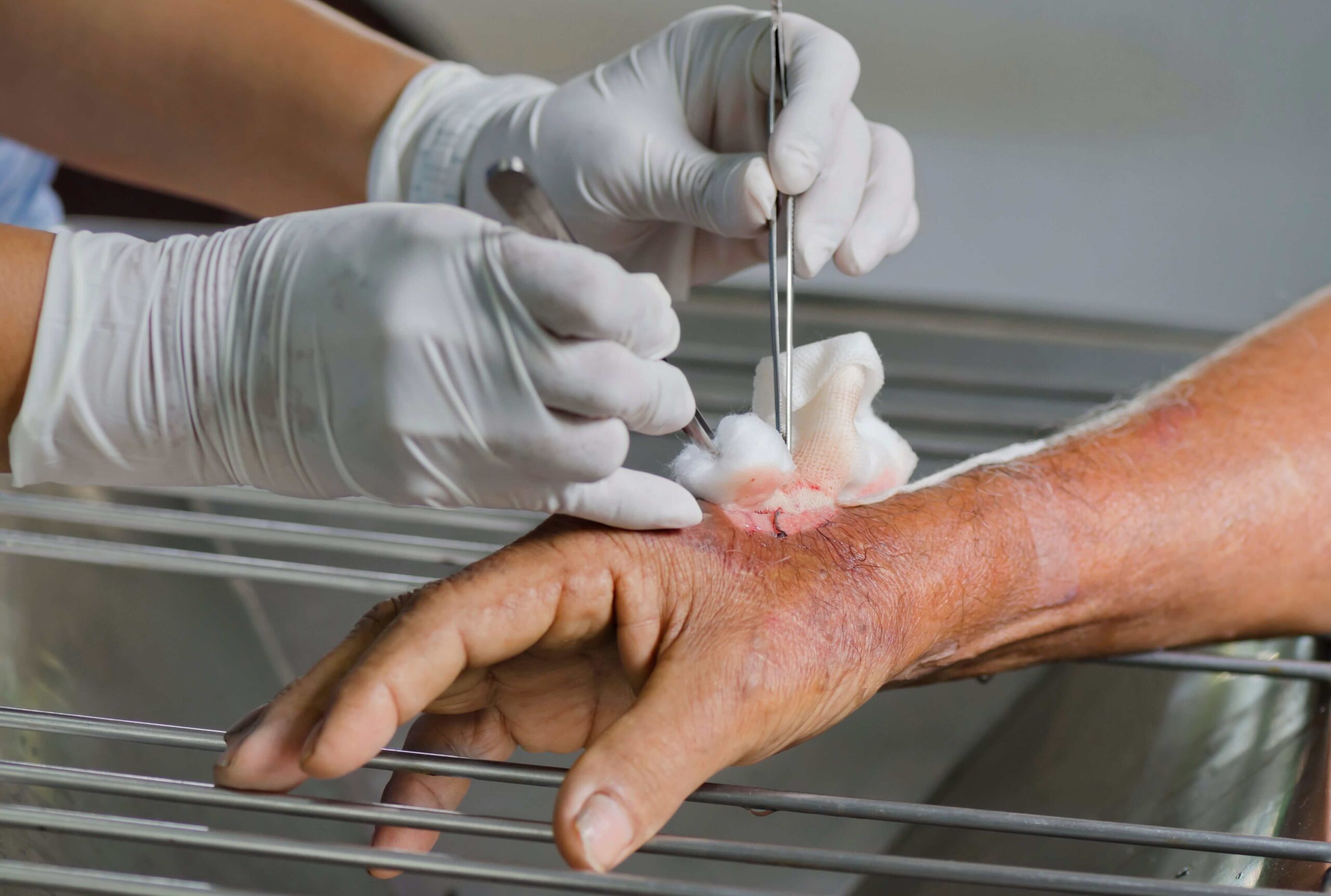
wound care specialist treating an arterial ulcerArterial ulcers often occur on the toes, heals, or bony parts of the foot. They are typically characterized by a ‘punched out’ appearance, such that their round shape has well-defined margins, but the sore is deeper in the skin than the healthy tissue that surrounds it. The base of the wound can be yellow, brown, grey, or black in color. The wound itself can be quite painful, with discomfort typically worsening at night or at rest.

Its symmetrical shape and distinctive color can be accompanied by other signs such as:

Unlike some other wounds, because low blood circulation is the primary cause of these types of ulcers they don’t bleed. The pulse in the affected area is also typically low and cool to the touch.

It’s common for affected patients to try to relieve pain by hanging their legs from the bed or sleeping in a chair. Additionally, you may experience cramping pains in the back of the legs and your glutes after exercise since your muscles are ill-equipped to meet the growing oxygen demands of the activity. In many cases, however, this pain will subside with rest.

Since the blood supply to this region is poor, white blood cells are in low supply. That means your body may have more difficulty warding off infections.

Some red flags to watch out for include fever (infection), discharge, numbness (nerve damage), and a foul odor. You should contact a wound care specialist or medical professional as soon as possible if you experience any of these symptoms; as delayed treatment can result in severe complications including amputation.

Arterial vs Venous Ulcers

Because arterial and venous ulcers both can occur on the lower extremities and share some characteristics, it can be difficult to tell them apart. That said, there are several key differences between both of these conditions such as:

If you would like to learn more about Venous ulcers and how they are treated we highly recommend this in-depth guide we put together on the subject.

Treatment For an Arterial Ulcer

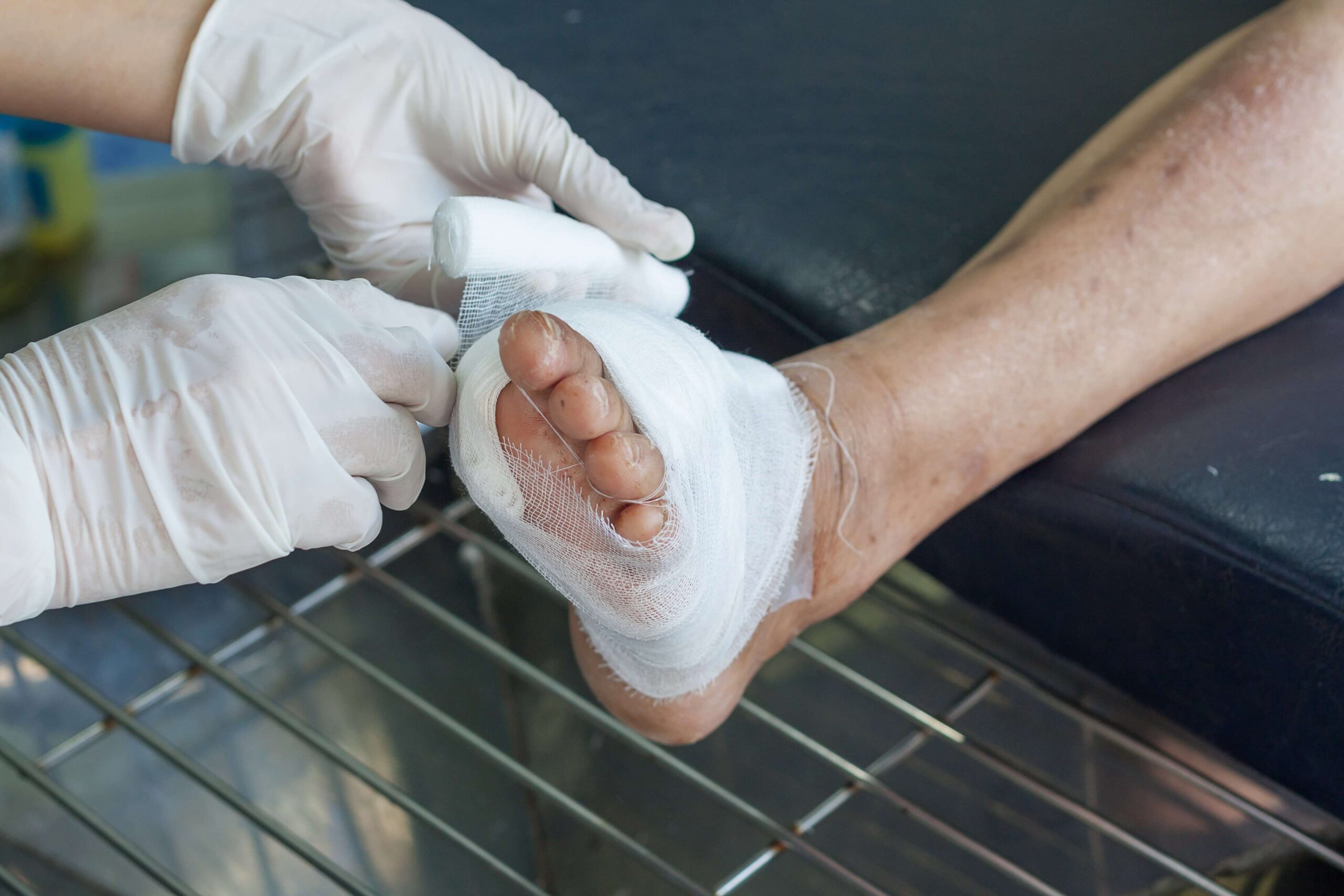
doctor dressing an arterial leg ulcerAlthough in some cases, the body can heal arterial wounds on its own, as we discussed earlier, because of poor circulation to the area the process may be slower. While the above symptoms are common among arterial ulcers, it’s important to consult a wound specialist for a proper diagnosis and treatment. Your specialist will begin with a thorough assessment to determine the potential of healing and the best course of treatment.

There are a number of tests healthcare professionals can use that indicate vascular compromise, such as capillary refill time and a Beurger test (where the patient lies flat and raises their leg 45 degrees above horizontal for 1 minute). Visiting a wound care center also allows your specialist to address any underlying causes; a crucial aspect of treating arterial ulcers.

Diabetes, arterial disease, and kidney diseases are a few risk factors of arterial disease, which is why just treating the ulcer itself might not be sufficient for full recovery. Restoring blood circulation to the affected area is the primary goal of treatment for arterial ulcers along with treating underlying causes, preventing infection, removing pressure on the affected limb, and keeping the wound dry and clean with dressings.

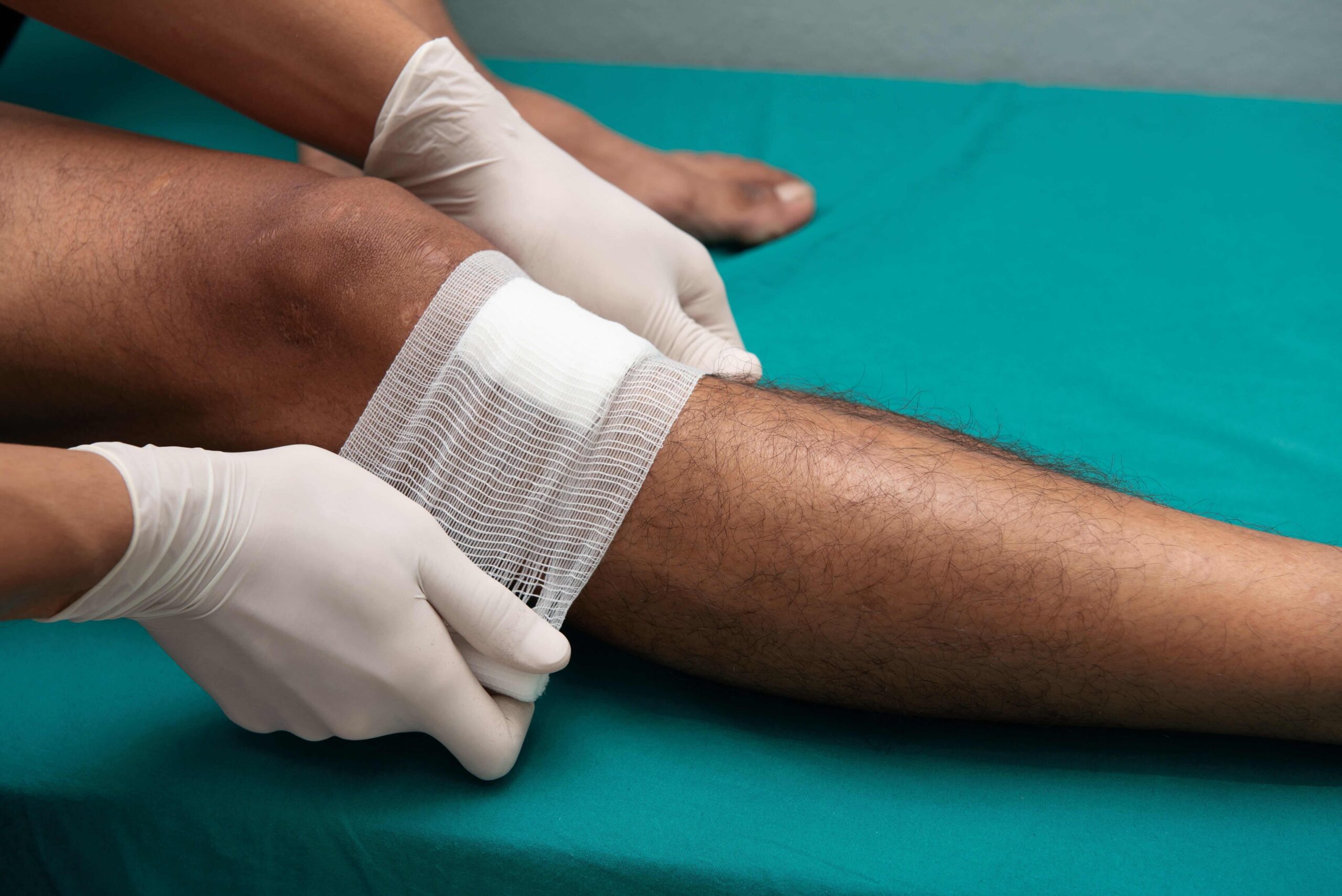
Pressure on the sore can also be relieved through special shoes and orthopedic devices. The wound is kept dry and clean with bandages and dressings, which must be regularly changed.

While some dressings reduce discharge, others serve as an optimal medium for healing. Your specialist can recommend specific wound dressings based on the nature of your arterial wound.

Because infection can lead to rapid deterioration of an arterial ulcer, antibiotics may also be prescribed if there are any indications of an infection.

Most importantly, blood circulation must be re-established. In some cases, surgical options, such as angioplasty (balloon to open up the affected artery) and bypass (setting up a new pathway for blood flow), may be utilized.

Your specialist may also outline specific lifestyle changes such as exercising regularly, taking note of your sodium intake, quitting smoking, and managing your cholesterol, blood pressure, and blood sugar by switching to a healthier diet. Not only can these changes aid in the healing process but can play a role in preventing arterial ulcers from coming back.

Additional Tips for Managing Arterial Ulcers

Whether you are at risk of developing an arterial ulcer or are looking to reduce potential complications there are a few other steps you can take to help:

Taking Care of Your Feet and Legs

Lifestyle Tips

Additionally, if you are recovering from an arterial ulcer at home your doctor may recommend:

Specialized Healing For Arterial Ulcers and Chronic Wounds

Arterial ulcers sound scary, but recovery is possible with proper wound care and management. While your wound specialist focuses on treating the underlying disease and reestablishing circulation, there is much you can do as well. Keeping the wound dry by changing the dressing, taking your prescribed medicines, wearing orthopedic shoes, and adopting a healthy lifestyle can be an invaluable defense against arterial ulcers.

If you or someone you care for is suffering from an arterial ulcer or is at risk of developing one; the specialized team at West Coast Wound Center is here to help.

Through our fully integrated wound and dermatology care and high-quality services, we heal arterial ulcers 25% quicker than other practices.

Our specialized wound care staff is equipped with the expertise to treat a full range of wound types and skin concerns. Book an appointment at our wound care center today and discover how we can restore your quality of life.

[/fusion_text][/fusion_builder_column][fusion_builder_column type=”1_3″ layout=”1_3″ spacing=”” center_content=”no” link=”” target=”_self” min_height=”” hide_on_mobile=”small-visibility,medium-visibility,large-visibility” class=”” id=”” hover_type=”none” border_color=”” border_style=”solid” border_position=”all” border_radius=”” box_shadow=”no” dimension_box_shadow=”” box_shadow_blur=”0″ box_shadow_spread=”0″ box_shadow_color=”” box_shadow_style=”” padding_top=”” padding_right=”” padding_bottom=”” padding_left=”” margin_top=”” margin_bottom=”” background_type=”single” gradient_start_color=”” gradient_end_color=”” gradient_start_position=”0″ gradient_end_position=”100″ gradient_type=”linear” radial_direction=”center center” linear_angle=”180″ background_color=”” background_image=”” background_image_id=”” background_position=”left top” background_repeat=”no-repeat” background_blend_mode=”none” animation_type=”” animation_direction=”left” animation_speed=”0.3″ animation_offset=”” filter_type=”regular” filter_hue=”0″ filter_saturation=”100″ filter_brightness=”100″ filter_contrast=”100″ filter_invert=”0″ filter_sepia=”0″ filter_opacity=”100″ filter_blur=”0″ filter_hue_hover=”0″ filter_saturation_hover=”100″ filter_brightness_hover=”100″ filter_contrast_hover=”100″ filter_invert_hover=”0″ filter_sepia_hover=”0″ filter_opacity_hover=”100″ filter_blur_hover=”0″ last=”true” border_sizes_top=”0″ border_sizes_bottom=”0″ border_sizes_left=”0″ border_sizes_right=”0″ first=”false” spacing_left=”1.3333333333333333%”][fusion_widget_area name=”avada-blog-sidebar” title_size=”” title_color=”” background_color=”” padding_top=”” padding_right=”” padding_bottom=”” padding_left=”” hide_on_mobile=”small-visibility,medium-visibility,large-visibility” class=”” id=”” /][/fusion_builder_column][/fusion_builder_row][/fusion_builder_container]

[fusion_builder_container hundred_percent=”no” equal_height_columns=”no” menu_anchor=”” hide_on_mobile=”small-visibility,medium-visibility,large-visibility” class=”” id=”” background_color=”” background_image=”” background_position=”center center” background_repeat=”no-repeat” fade=”no” background_parallax=”none” parallax_speed=”0.3″ video_mp4=”” video_webm=”” video_ogv=”” video_url=”” video_aspect_ratio=”16:9″ video_loop=”yes” video_mute=”yes” overlay_color=”” video_preview_image=”” border_color=”” border_style=”solid” padding_top=”” padding_bottom=”” padding_left=”” padding_right=”” type=”legacy” admin_toggled=”no”][fusion_builder_row][fusion_builder_column type=”2_3″ layout=”1_1″ background_position=”left top” background_color=”” border_color=”” border_style=”solid” border_position=”all” spacing=”yes” background_image=”” background_repeat=”no-repeat” padding_top=”” padding_right=”” padding_bottom=”” padding_left=”” margin_top=”0px” margin_bottom=”0px” class=”” id=”” animation_type=”” animation_speed=”0.3″ animation_direction=”left” hide_on_mobile=”small-visibility,medium-visibility,large-visibility” center_content=”no” last=”false” min_height=”” hover_type=”none” link=”” border_sizes_top=”” border_sizes_bottom=”” border_sizes_left=”” border_sizes_right=”” first=”true” spacing_right=”2.6666666666666665%”][fusion_text columns=”” column_min_width=”” column_spacing=”” rule_style=”default” rule_size=”” rule_color=”” content_alignment_medium=”” content_alignment_small=”” content_alignment=”” hide_on_mobile=”small-visibility,medium-visibility,large-visibility” sticky_display=”normal,sticky” class=”” id=”” margin_top=”” margin_right=”” margin_bottom=”” margin_left=”” font_size=”” fusion_font_family_text_font=”” fusion_font_variant_text_font=”” line_height=”” letter_spacing=”” text_color=”” animation_type=”” animation_direction=”left” animation_speed=”0.3″ animation_offset=””]

When it comes to minor wounds and scratches, the body can start healing within minutes as blood cells clump together to form a barrier in the skin. However, deeper or more serious wounds take more time and energy to heal.

Treating chronic wounds requires a multifaceted and holistic approach. While treatments such as wound debridement and preventing infection strategies are more widely known, evaluating and optimizing nutritional status should also be a part of a comprehensive treatment plan.

While not all wounds are the same, nutrition must be taken into account in the treatment of all types of wounds. But what happens when the body doesn’t receive the nutrition it needs? How does malnutrition impact the healing process? And what can you do to ensure you are giving your body what it needs to recover? This guide has everything you need to know.

Article Contents

Why is Nutrition Necessary for Wound Healing?

doctor giving nutritional meal to patientThere is a well-established link between nutrition and wound management. Nutrition can be essential throughout each stage of wound healing.

When a person is malnourished the body lacks sufficient nutrients to build, maintain and repair tissue, which can result in issues such as reduced fatty tissue, less resistant skin, oedema, and other potential complications that interfere with healing. Additionally, suboptimal nutrition can impair the healing process by interfering with the immune system, collagen synthesis as well as wound tensile strength.

During the wound healing process, the body works to replace the damaged tissue with new tissue. This response requires increased use of energy and specific nutrients. Most notably protein.

During the catabolic phase which occurs after a wound, the body prioritizes supplying the area with the nutrients it needs to heal by releasing stress hormones and altering metabolism. If the body doesn’t receive enough nutrients or this phase takes too long, a condition known as protein energy malnutrition (PEM) can occur.

Protein energy malnutrition may be directly linked to slow healing wounds. When the body is suffering from PEM, it breaks down the amino acids it needs to heal; resulting in a reduction of lean body mass. As lean body mass goes down, the body breaks down the protein from muscles and is more likely to suppress the immune system and impair healing. This can be especially detrimental for patients with comorbidity such as those suffering from diabetes.

Malnutrition and Chronic Wounds

Unfortunately, nutrition is often neglected in the management of chronic wounds. This is particularly relevant in the older population who are at higher risk of chronic wounds and often suffer from nutritional deficiencies. As referenced above, wounds can increase the metabolic and protein demands of the body.

According to a review published in Advances in Wound Care, “the presence of a chronic wound can increase protein requirements by 250% and calorie requirements by 50%”. The review went on to mention that in some cases, administering more than the usual nutrients may aid in the healing process.

This was further discussed in a later paper on improving clinical outcomes for chronic wounds through proper nutrition published by the Journal of the American Society of Plastic Surgeons.

That’s why many wound care specialists will work with a nutritionist to conduct a nutritional screening and follow up assessment as part of their treatment plan for chronic wounds.

Nutritional Screening and Assessments

wound care specialist explaining a meal plan to patientNutritional screening is a strategy utilized by wound specialists to help identify nutritional disorders as well as any signs of malnutrition that could impair wound healing. During the assessment, a specialist will evaluate a patient’s food and medical history and determine whether specific nutritional interventions might be needed.

The Mini Nutritional Assessment (MNA) is a type of tool a specialist may utilize to identify a patient’s potential for malnutrition; especially among older individuals. The MNA evaluates a number of parameters such as body mass index, mobility, and food intake to better understand nutritional risk.

Indicators of Malnutrition in Patients

Being able to spot the most common signs of malnutrition can help a specialist know whether a nutritional assessment might be needed and what actions should be taken moving forward. Here are a few common indicators of malnutrition a specialist might be on the lookout for:

Because less food intake can cause blood pressure and blood sugar to decrease, some patients might also feel dizzy, tired, or cold for most of the day.

It’s also important to note that malnutrition does not only apply to underweight individuals. Rather, it can also include those who eat too much, eat the wrong things, and/or are overweight.

Necessary Nutrients for Wound Healing

body consisting of nutritious fruits and vegetablesWound healing is a complex, multi-phase process that relies on specific macro and micronutrients in order to progress through each stage. Additionally, caloric intake should be assessed on an individual basis based on factors such as weight, age, comorbidities, and what type of calories might be needed. The severity of the wound and where in the healing process the patient is should also be evaluated.

Let’s explore some of these nutrients essential to wound healing in greater depth:

Macronutrients and Caloric Intake

Proteins

Proteins are the main nutrients needed for repair, tissue regrowth, and cell renewal throughout the healing process. Because protein is directly linked to the body’s ability to produce collagen it plays a major role in how effectively wounds heal.

Protein also plays other roles in the healing process. It has been shown to impact immune function, wound contraction, and fibroblast proliferation. It can also help maintain oncotic pressure which can be valuable in treating venous insufficiency wounds.

Additionally, as discussed above, deficiencies in calories can result in the body utilizing protein for other functions instead of the wound site. Making it all the more important to make sure you’re getting enough protein.

Some of the foods known to be a good supply of protein include whole grains, eggs, cheese, meat, fish, and chicken.

Carbohydrates

If the body doesn’t receive enough energy, it will use the protein it should be using to help the healing process. The bigger and more severe the wound, the more carbohydrates are needed to avoid this from happening.

Carbohydrates provide a major fuel source for the body. They encourage metabolic activity, stimulate insulin production, and facilitate collagen synthesis as well as tissue regeneration. Making sure you get enough carbohydrates can also aid in fibroblast production.

Lipids and essential fatty acids

Many of the benefits of carbohydrates also apply to lipids and fatty acids. They provide energy to the body to support the healing process and aid in wound remodeling.

Getting enough fats in your diet can also help absorb fat soluble nutrients such as Vitamin A, and omega-3 and omega-6 fatty acids that help the body heal.

Water and Fluids

In addition to caloric intake, dehydration is another important factor to consider. Dehydrated skin is more fragile and easier to injure. It can also interfere with the supply of nutrients to the wound site by affecting blood circulation. It’s imperative to regularly monitor hydration levels after a wound for signs of dehydration. It’s also a good idea to make sure you are drinking plenty of water throughout the day.

Micronutrients

Amino Acids

Amino acids such as arginine and glutamine can also contribute to recovery after an injury. Arginine plays a crucial role in the inflammatory stage of wound healing. It can also aid in collagen synthesis as well as lymphocyte mitogenesis.

While similar to arginine, glutamine can also impact how effectively wounds heal. It can serve as an energy source, lower risk of infection, and increase insulin sensitivity.

Vitamins

Ensuring you are getting adequate Vitamins in your diet can also facilitate healing and improve outcomes. For example:

Zinc

Zinc plays a role in how the body metabolizes carbs and proteins and helps maintain cell membrane integrity. A diet too low in zinc can put you at added risk of oxidative damage. In fact, a recent study that explored the effects of zinc on wound healing among patients with diabetic foot ulcers found zinc supplementation helped reduce ulcer size and improve metabolic profiles. If you are looking for diets high in zinc, consider incorporating animal based foods into your diet.

Working Together to Optimize Healing

Your body needs all of the nutrients available to heal chronic wounds. Unfortunately, poor nutrition and an unhealthy diet can prolong the process and are too often neglected until it’s too late. Don’t let this happen to you

Like wound care itself, there are different components to proper nutrition and it can play a number of roles in wound healing. Incorporating a variety of healthy foods into your diet that includes the right macro and micronutrients before and during healing can help. That said, the best way to ensure your body has everything it needs to heal properly after a wound is to consult with a wound care specialist and nutritionist. Working on your nutritional status in conjunction with proper wound care treatments can help you heal.

Unlike most other practices, at West Coast Wound Center, we value the whole patient’s health and not just the wound. We consider the most important extrinsic and intrinsic factors that affect healing including nutritional health. Our team works closely with each patient’s nutritionist to help optimize one’s wound healing.

Book an appointment today and let us help restore your quality of life.

[/fusion_text][/fusion_builder_column][fusion_builder_column type=”1_3″ layout=”1_3″ spacing=”” center_content=”no” link=”” target=”_self” min_height=”” hide_on_mobile=”small-visibility,medium-visibility,large-visibility” class=”” id=”” hover_type=”none” border_color=”” border_style=”solid” border_position=”all” border_radius=”” box_shadow=”no” dimension_box_shadow=”” box_shadow_blur=”0″ box_shadow_spread=”0″ box_shadow_color=”” box_shadow_style=”” padding_top=”” padding_right=”” padding_bottom=”” padding_left=”” margin_top=”” margin_bottom=”” background_type=”single” gradient_start_color=”” gradient_end_color=”” gradient_start_position=”0″ gradient_end_position=”100″ gradient_type=”linear” radial_direction=”center center” linear_angle=”180″ background_color=”” background_image=”” background_image_id=”” background_position=”left top” background_repeat=”no-repeat” background_blend_mode=”none” animation_type=”” animation_direction=”left” animation_speed=”0.3″ animation_offset=”” filter_type=”regular” filter_hue=”0″ filter_saturation=”100″ filter_brightness=”100″ filter_contrast=”100″ filter_invert=”0″ filter_sepia=”0″ filter_opacity=”100″ filter_blur=”0″ filter_hue_hover=”0″ filter_saturation_hover=”100″ filter_brightness_hover=”100″ filter_contrast_hover=”100″ filter_invert_hover=”0″ filter_sepia_hover=”0″ filter_opacity_hover=”100″ filter_blur_hover=”0″ last=”true” border_sizes_top=”0″ border_sizes_bottom=”0″ border_sizes_left=”0″ border_sizes_right=”0″ first=”false” spacing_left=”1.3333333333333333%”][fusion_widget_area name=”avada-blog-sidebar” title_size=”” title_color=”” background_color=”” padding_top=”” padding_right=”” padding_bottom=”” padding_left=”” hide_on_mobile=”small-visibility,medium-visibility,large-visibility” class=”” id=”” /][/fusion_builder_column][/fusion_builder_row][/fusion_builder_container][fusion_builder_container type=”flex” hundred_percent=”no” equal_height_columns=”no” menu_anchor=”” hide_on_mobile=”small-visibility,medium-visibility,large-visibility” class=”” id=”” background_color=”” background_image=”” background_position=”center center” background_repeat=”no-repeat” fade=”no” background_parallax=”none” parallax_speed=”0.3″ video_mp4=”” video_webm=”” video_ogv=”” video_url=”” video_aspect_ratio=”16:9″ video_loop=”yes” video_mute=”yes” overlay_color=”” video_preview_image=”” border_color=”” border_style=”solid” padding_top=”” padding_bottom=”” padding_left=”” padding_right=””][fusion_builder_row][fusion_builder_column type=”1_1″ layout=”1_1″ background_position=”left top” background_color=”” border_color=”” border_style=”solid” border_position=”all” spacing=”yes” background_image=”” background_repeat=”no-repeat” padding_top=”” padding_right=”” padding_bottom=”” padding_left=”” margin_top=”0px” margin_bottom=”0px” class=”” id=”” animation_type=”” animation_speed=”0.3″ animation_direction=”left” hide_on_mobile=”small-visibility,medium-visibility,large-visibility” center_content=”no” last=”true” min_height=”” hover_type=”none” link=”” border_sizes_top=”” border_sizes_bottom=”” border_sizes_left=”” border_sizes_right=”” first=”true”][fusion_text]

[/fusion_text][/fusion_builder_column][/fusion_builder_row][/fusion_builder_container]

[fusion_builder_container hundred_percent=”no” equal_height_columns=”no” menu_anchor=”” hide_on_mobile=”small-visibility,medium-visibility,large-visibility” class=”” id=”” background_color=”” background_image=”” background_position=”center center” background_repeat=”no-repeat” fade=”no” background_parallax=”none” parallax_speed=”0.3″ video_mp4=”” video_webm=”” video_ogv=”” video_url=”” video_aspect_ratio=”16:9″ video_loop=”yes” video_mute=”yes” overlay_color=”” video_preview_image=”” border_color=”” border_style=”solid” padding_top=”” padding_bottom=”” padding_left=”” padding_right=”” type=”legacy” admin_toggled=”no”][fusion_builder_row][fusion_builder_column type=”2_3″ layout=”1_1″ background_position=”left top” background_color=”” border_color=”” border_style=”solid” border_position=”all” spacing=”yes” background_image=”” background_repeat=”no-repeat” padding_top=”” padding_right=”” padding_bottom=”” padding_left=”” margin_top=”0px” margin_bottom=”0px” class=”” id=”” animation_type=”” animation_speed=”0.3″ animation_direction=”left” hide_on_mobile=”small-visibility,medium-visibility,large-visibility” center_content=”no” last=”false” min_height=”” hover_type=”none” link=”” border_sizes_top=”” border_sizes_bottom=”” border_sizes_left=”” border_sizes_right=”” first=”true” spacing_right=”2.6666666666666665%”][fusion_text columns=”” column_min_width=”” column_spacing=”” rule_style=”default” rule_size=”” rule_color=”” content_alignment_medium=”” content_alignment_small=”” content_alignment=”” hide_on_mobile=”small-visibility,medium-visibility,large-visibility” sticky_display=”normal,sticky” class=”” id=”” margin_top=”” margin_right=”” margin_bottom=”” margin_left=”” font_size=”” fusion_font_family_text_font=”” fusion_font_variant_text_font=”” line_height=”” letter_spacing=”” text_color=”” animation_type=”” animation_direction=”left” animation_speed=”0.3″ animation_offset=””]

doctors caring for a pressure ulcer woundPressure ulcers also referred to as bedsores, pressure injuries, and decubitus ulcers occur when areas of the skin break down due to prolonged pressure that lowers the blood flow to the area. Pressure ulcers are a common problem for older adults, wheelchair users, or those in a hospital bed for an extended amount of time without movement.

Although pressure ulcers can happen anywhere on the body, they usually occur on the more bony parts of the body including the hips, back, elbows, heels of the feet, ankles, shoulder blades, tailbone, and the back of the head. For some, pressure ulcers can be uncomfortable and interfere with quality of life, for others they can be even more dangerous and potentially life-threatening if not cared for. Fortunately, most pressure sores can be treated and through proper wound care even prevented.

Risk Factors and Causes of Pressure Ulcers

Pressure ulcers are a type of slow healing wound caused by prolonged pressure that reduces blood flow or friction that can make the skin more fragile. Some of the people who might be at added risk of developing pressure ulcers include:

Different Stages of Pressure Ulcers

stage two pressure ulcer woundPressure ulcers are generally categorized into four stages depending on how deep the wound is and the severity of the symptoms. Categorizing the wound into these stages can help wound care specialists determine the right course of treatment.

Although less common, deep pressure injury and unstageable sores are two types of severe pressure ulcers that don’t fall into the above stages. These types of ulcers can be more difficult to diagnose and should be addressed by a specialist.

Development and treatment of pressure ulcers depend upon the care you receive. Diagnosis is followed by ulcer staging which, in conjunction with the degree of pain and time of onset, helps determines the course of wound care.

Treatment for Pressure Ulcers

A multi-pronged approach of lowering pressure on injured areas, thoroughly cleaning the wound, managing pain, preventing further infection, and ensuring dietary care is an ideal way to deal with pressure ulcers.

Reducing Pressure

Since pressure ulcers develop from prolonged friction, minimizing the source prevents the condition from worsening and the formation of new ones. This can be achieved through regular repositioning and using better support surfaces like specialized mattresses and cushions.

Repositioning

Changing your position frequently can help avoid making pressure ulcers worse. How often you need to reposition yourself will depend on your circumstances as well as what type of surface you are on. For example, wheelchair users are advised to change position every fifteen minutes, whereas bedridden people should try to reposition every two hours. Devising a repositioning schedule based on the severity of your injury and the type of material you lay on can help make sure you stay on track.

Special Support Surfaces

There is specialized equipment to help alleviate pressure on the wound site. A specially designed dynamic mattress or static foam is typically used for bedsores due to its pressure redistribution capabilities.

Special pillows, booties, mattress pads, and foam cushions are available, with some being water or air-filled for a more comfortable experience. If your ulcer is very severe, a sophisticated system with an air pump may be recommended by your doctor.

Do not blindly purchase any mattress online because the best cushion depends on your ulcer, whether you are in a wheelchair or a bed, as well as other factors. Shape and material options also vary according to need and preference. Consult with your wound care specialist for recommendations on what you might need.

Wound Care For Pressure Ulcers

wound care specialists treating a pressure ulcerWhile stage 3 and 4 pressure ulcers should be cleaned and treated by a wound care specialist, there are things you can do to care for wounds that are in the first two stages. That said, it’s still recommended to seek professional guidance on proper caring methods.

Added pressure can cause the ulcer to break the skin, so the first step in treating a pressure ulcer is to alleviate excess pressure. Using blankets or pillows can be helpful if you are lying down. Try to keep the wound site clean and dry.

Gently washing the area with mild soap and water is sufficient to help a Stage I sore, while saline (salt water) or specific cleaner can be used for Stage II sores to remove loose, dead tissue. Avoid using hydrogen peroxide and iodine cleansers that could further damage the skin.

Wound Dressing For Pressure Ulcers

A wound care specialist may recommend wound dressings that can help keep the site clean and dry to avoid infection. Depending on the wound and its severity, your specialist may recommend a specific type of dressing to use.

Though the right dressing depends upon the size and stage of your ulcer, gauze dressings are not advised for this situation. Instead, specially designed dressings like those made from alginate (with seaweed, containing sodium and calcium), hydrocolloid (with a gel that enhances cellular growth), and hydrofibers are often used.

A specialist can also walk you through the proper way to dress your wound. It’s also important to be on the lookout for any signs of infection.

Treating Stage 3 and 4 Pressure Ulcers

As referenced above, it’s crucial to seek professional support as soon as possible if you have a stage 3 or 4 pressure ulcer. The more severe the wound, the higher the risk of infection. If your ulcer is categorized as stage 3, your specialist might recommend antibiotics if there is an infection and wound debridement to prevent infection and facilitate healing. Stage 4 pressure ulcers require immediate medical attention and could require additional interventions like surgical options.

Preventing Pressure Ulcers

While in some cases, it can be difficult to prevent pressure ulcers from developing, there are certain steps that you can put into place to help lower your risk.

Finally, you should contact a physician as soon as you feel the situation is out of your control. For example, if new sores develop, your current one changes or you see any sign of infection. Some of the signs to watch out for include pus, foul smell, redness and tenderness around the sore, and fever. You should not wait until the situation gets worse.

Specialized Wound and Skin Care

Without proper care, most pressure ulcers only get worse. That’s why it’s crucial to let your wound care specialist know if you spot any signs of one developing. They can help recommend and execute the best course of treatment to facilitate healing and help prevent them from coming back.
If you or someone you care for have suffered a serious wound or is at risk of developing a pressure ulcer the expert team at West Coast Wound Center is here to help. The specialized physicians and medical staff at our wound care center in Fresno are equipped to treat a complete range of wound types and skin concerns including pressure ulcers and bedsores.

Through our fully integrated wound and dermatology care, we are able to heal pressure ulcers 50% quicker than other practices.

Book an appointment at West Coast Wound Center today and let us help you heal and restore your quality of life.

[/fusion_text][/fusion_builder_column][fusion_builder_column type=”1_3″ layout=”1_3″ spacing=”” center_content=”no” link=”” target=”_self” min_height=”” hide_on_mobile=”small-visibility,medium-visibility,large-visibility” class=”” id=”” hover_type=”none” border_color=”” border_style=”solid” border_position=”all” border_radius=”” box_shadow=”no” dimension_box_shadow=”” box_shadow_blur=”0″ box_shadow_spread=”0″ box_shadow_color=”” box_shadow_style=”” padding_top=”” padding_right=”” padding_bottom=”” padding_left=”” margin_top=”” margin_bottom=”” background_type=”single” gradient_start_color=”” gradient_end_color=”” gradient_start_position=”0″ gradient_end_position=”100″ gradient_type=”linear” radial_direction=”center center” linear_angle=”180″ background_color=”” background_image=”” background_image_id=”” background_position=”left top” background_repeat=”no-repeat” background_blend_mode=”none” animation_type=”” animation_direction=”left” animation_speed=”0.3″ animation_offset=”” filter_type=”regular” filter_hue=”0″ filter_saturation=”100″ filter_brightness=”100″ filter_contrast=”100″ filter_invert=”0″ filter_sepia=”0″ filter_opacity=”100″ filter_blur=”0″ filter_hue_hover=”0″ filter_saturation_hover=”100″ filter_brightness_hover=”100″ filter_contrast_hover=”100″ filter_invert_hover=”0″ filter_sepia_hover=”0″ filter_opacity_hover=”100″ filter_blur_hover=”0″ last=”true” border_sizes_top=”0″ border_sizes_bottom=”0″ border_sizes_left=”0″ border_sizes_right=”0″ first=”false” spacing_left=”1.3333333333333333%”][fusion_widget_area name=”avada-blog-sidebar” title_size=”” title_color=”” background_color=”” padding_top=”” padding_right=”” padding_bottom=”” padding_left=”” hide_on_mobile=”small-visibility,medium-visibility,large-visibility” class=”” id=”” /][/fusion_builder_column][/fusion_builder_row][/fusion_builder_container]

[fusion_builder_container hundred_percent=”no” equal_height_columns=”no” menu_anchor=”” hide_on_mobile=”small-visibility,medium-visibility,large-visibility” class=”” id=”” background_color=”” background_image=”” background_position=”center center” background_repeat=”no-repeat” fade=”no” background_parallax=”none” parallax_speed=”0.3″ video_mp4=”” video_webm=”” video_ogv=”” video_url=”” video_aspect_ratio=”16:9″ video_loop=”yes” video_mute=”yes” overlay_color=”” video_preview_image=”” border_color=”” border_style=”solid” padding_top=”” padding_bottom=”” padding_left=”” padding_right=”” type=”legacy” admin_toggled=”no”][fusion_builder_row][fusion_builder_column type=”2_3″ layout=”1_1″ background_position=”left top” background_color=”” border_color=”” border_style=”solid” border_position=”all” spacing=”yes” background_image=”” background_repeat=”no-repeat” padding_top=”” padding_right=”” padding_bottom=”” padding_left=”” margin_top=”0px” margin_bottom=”0px” class=”” id=”” animation_type=”” animation_speed=”0.3″ animation_direction=”left” hide_on_mobile=”small-visibility,medium-visibility,large-visibility” center_content=”no” last=”false” min_height=”” hover_type=”none” link=”” border_sizes_top=”” border_sizes_bottom=”” border_sizes_left=”” border_sizes_right=”” first=”true” spacing_right=”2.6666666666666665%”][fusion_text columns=”” column_min_width=”” column_spacing=”” rule_style=”default” rule_size=”” rule_color=”” content_alignment_medium=”” content_alignment_small=”” content_alignment=”” hide_on_mobile=”small-visibility,medium-visibility,large-visibility” sticky_display=”normal,sticky” class=”” id=”” margin_top=”” margin_right=”” margin_bottom=”” margin_left=”” font_size=”” fusion_font_family_text_font=”” fusion_font_variant_text_font=”” line_height=”” letter_spacing=”” text_color=”” animation_type=”” animation_direction=”left” animation_speed=”0.3″ animation_offset=””]

One of the most common types of leg ulcers, venous ulcers are serious wounds that most commonly affect the legs. If left untreated, this slow healing wound can result in serious complications including infection and even loss of limbs. The longer you wait to take of it the greater the risk of experiencing further issues. Fortunately, the expert staff at West Coast Wound Center specializes in the treatment and prevention of serious wounds like venous ulcers and can help restore your quality of life.

What Are Venous Ulcers

man with a venous ulcer on this legVenous ulcers are open skin ulcers that often occur on the legs. These types of slow healing wounds generally result from circulation issues in the leg veins and are commonly associated with discomfort, itching, and swelling. Also referred to as venous leg ulcers or venous stasis ulcers, venous ulcers can last from a few weeks to months depending on the individual.

What Causes Venous Ulcers

Venous ulcers are a result of the vein’s inability to carry proper blood flow back up to the heart. Valves control blood pressure within the veins; decreasing pressure as you walk. If these valves become blocked or damaged, pressure builds and the blood can flow backward and collect in the legs (a process also referred to as venous insufficiency). If left untreated, the higher pressure and excess fluid can get in the way of the path of nutrients and oxygen; resulting in cell death, tissue damage, and an open wound to form.

In addition to venous insufficiency, venous ulcers can be caused by conditions such as:

Common Symptoms of Venous Ulcers

It’s crucial to be able to identify the symptoms of having a venous ulcer so you can take the appropriate steps to manage it. Some of the most common signs to be on the lookout for include:

If you are experiencing any of the above symptoms or if there are any signs of infection make sure to contact a wound care specialist or healthcare professional as soon as possible.

Who is Most At Risk?

Although anyone can have a venous skin ulcer, they are more common among older adults and females. You may also be at heightened risk if you:

Managing and Treating Venous Ulcers

specialist treating venous leg ulcerIf you have a slow healing wound like a venous ulcer or a wound you suspect might be infected it’s imperative that you consult a wound care specialist as soon as possible. Venous ulcers don’t heal by themselves and if left untreated, the greater the risk of lingering tissue damage. Damaged tissue can spread and increase the chances of infection as well as other serious conditions like gangrene.

Generally, treatment begins with an assessment of the wound and surrounding skin to determine if you have a venous ulcer. Your wound care specialist will gather information on your medical history such as if you have a history of chronic wounds, underlying issues that might be contributing to the issue, or other conditions that might impair wound healing like diabetes. If the underlying conditions are not addressed it may increase the likelihood of the ulcer coming back after treatment.

Once a diagnosis has been made, a customized treatment plan can be developed. Treatment for venous ulcers largely depends on the severity and location of the wound, however, compression therapy is the most common approach. Compression therapy adds pressure with wraps or bandages, allowing the veins to loosen which in turn decreases venous pressure, reduces edema, as well as improves blood flow.

In addition to compression therapy, your wound care specialist might recommend other treatment approaches such as:

With proper treatment full recovery from venous ulcers is possible. That said, having a venous ulcer makes it more likely to come back in the future so it is crucial to follow any wound care recommendations given to you.

How to Prevent Venous Ulcers

If you are at risk of developing venous ulcers it’s important to stay educated on what you can do to help prevent them from occurring. This is even more important if you have experienced an ulcer before. Your wound specialist can offer lifestyle changes and daily routines but there are a few steps you can take to help prevent vein issues:

Specialized Wound Care and Management

At West Coast Wound Center, our specialized team of physicians and medical staff are equipped with the expertise to treat a full range of wound types and skin concerns including venous ulcers.

Due to our comprehensive, integrated and holistic approach to wound care; we heal venous wounds 25% faster than other practices.

We are committed to providing the highest quality care to each of our patients in the Fresno and California area and offer the full spectrum of wound care and management.

Book an appointment today and let us show you how we can help heal your wounds and take back your life.

[/fusion_text][/fusion_builder_column][fusion_builder_column type=”1_3″ layout=”1_3″ spacing=”” center_content=”no” link=”” target=”_self” min_height=”” hide_on_mobile=”small-visibility,medium-visibility,large-visibility” class=”” id=”” hover_type=”none” border_color=”” border_style=”solid” border_position=”all” border_radius=”” box_shadow=”no” dimension_box_shadow=”” box_shadow_blur=”0″ box_shadow_spread=”0″ box_shadow_color=”” box_shadow_style=”” padding_top=”” padding_right=”” padding_bottom=”” padding_left=”” margin_top=”” margin_bottom=”” background_type=”single” gradient_start_color=”” gradient_end_color=”” gradient_start_position=”0″ gradient_end_position=”100″ gradient_type=”linear” radial_direction=”center center” linear_angle=”180″ background_color=”” background_image=”” background_image_id=”” background_position=”left top” background_repeat=”no-repeat” background_blend_mode=”none” animation_type=”” animation_direction=”left” animation_speed=”0.3″ animation_offset=”” filter_type=”regular” filter_hue=”0″ filter_saturation=”100″ filter_brightness=”100″ filter_contrast=”100″ filter_invert=”0″ filter_sepia=”0″ filter_opacity=”100″ filter_blur=”0″ filter_hue_hover=”0″ filter_saturation_hover=”100″ filter_brightness_hover=”100″ filter_contrast_hover=”100″ filter_invert_hover=”0″ filter_sepia_hover=”0″ filter_opacity_hover=”100″ filter_blur_hover=”0″ last=”true” border_sizes_top=”0″ border_sizes_bottom=”0″ border_sizes_left=”0″ border_sizes_right=”0″ first=”false” spacing_left=”1.3333333333333333%”][fusion_widget_area name=”avada-blog-sidebar” title_size=”” title_color=”” background_color=”” padding_top=”” padding_right=”” padding_bottom=”” padding_left=”” hide_on_mobile=”small-visibility,medium-visibility,large-visibility” class=”” id=”” /][/fusion_builder_column][/fusion_builder_row][/fusion_builder_container]

[fusion_builder_container hundred_percent=”no” equal_height_columns=”no” menu_anchor=”” hide_on_mobile=”small-visibility,medium-visibility,large-visibility” class=”” id=”” background_color=”” background_image=”” background_position=”center center” background_repeat=”no-repeat” fade=”no” background_parallax=”none” parallax_speed=”0.3″ video_mp4=”” video_webm=”” video_ogv=”” video_url=”” video_aspect_ratio=”16:9″ video_loop=”yes” video_mute=”yes” overlay_color=”” video_preview_image=”” border_color=”” border_style=”solid” padding_top=”” padding_bottom=”” padding_left=”” padding_right=”” type=”legacy” admin_toggled=”no”][fusion_builder_row][fusion_builder_column type=”2_3″ layout=”1_1″ background_position=”left top” background_color=”” border_color=”” border_style=”solid” border_position=”all” spacing=”yes” background_image=”” background_repeat=”no-repeat” padding_top=”” padding_right=”” padding_bottom=”” padding_left=”” margin_top=”0px” margin_bottom=”0px” class=”” id=”” animation_type=”” animation_speed=”0.3″ animation_direction=”left” hide_on_mobile=”small-visibility,medium-visibility,large-visibility” center_content=”no” last=”false” min_height=”” hover_type=”none” link=”” border_sizes_top=”” border_sizes_bottom=”” border_sizes_left=”” border_sizes_right=”” first=”true” spacing_right=”2.6666666666666665%”][fusion_text columns=”” column_min_width=”” column_spacing=”” rule_style=”default” rule_size=”” rule_color=”” content_alignment_medium=”” content_alignment_small=”” content_alignment=”” hide_on_mobile=”small-visibility,medium-visibility,large-visibility” sticky_display=”normal,sticky” class=”” id=”” margin_top=”” margin_right=”” margin_bottom=”” margin_left=”” font_size=”” fusion_font_family_text_font=”” fusion_font_variant_text_font=”” line_height=”” letter_spacing=”” text_color=”” animation_type=”” animation_direction=”left” animation_speed=”0.3″ animation_offset=””]

While for minor wounds your body can naturally repair itself and remove dead tissue, for more serious or chronic wounds that’s not always the case. When a wound isn’t healing well on its own or responding to the body’s natural immune system, your doctor may recommend wound debridement to help restart the process.

What is Wound Debridement

Wound debridement has been around for more than a decade and has become an integral part of wound management. Wound debridement is the process where a wound care specialist or health care professional removes tissue in order to promote healing and prevent infection. Dead tissue can promote bacteria growth and result in more serious infections. It can also interfere with the growth of healthy tissue. Debridement removes the dead tissue to reduce the risk of further complications and help the healing process.

When is Wound Debridement Necessary?

doctor caring for wound after debridementFor acute wounds, the body naturally works to remove dead tissues (a process referred to as autolysis). During the acute inflammatory stage of healing, the body clears out dead tissue and contaminants to allow for healing. However, in chronic wounds, damaged cells get in the way of this process and can require assistance through debridement. Certain conditions such as diabetic ulcers or severe burns can also be good candidates for wound debridement.

While wound debridement can be applied to most types of slow healing wounds, a wound care specialist plays a major role in determining whether wound debridement is needed and what type should be utilized. The process generally starts with a holistic wound care assessment to identify any underlying causes of the wound, anything that could slow the healing process, and establish wound care goals.

Types of Wound Debridement

Depending on your health, the overall risk of complications, and the severity of the wound, there are a number of methods a specialist may use for debridement. In some cases, multiple approaches may be used. Each type of wound debridement has its own benefits and your specialist will work with you to determine the best way to approach your wound. Some of the types of wound debridement used may include:

In some cases, if you have a deep wound a skin graft may be utilized. Skin grafting involves transplanting a piece of tissue to help blood vessels grow and bond the piece to the affected area.

Benefits of Wound Debridement

There are several ways debridement can help a slow healing or chronic wound such as:

Preparing For Wound Debridement

nurse caring for patient’s woundWhile wound debridement is safe, we understand that any type of procedure can be stressful. Being prepared ahead of time and understanding what to expect can help alleviate some of your apprehension. Here are a few tips for how to best prepare yourself before debridement:

Wound Care After Debridement

How long it takes for your wound to heal will depend on how severe the injury is as well as if you have other health conditions that might impair the recovery process. That said, knowing how to care for your wound after debridement can play a crucial role in healing and minimizing the risk of any complications. Your wound care specialist can recommend a care plan to follow but below are a few helpful tips to protect your wound while it heals:

You should contact your doctor right away if you spot any signs of possible infection.

Full Spectrum Wound Care Services

If you or someone you know has suffered a major or chronic wound the specialized physicians and medical staff at our wound care center have the expertise to help. Our center provides a full spectrum of wound and skin care services, including advanced therapies like debridement. We are committed to providing only the highest level of care for our patients in the Fresno and California area and are constantly improving our services to run effectively, compassionately, and professionally.

Don’t wait until your wound becomes worse. Contact West Coast Wound Center and let us help improve your quality of life.

If your wound is preventing you from traveling, our expert team can come to you so you can receive the care and support you need wherever you reside.

[/fusion_text][/fusion_builder_column][fusion_builder_column type=”1_3″ layout=”1_3″ spacing=”” center_content=”no” link=”” target=”_self” min_height=”” hide_on_mobile=”small-visibility,medium-visibility,large-visibility” class=”” id=”” hover_type=”none” border_color=”” border_style=”solid” border_position=”all” border_radius=”” box_shadow=”no” dimension_box_shadow=”” box_shadow_blur=”0″ box_shadow_spread=”0″ box_shadow_color=”” box_shadow_style=”” padding_top=”” padding_right=”” padding_bottom=”” padding_left=”” margin_top=”” margin_bottom=”” background_type=”single” gradient_start_color=”” gradient_end_color=”” gradient_start_position=”0″ gradient_end_position=”100″ gradient_type=”linear” radial_direction=”center center” linear_angle=”180″ background_color=”” background_image=”” background_image_id=”” background_position=”left top” background_repeat=”no-repeat” background_blend_mode=”none” animation_type=”” animation_direction=”left” animation_speed=”0.3″ animation_offset=”” filter_type=”regular” filter_hue=”0″ filter_saturation=”100″ filter_brightness=”100″ filter_contrast=”100″ filter_invert=”0″ filter_sepia=”0″ filter_opacity=”100″ filter_blur=”0″ filter_hue_hover=”0″ filter_saturation_hover=”100″ filter_brightness_hover=”100″ filter_contrast_hover=”100″ filter_invert_hover=”0″ filter_sepia_hover=”0″ filter_opacity_hover=”100″ filter_blur_hover=”0″ last=”true” border_sizes_top=”0″ border_sizes_bottom=”0″ border_sizes_left=”0″ border_sizes_right=”0″ first=”false” spacing_left=”1.3333333333333333%”][fusion_widget_area name=”avada-blog-sidebar” title_size=”” title_color=”” background_color=”” padding_top=”” padding_right=”” padding_bottom=”” padding_left=”” hide_on_mobile=”small-visibility,medium-visibility,large-visibility” class=”” id=”” /][/fusion_builder_column][/fusion_builder_row][/fusion_builder_container]

[fusion_builder_container hundred_percent=”no” equal_height_columns=”no” menu_anchor=”” hide_on_mobile=”small-visibility,medium-visibility,large-visibility” class=”” id=”” background_color=”” background_image=”” background_position=”center center” background_repeat=”no-repeat” fade=”no” background_parallax=”none” parallax_speed=”0.3″ video_mp4=”” video_webm=”” video_ogv=”” video_url=”” video_aspect_ratio=”16:9″ video_loop=”yes” video_mute=”yes” overlay_color=”” video_preview_image=”” border_color=”” border_style=”solid” padding_top=”” padding_bottom=”” padding_left=”” padding_right=”” type=”legacy” admin_toggled=”no”][fusion_builder_row][fusion_builder_column type=”2_3″ layout=”1_1″ background_position=”left top” background_color=”” border_color=”” border_style=”solid” border_position=”all” spacing=”yes” background_image=”” background_repeat=”no-repeat” padding_top=”” padding_right=”” padding_bottom=”” padding_left=”” margin_top=”0px” margin_bottom=”0px” class=”” id=”” animation_type=”” animation_speed=”0.3″ animation_direction=”left” hide_on_mobile=”small-visibility,medium-visibility,large-visibility” center_content=”no” last=”false” min_height=”” hover_type=”none” link=”” border_sizes_top=”” border_sizes_bottom=”” border_sizes_left=”” border_sizes_right=”” first=”true” spacing_right=”2.6666666666666665%”][fusion_text columns=”” column_min_width=”” column_spacing=”” rule_style=”default” rule_size=”” rule_color=”” content_alignment_medium=”” content_alignment_small=”” content_alignment=”” hide_on_mobile=”small-visibility,medium-visibility,large-visibility” sticky_display=”normal,sticky” class=”” id=”” margin_top=”” margin_right=”” margin_bottom=”” margin_left=”” font_size=”” fusion_font_family_text_font=”” fusion_font_variant_text_font=”” line_height=”” letter_spacing=”” text_color=”” animation_type=”” animation_direction=”left” animation_speed=”0.3″ animation_offset=””]

For many individuals, wound healing is a natural process, however, for others, it’s not that easy. Non-healing wounds are a common occurrence that impact the health and quality of life for many. In fact, it’s estimated that in the U.S. about 6.5 million patients suffer from chronic wounds. Without proper treatment, these slow-healing wounds can result in difficult and long-term health problems including extreme pain, loss of function and mobility, and prolonged hospitalization.

What Are Chronic Non-Healing Wounds?

specialist treating a non-healing leg woundA non-healing wound also referred to as a ‘chronic wound’ is a wound that won’t heal after several weeks or months despite adhering to recommended treatments. In most cases, there is a physiologic impairment that slows or prevents healing. Chronic wounds can quickly escalate and become infected. In some cases, if not properly addressed these types of wounds can result in serious conditions and potentially amputation. That is why it is imperative to educate yourself about the nature of non-healing wounds, who is most at risk, and the proper way to treat them.

Types of Non-Healing Wounds

Although many non-healing wounds share common characteristics; there are four main categories of chronic injuries:

1. Pressure ulcers

These types of wounds affect the skin and underlying tissue and are most often a result of prolonged pressure on the skin. For example, if someone is in bed or a chair for an extended amount of time. Pressure ulcers develop gradually and can affect any part of the body. These types of wounds only get worse if not tended to so if you suspect that you or someone you are caring for has a pressure ulcer it’s important to speak to a healthcare professional or wound care specialist as soon as possible.

2. Diabetic ulcers

Diabetes makes a person more susceptible to wounds and ulcers. These open wounds are most often found on the legs or bottom of the feet. Research suggests that 15% of those with diabetes will experience diabetic foot ulcers in their lifetime. Due to the effect diabetes can have on the wound healing process this can be very dangerous and lead to serious infection and in some cases even gangrene. In fact, about 6% of those with a diabetic foot ulcer will be hospitalized because of infection or other related issues. Fortunately, diabetic ulcers can be treated by a wound care specialist and in many cases prevented entirely.

3. Venous ulcers

These leg ulcers most often form around the ankles and are caused by damage-related issues with blood circulation in your leg veins. Valves in our legs control blood pressure inside the veins. However, if the blood flow in these veins can’t drop as you walk it causes ulcers to form on the ankles. Other issues with leg veins can also cause venous ulcers such as varicose veins or chronic venous insufficiency. Like other non-healing wounds, venous ulcers require proper care to avoid infection and recover. Healthy habits that encourage blood flow and lifestyle changes can sometimes help prevent the vein problems responsible.

4. Arterial ulcers

Arterial ulcers also referred to as ischemic ulcers are typically caused by damage to the arteries. Our arteries deliver nutrients and oxygen to tissues in the body. When they become blocked, nutrients are unable to flow to the extremities resulting in an open wound that can continue to grow and become infected. Treatment for arterial ulcers involves restoring blood circulation to the injured area.

Non-healing surgical wounds are another type of injury and can occur after surgery when an incision doesn’t heal as expected. Although rare, this can be caused by infection.

What Causes Non-Healing Wounds?

Impaired wound healing is rarely due to one single cause, rather it’s a combination of factors responsible. Some of those contributing factors that can cause non-healing wounds include:

Non-healing wounds can happen to anyone but some are more at risk than others. Those who might be more prone to chronic wounds include:

Symptoms of Non-Healing Wounds

As we discussed, it’s essential to be able to identify the symptoms of non-healing wounds. If you experience any of the below signs make sure to contact a wound care specialist as soon as possible:

Treatment for Non-Healing Wounds

specialist dressing chronic foot woundYour wound care specialist will work with you and recommend the ideal way to treat your non-healing wound or ulcer depending on the severity and type of injury. Treatment typically begins by gathering information about the patient and their wound history. This can help determine the appropriate course of treatment. In many cases, the underlying causes of the wound would first need to be addressed before healing can begin.

That said, below are a few general treatment approaches a wound care specialist might use that can help:

Dressing Non-Healing Wounds

Wound dressing can be especially important to prepare the area for healing and control moisture levels. There are several different types of dressings and each one has unique properties that can impact how fast the wound heals. Unfortunately, there is no one dressing for every type of wound. Your wound care specialist can help determine the right type of dressing based on your individual circumstances, characteristics of the wound as well as the stage of healing.

Specialized Care for Chronic Wounds and Injuries

At our wound care center in Fresno, we are committed to providing high quality care to the patients we serve. From pressure and diabetic ulcers to vascular ulcers and more, our specialized wound care physicians and medical staff are equipped with the expertise in treating the full range of wound types and skin issues.

We pride ourselves in providing the full spectrum of wound care, including advanced therapies, such as debridement, biopsies, skin scrapings, cryotherapy, destruction of tissue, skin substitutes, compression devices, and more. Make an appointment at Wound Coast Wound and Skin Care today and let us help you heal and restore your quality of life.

If you are unable to come to our wound care center, our specialized staff will come to you wherever you reside.

[/fusion_text][/fusion_builder_column][fusion_builder_column type=”1_3″ layout=”1_3″ spacing=”” center_content=”no” link=”” target=”_self” min_height=”” hide_on_mobile=”small-visibility,medium-visibility,large-visibility” class=”” id=”” hover_type=”none” border_color=”” border_style=”solid” border_position=”all” border_radius=”” box_shadow=”no” dimension_box_shadow=”” box_shadow_blur=”0″ box_shadow_spread=”0″ box_shadow_color=”” box_shadow_style=”” padding_top=”” padding_right=”” padding_bottom=”” padding_left=”” margin_top=”” margin_bottom=”” background_type=”single” gradient_start_color=”” gradient_end_color=”” gradient_start_position=”0″ gradient_end_position=”100″ gradient_type=”linear” radial_direction=”center center” linear_angle=”180″ background_color=”” background_image=”” background_image_id=”” background_position=”left top” background_repeat=”no-repeat” background_blend_mode=”none” animation_type=”” animation_direction=”left” animation_speed=”0.3″ animation_offset=”” filter_type=”regular” filter_hue=”0″ filter_saturation=”100″ filter_brightness=”100″ filter_contrast=”100″ filter_invert=”0″ filter_sepia=”0″ filter_opacity=”100″ filter_blur=”0″ filter_hue_hover=”0″ filter_saturation_hover=”100″ filter_brightness_hover=”100″ filter_contrast_hover=”100″ filter_invert_hover=”0″ filter_sepia_hover=”0″ filter_opacity_hover=”100″ filter_blur_hover=”0″ last=”true” border_sizes_top=”0″ border_sizes_bottom=”0″ border_sizes_left=”0″ border_sizes_right=”0″ first=”false” spacing_left=”1.3333333333333333%”][fusion_widget_area name=”avada-blog-sidebar” title_size=”” title_color=”” background_color=”” padding_top=”” padding_right=”” padding_bottom=”” padding_left=”” hide_on_mobile=”small-visibility,medium-visibility,large-visibility” class=”” id=”” /][/fusion_builder_column][/fusion_builder_row][/fusion_builder_container]

[fusion_builder_container hundred_percent=”no” equal_height_columns=”no” menu_anchor=”” hide_on_mobile=”small-visibility,medium-visibility,large-visibility” class=”” id=”” background_color=”” background_image=”” background_position=”center center” background_repeat=”no-repeat” fade=”no” background_parallax=”none” parallax_speed=”0.3″ video_mp4=”” video_webm=”” video_ogv=”” video_url=”” video_aspect_ratio=”16:9″ video_loop=”yes” video_mute=”yes” overlay_color=”” video_preview_image=”” border_color=”” border_style=”solid” padding_top=”” padding_bottom=”” padding_left=”” padding_right=”” type=”legacy” admin_toggled=”no”][fusion_builder_row][fusion_builder_column type=”2_3″ layout=”1_1″ background_position=”left top” background_color=”” border_color=”” border_style=”solid” border_position=”all” spacing=”yes” background_image=”” background_repeat=”no-repeat” padding_top=”” padding_right=”” padding_bottom=”” padding_left=”” margin_top=”0px” margin_bottom=”0px” class=”” id=”” animation_type=”” animation_speed=”0.3″ animation_direction=”left” hide_on_mobile=”small-visibility,medium-visibility,large-visibility” center_content=”no” last=”false” min_height=”” hover_type=”none” link=”” border_sizes_top=”” border_sizes_bottom=”” border_sizes_left=”” border_sizes_right=”” first=”true” spacing_right=”2.6666666666666665%”][fusion_text columns=”” column_min_width=”” column_spacing=”” rule_style=”default” rule_size=”” rule_color=”” content_alignment_medium=”” content_alignment_small=”” content_alignment=”” hide_on_mobile=”small-visibility,medium-visibility,large-visibility” sticky_display=”normal,sticky” class=”” id=”” margin_top=”” margin_right=”” margin_bottom=”” margin_left=”” font_size=”” fusion_font_family_text_font=”” fusion_font_variant_text_font=”” line_height=”” letter_spacing=”” text_color=”” animation_type=”” animation_direction=”left” animation_speed=”0.3″ animation_offset=””]

As you grow older you may start to notice that wounds or injuries don’t heal as quickly as they once did. This is no coincidence. The impact of age on the body’s ability to heal itself is well documented.

Not only are older adults more likely to have to deal with injuries but the healing process can also take longer and the results of these chronic wounds can have an even more profound impact on overall quality of life. Fortunately, staying educated on how to control underlying conditions and being able to know when it’s time to reach out to a professional for help can go a long way toward prevention and healing.

Let’s take a look at why age can play a role in how quickly and effectively our body heals and why it’s even more important for the older population to seek professional care from a wound care specialist after an injury.

Factors that Affect Wound Healing

older patient getting his wound dressed by specialistAging affects every part of the body, including the structure and function of the skin. When you age, wound healing slows down because the skin is thinner. However, age isn’t the only factor that can affect wound healing and recovery. Some of the other factors can include:

Stages of Wound Healing

In order to understand the impact of aging on the healing process, it’s important to first explore how wounds heal in general. While the process can vary depending on several factors such as the severity and location of the wound as well as preexisting medical conditions, typically wound healing takes place in three main stages.

Inflammatory Phase

Proliferation Phase

Maturation Phase

Why Older Adults Heal More Slowly

elderly woman seeing a wound care specialistEach phase of the wound healing process is affected among the elderly, resulting in a more delayed recovery time. In fact, any interference with the wound healing phases is said to delay healing by 20-60%. Let’s break down why older adults are more prone to injuries and why age can play a role in how effectively wounds heal.

Diabetes and Age-Related Disorders

Not only do wounds tend to heal more slowly with age but many chronic wounds such as diabetic or venous ulcers, arterial insufficiency, and pressure ulcers have been known to be associated with conditions that often occur in older individuals. Further, surgery is also common among older adults, increasing the risk of potential wound complications.

One example of these age-related diseases that can impair wound healing is diabetes. As we age our risk of developing diabetes dramatically increases. Those suffering from diabetic wounds often have circulation problems and necessary nutrients and oxygen don’t reach the wound site resulting in slow healing.

Aging Skin and Pressure Wounds

Changes to the skin are one of the most obvious signs of aging and can have a direct impact on wound healing. In fact, it’s said that skin injuries in older adults can take up to four times longer to recover compared to younger individuals.

This is partly due to the effect of aging on the cells within the body. In many elderly patients, cells divide more slowly or in some cases not at all (a condition referred to as senescence). The body also has a more difficult time producing fat cells under the skin. These effects are one of the reasons why the elderly have thin skin and are more prone to wounds or injuries.

Additionally, after a wound, the skin doesn’t heal as quickly or properly. These aging cells take longer to regrow skin and won’t be able to guard the body against bacteria, increasing the risk of infection. Research also indicates that cells that don’t divide may also increase inflammation and damage surrounding tissue; impeding the healing process.

These changes also increase the risk of pressure wounds because:

Poor Nutrition and Wound Healing

Lack of physical activity and poor nutrition can also play a role in wound healing and risk of injury. Elderly people with poor nutrition are typically at higher risk of bone fractures, more likely to need extended hospitalization stays, and have lower success rates of treatments. While everyone requires energy to heal this is especially crucial for elderly patients who are at greater risk of malnutrition and tend to heal more slowly.

If you are seeking help from a wound care specialist ask them for dietary and nutrition recommendations. The top professionals will work closely with each patient’s nutritionist and physical therapist to coordinate care and optimize healing.

Additional Wound Care Tips For Seniors

wound care dressing and toolsWhile in many cases, serious wounds should be treated by a wound care specialist or healthcare professional – especially if you are an older adult – there are a few things you can do to help minor wounds heal more effectively. Below are a few tips:

How to Spot an Infection

Any opening in the skin can become infected, which is why it’s imperative that you are aware of the signs of an infection and check for them often. If you notice any of the following signs, contact a doctor or medical professional immediately.

Specialized Wound Care For Seniors and Older Patients

If you have suffered a serious wound or have a wound that won’t heal the specialists at West Coast Wound and Skin Care are here to help. We know it can be difficult for older patients to leave home for the care they need, that is why we provide our full range of high-quality, full-spectrum wound care services to patients from the convenience of their homes.

Whether you are in an assisted living facility, skilled nursing home, or at your own residence our skilled medical professionals can help manage your wound and ensure it heals correctly. We also invite you to visit our new wound care center where our physicians provide the full spectrum of wound care and treatments.

Don’t wait until your wound gets worse, contact us and book an appointment today.

[/fusion_text][/fusion_builder_column][fusion_builder_column type=”1_3″ layout=”1_3″ spacing=”” center_content=”no” link=”” target=”_self” min_height=”” hide_on_mobile=”small-visibility,medium-visibility,large-visibility” class=”” id=”” hover_type=”none” border_color=”” border_style=”solid” border_position=”all” border_radius=”” box_shadow=”no” dimension_box_shadow=”” box_shadow_blur=”0″ box_shadow_spread=”0″ box_shadow_color=”” box_shadow_style=”” padding_top=”” padding_right=”” padding_bottom=”” padding_left=”” margin_top=”” margin_bottom=”” background_type=”single” gradient_start_color=”” gradient_end_color=”” gradient_start_position=”0″ gradient_end_position=”100″ gradient_type=”linear” radial_direction=”center center” linear_angle=”180″ background_color=”” background_image=”” background_image_id=”” background_position=”left top” background_repeat=”no-repeat” background_blend_mode=”none” animation_type=”” animation_direction=”left” animation_speed=”0.3″ animation_offset=”” filter_type=”regular” filter_hue=”0″ filter_saturation=”100″ filter_brightness=”100″ filter_contrast=”100″ filter_invert=”0″ filter_sepia=”0″ filter_opacity=”100″ filter_blur=”0″ filter_hue_hover=”0″ filter_saturation_hover=”100″ filter_brightness_hover=”100″ filter_contrast_hover=”100″ filter_invert_hover=”0″ filter_sepia_hover=”0″ filter_opacity_hover=”100″ filter_blur_hover=”0″ last=”true” border_sizes_top=”0″ border_sizes_bottom=”0″ border_sizes_left=”0″ border_sizes_right=”0″ first=”false” spacing_left=”1.3333333333333333%”][fusion_widget_area name=”avada-blog-sidebar” title_size=”” title_color=”” background_color=”” padding_top=”” padding_right=”” padding_bottom=”” padding_left=”” hide_on_mobile=”small-visibility,medium-visibility,large-visibility” class=”” id=”” /][/fusion_builder_column][/fusion_builder_row][/fusion_builder_container]