
Scar healing is a natural part of the body’s recovery process, but the way a wound is treated can make a significant difference in how a scar ultimately looks and feels. Scars form during the final stage of repair, known as the remodeling phase, when the body strengthens injured tissue. While scars cannot always be eliminated, the right wound care approach can reduce their visibility and, in some cases, limit their formation altogether.
What is scar healing?
Scar healing is the final stage of the body’s repair process, known as the remodeling phase. During this time, collagen rebuilds damaged skin, forming a scar that gradually becomes smoother and less noticeable over time.
When should I see a specialist for a wound?
You should seek professional care for deep wounds, severe burns, bites, persistent bleeding, or any signs of infection like redness, swelling, or discharge. Early treatment can prevent complications and reduce scarring.
How Do Scars Form?
Scar healing begins when the deeper layer of skin, called the dermis, is damaged. The body responds by producing collagen fibers to close and reinforce the wound. This collagen rebuilds the tissue, but it does not align in the same way as uninjured skin, which is why scars often appear different in texture and tone. You can learn more here from the National Institute of Health.
Over time, most scars gradually flatten, soften, and fade. However, they remain a permanent part of the skin. Several factors influence how scars develop, including:
- The size and depth of the wound
- Where the injury occurs on the body
- How quickly treatment begins
- Age and overall health
- Genetic predisposition
- Presence of infection during healing
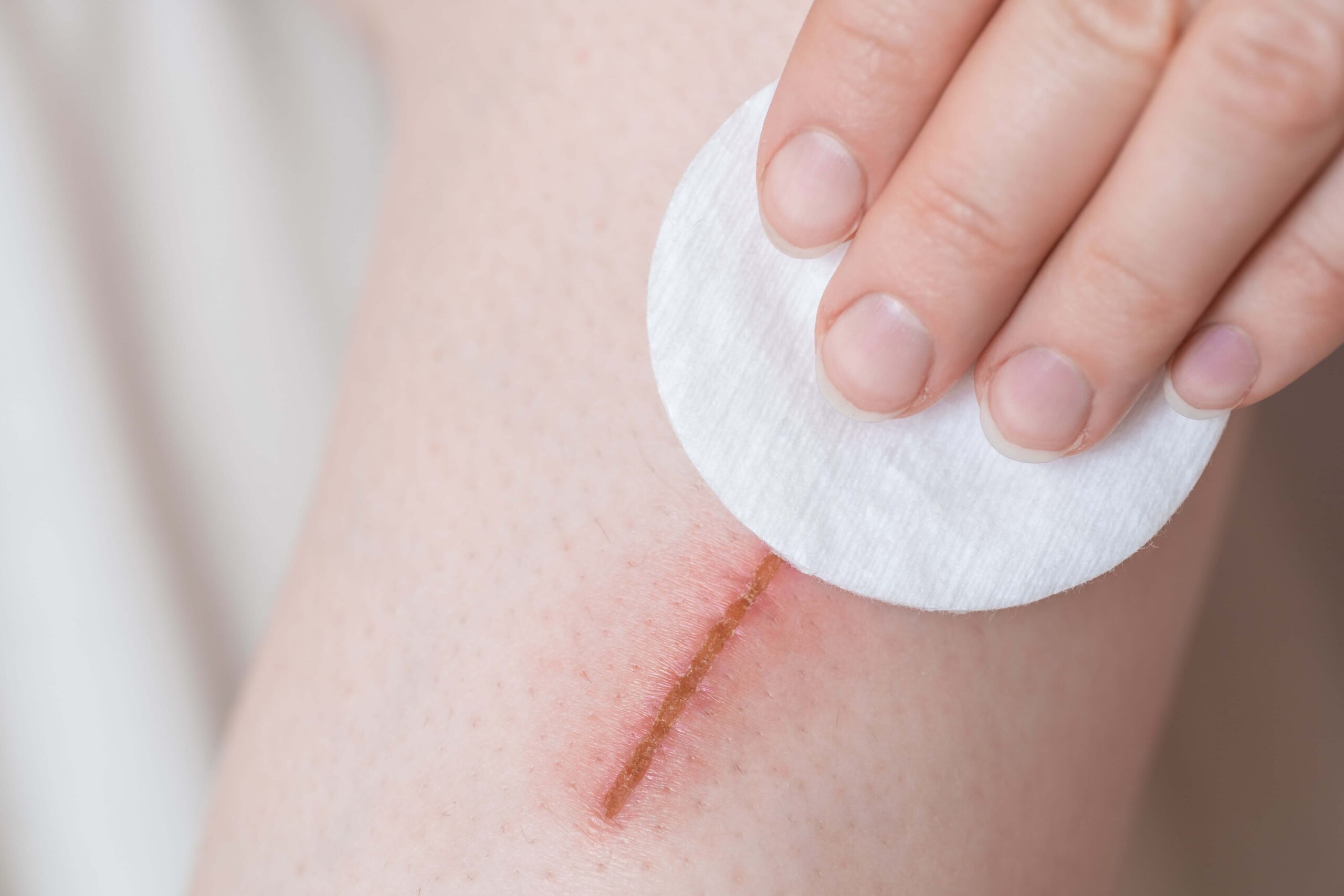
Types of Scars
Not all scars look or behave the same. The body’s response to injury determines the type of scar that forms:
- Fine line scars
Often seen after minor cuts or surgical incisions, these scars tend to fade significantly over time. - Keloid scars
These occur when collagen production becomes excessive, causing the scar to grow beyond the original wound boundaries. - Hypertrophic scars
Similar to keloids but contained within the wound area, these scars may appear raised and red. - Pitted scars
Commonly associated with acne or conditions like chickenpox, these scars form when underlying tissue is lost. - Contracture scars
Typically resulting from burns, these scars tighten the skin and may restrict movement. - Stretched scars
These develop when skin expands rapidly, such as during pregnancy or near joints under tension.
Each type requires a slightly different approach to optimize scar healing.
How Proper Wound Care Improves Scar Healing
Effective wound care is one of the most important factors in reducing scar severity. Addressing a wound early and correctly can dramatically influence the final result.
For minor wounds, consider these essential steps:
- Clean the wound promptly to remove debris and reduce infection risk
- Keep the area moist using petroleum jelly or similar ointments to prevent scab formation
- Cover the wound with a sterile bandage or silicone gel sheet
- Change dressings daily or as recommended
- Follow medical guidance if stitches or closures are used
Additional Tips to Minimize Scars
Beyond basic wound care, small habits can make a meaningful difference in how scars develop:
- Avoid picking at scabs or scratching the area
- Limit excessive movement that could reopen the wound
- Gently massage the area once healing allows
- Protect healing skin from sun exposure with sunscreen
- Use cosmetic solutions like skin camouflage if needed
Incorporating these practices into a holistic wound care approach helps support both skin health and cosmetic outcomes without disrupting the natural healing process.
When to Seek Professional Care
Some wounds require more than at-home care. Seeking timely medical attention can prevent complications and improve scar healing results.
Consult a specialist if you experience:
- Ongoing or heavy bleeding
- Deep puncture wounds
- Animal or human bites
- Severe burns
- Signs of infection such as redness, swelling, or discharge
In these situations, a wound care specialist team can assess the injury and provide targeted treatment to reduce long-term scarring.
Advanced Treatments for Scar Healing
Modern medicine offers several options for improving the appearance of scars, particularly for those that are raised, discolored, or restrictive.
Common treatments include:
- Pressure therapy to flatten raised scars
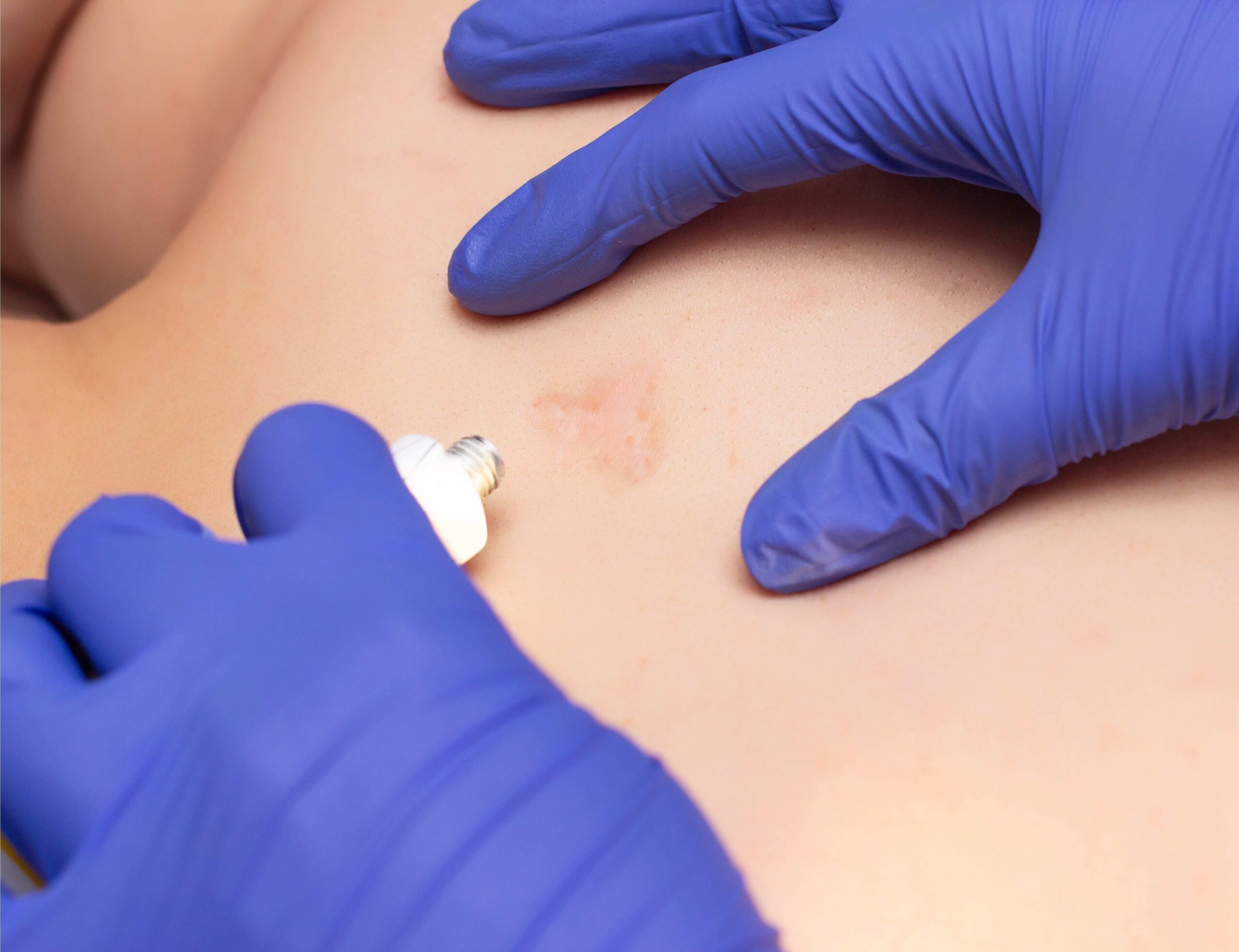
- Topical treatments such as onion extract gels
- Steroid injections to reduce inflammation and thickness
- Laser therapy to improve color and texture
- Microneedling to stimulate collagen remodeling
- Cryotherapy to shrink abnormal scar tissue
- Surgical revision for severe or function-limiting scars
These therapies are often used in combination, depending on the type and severity of the scar. They can significantly enhance scar healing when guided by experienced providers.
The Role of Consistent Care in Long-Term Results
Scar healing does not happen overnight. It can take months or even years for a scar to fully mature. During this time, consistency is essential. Maintaining proper wound care habits, following medical advice, and protecting the skin from additional damage all contribute to improved outcomes.
For individuals who cannot easily travel to clinics, mobile wound care services provide a convenient way to receive professional treatment at home. This ensures continuity of care, which is critical for both healing and scar prevention.
Support for Better Healing Outcomes
Scars may be a natural result of injury, but their impact can often be reduced with the right approach. From early wound management to advanced therapies, every step plays a role in shaping the final appearance of the skin.
At West Coast Wound Center, comprehensive care focuses on improving healing while minimizing long-term effects. With the right strategies and support, patients can achieve smoother, healthier skin.
FAQs About Scar Healing and Wound Care
Can proper wound care really reduce scarring?
Yes, consistent and effective wound care plays a major role in minimizing scars. Keeping the wound clean, moist, and protected helps the skin heal more evenly, which improves overall scar appearance.
What are the most common types of scars?
Common scar types include fine line scars, keloids, hypertrophic scars, pitted scars, contractures, and stretched scars. Each type forms differently depending on how the skin heals after injury.
Are there treatments available to improve existing scars?
Yes, several advanced treatments can improve scars, including laser therapy, microneedling, steroid injections, and topical solutions. These options help refine texture, reduce discoloration, and support better skin recovery.
