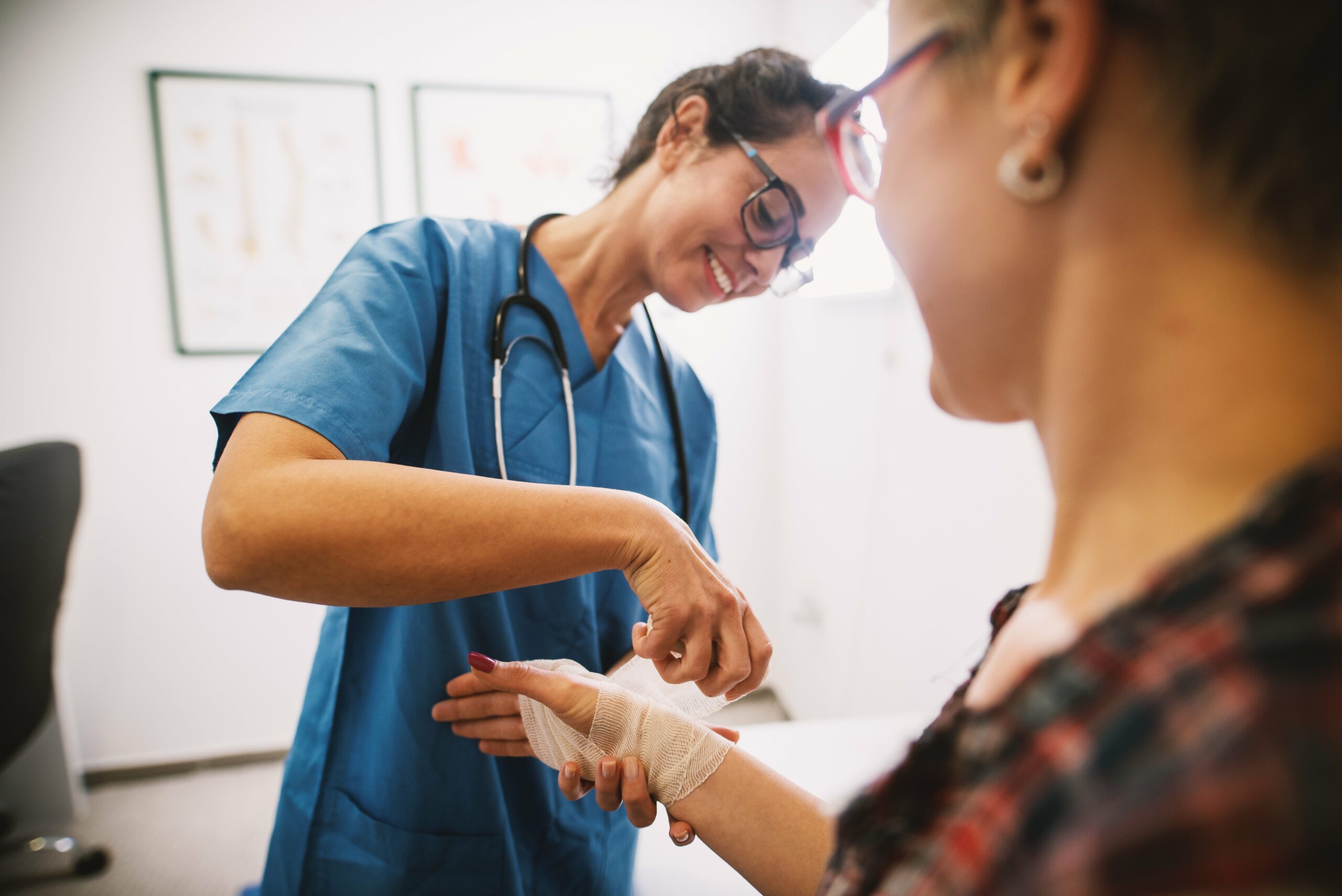
Infection control and preventing infection are some of the most important wound care services that we provide. Always, we follow OSHA (the Occupational Safety and Health Administration) regulations when doing so. These protect both healthcare providers and patients by mandating safe practices in medical environments.
These regulations can serve as part of the foundation for infection prevention protocols across healthcare settings. At West Coast Wound Care, we follow OSHA regulations closely to maintain safe, hygienic environments wherever care is delivered, incorporating these standards into our patient-centered services.

Open wounds, especially those that are deep, draining, or slow to heal, unfortunately, create opportunities for microbial entry. When combined with underlying conditions like diabetes or compromised circulation, wounds can quickly become infected if protocols aren’t followed.
OSHA’s regulations are not optional—they are mandatory for all healthcare employers, including us. These regulations are designed to:
Because we work in patients’ homes, long-term care facilities, and dedicated clinics, these regulations help us maintain consistent infection control standards wherever we provide care.
The most applicable OSHA rule to wound care is the Bloodborne Pathogens Standard (29 CFR 1910.1030). This regulation requires healthcare employers like us to implement practices that reduce occupational exposure to blood and other potentially infectious materials (OPIM). Since wound care often involves direct contact with bodily fluids, complying with this standard is essential.
Key OSHA-mandated infection control practices include:
All these practices are part of our services and help reduce infection risks. (OSHA Bloodborne Pathogens Standard – OSHA.gov)
While the Bloodborne Pathogens Standard remains central, several recent developments have deepened the importance of infection control:
These shifts underscore the need for infection prevention strategies tailored to every patient, whether at a clinic or in the field.
We’ve embedded OSHA compliance into everything we do at West Coast Wound Care. Whether we’re seeing a patient in one of our clinics or visiting them at home, we follow the same rigorous safety standards.
Here’s how we do it:
By keeping these systems in place, we protect both our patients and our staff while delivering high-quality care.
We specialize in providing a wide range of wound care services, and we do so in a way that prioritizes safety, infection prevention, and patient comfort. Our care team is trained to treat:
Our treatments include:
Everything we do is supported by documentation and safety protocols that meet OSHA standards, ensuring continuity and excellence in care.
If you or someone you know is in need of reliable, skilled, and infection-conscious care—delivered either in a clinic or right at home—we’re ready to help. At West Coast Wound Care, we combine safety with compassion to help wounds heal the right way. Reach out for more information or to schedule an appointment to see how we can treat infection and more.
Medicare provides essential coverage for millions of Americans needing wound care, but navigating the system often creates unnecessary barriers to proper treatment. While Medicare does cover many wound healing services, strict requirements, limited provider networks, and complex billing processes can delay critical care. West Coast Wound Center bridges this gap by offering specialized wound care solutions (including mobile ones) that work while providing the expert attention patients truly need.
Medicare Part B covers wound care services deemed medically necessary, including:
However, coverage comes with significant limitations that can hinder wound healing progress:
Medicare demands extensive documentation to prove medical necessity, often requiring:
This administrative burden can lead to delayed approvals and interrupted treatment plans.
Medicare often caps the number of covered wound care visits, forcing providers to either:
Many wound care specialists don’t accept Medicare assignment, leaving patients with few quality options in-network.
These bureaucratic hurdles create real clinical consequences:
The average Medicare prior authorization takes more than a week to process – critical time lost for wounds that require immediate, consistent care.
Many providers default to conservative treatments (basic dressings rather than advanced modalities) to avoid claim denials.
Patients may be discharged from wound care programs once Medicare benefits are exhausted, regardless of healing status.
Our mobile wound care team understands how to work within Medicare’s framework while delivering exceptional care:
Our specialists are trained in Medicare’s precise documentation requirements, ensuring:
We help patients:
While following Medicare rules, we still provide:
For homebound or facility-bound patients, our mobile services solve key Medicare challenges:
Traditional wound clinics require patients to travel for care – often impossible for those with limited mobility. Our mobile unit brings care to them, ensuring consistent treatment.
By providing wound healing services at home, we help avoid costly hospitalizations that Medicare penalizes facilities for.
We coordinate with primary care providers to maintain seamless treatment records that satisfy Medicare requirements.
Behind the Medicare policies are real patients suffering needlessly:
West Coast Wound Center’s model addresses these human factors by:
West Coast Wound Center specializes in bringing expert wound healing directly to patients—whether they’re at home, in assisted living, or at long-term care facilities. Our mobile team of certified wound care specialists provides comprehensive treatments that go beyond basic care, including advanced debridement, infection management, specialized dressings, and personalized healing plans. For patients and families navigating complex Medicare requirements, we simplify the process by handling documentation, maximizing coverage, and ensuring treatments aren’t delayed by red tape.
For loved ones, our services offer peace of mind—no more stressful trips to clinics or gaps in care. We work closely with caregivers, training them on proper wound maintenance between visits to prevent complications. Whether a wound is stalled in healing or requires advanced intervention, our care model removes barriers, delivering the right care at the right time. If Medicare limitations or mobility challenges have made wound recovery difficult, West Coast Wound Center provides the solution: specialized healing, wherever it’s needed most. Reach out today to schedule an appointment.
While Medicare creates challenges, proper navigation can still yield excellent wound healing outcomes. The key lies in partnering with providers who:
West Coast Wound Center’s mobile specialists bring this balanced approach directly to patients, ensuring Medicare coverage works as intended – to facilitate healing rather than hinder it. For those struggling with non-healing wounds and Medicare frustrations, our team provides the expertise and accessibility needed to achieve real results.
When patients enter hospitals with severe wounds, they may be stabilized, but true wound healing often remains elusive. While hospitals excel at acute care, they face systemic challenges in achieving real and lasting wound recovery. This gap in care leaves many patients cycling between facilities and home without ever fully healing. West Coast Wound Center solves this problem by providing wound care that continues the healing process hospitals start but often can’t finish. A wound care specialist can help in a variety of ways.
Hospitals provide essential wound stabilization through:
However, several factors prevent hospitals from achieving complete wound healing:
The average hospital stay for wound patients is usually only a few days – barely enough time to control infection, let alone achieve meaningful healing. Patients are often discharged with “improved” but unhealed wounds.
While hospitals have wound care teams, they’re typically stretched thin across entire facilities. The brief daily wound checks common in hospitals pale in comparison to the focused attention chronic wounds recovery require.
Despite the best efforts of all involved, H=hospital-acquired infections affect patients daily. For wound patients, this means constant exposure to dangerous pathogens that can undermine healing progress.
Many patients transition from hospitals to SNFs (Skilled Nursing Facilities), but these institutions face their own healing barriers:
The average SNF nurse cares for many patients simultaneously, making consistent wound monitoring nearly impossible.
Most SNFs lack:
SNFs focus on rehabilitation goals rather than wound resolution, often discharging patients when their benefits expire – regardless of wound status. Here at West Coast Wound Care, we can fill that gap.
Our wound care services bridge the gaps left by hospitals and SNFs through:
We embed our specialists directly in partnered SNFs to provide:
Patients transitioning from hospital to home maintain the same wound care team throughout recovery, eliminating dangerous care transitions.
We bring hospital-grade treatments to wherever the patient is, including:
Our “skin sweeps” identify at-risk areas before wounds develop, particularly important for:
For patients sent home with unhealed wounds, West Coast Wound Center provides:
Our mobile units deliver:
We train family members in:
Our specialists coordinate with:
West Coast Wound Center eliminates the geographic and systemic barriers that prevent complete healing by:
Our mobile teams serve patients wherever they reside – no stressful clinic trips required.
We bring the full spectrum of wound therapies directly to:
Our specialists handle the most challenging wounds, including:
Hospitals save lives, but wounds need time and specialized attention to truly heal. West Coast Wound Center provides the missing piece – dedicated wound healing that continues long after discharge. For patients tired of bouncing between facilities without resolution, our mobile specialists deliver the consistent, advanced care needed to finally close the wound healing gap.
If you or a loved one has left a hospital with unhealed wounds, specialized help is available without another institutional stay. West Coast Wound Center brings complete wound healing directly to you – wherever you call home. Make an appointment today.
Lymphedema is a chronic condition that impacts the lives of millions of Americans, yet it often remains undiagnosed. Characterized by swelling, pain, and changes to the skin, this disease can reduce overall quality of life and complicate daily activities. At West Coast Wound Care, we specialize in offering in-home care tailored to your specific needs so as to treat your lymphedema. Our treatments are always holistic, treating not just the lymphedema but the entire person.
It is important to understand that lymphedema is not “just swelling.” This condition stems from a compromised lymphatic system, which can lead to skin hardening and impaired immune function. Left untreated, these issues can affect physical health, mental well-being, and even economic stability. Early intervention and practical management strategies are critical in mitigating these challenges and improving outcomes for those living with lymphedema.
The Challenges Lymphedema Presents
Lymphedema presents challenges for so many. However, all too often, it’s either improperly treated or even dismissed. Studies have found that patients “reported substantial delays in (lymphedema) diagnosis and treatment,” while “cancer-related and non-cancer-related lymphedema patients reported similar levels of perceived physician disinterest in lymphedema.” [1]
Even with that, unfortunately, the world is dealing with the “rising prevalence of lymphedema” and that it “affects millions globally.” [2] Here at West Coast Wound Care, we can treat many struggling with lymphedema from the comfort of their homes.

At West Coast Wound Care, we have a proven track record of helping patients reduce swelling and discomfort. Through our comprehensive services, we aim to restore mobility and enhance the overall quality of life.
Our trained techs use socks, sleeves, wraps and other garments to apply pressure that helps move fluid from the tissues back into circulation. This reduces swelling and lowers the risk of complications. These aren’t just great to wear during your treatment, either. You can wear them during daily activities and adjust as needed to maximize their effectiveness.
Performed by certified professionals, this gentle massage technique stimulates the movement of lymph fluid through the body.
Our techs reduce swelling by gently guiding lymph fluid from your tissues to active lymph nodes. We do this by applying light pressure to stimulate the lymphatic system, beginning with specific points in the body, such as the lymph nodes in the neck, armpits, and so forth.
By first addressing areas without swelling, space is created to encourage the movement of congested lymph fluid to these cleared pathways.
After manual lymphatic drainage sessions, our therapists may apply multilayer compression bandages to the affected areas. These bandages use graduated pressure to promote fluid circulation and further reduce swelling.
On the subject of compression, we may use pneumatic compression pumps. These deliver gentle pressure through sleeves that wrap around the affected limbs, encouraging fluid movement and preventing buildup. This has proven to be effective in helping to maintain the progress achieved through other treatments.
Moisturizing and maintaining proper hygiene can prevent dryness, cracks, and irritation that might exacerbate the condition. By keeping the skin healthy, we help patients avoid complications that could lead to more severe issues. We use specialized ointments and creams to protect the skin and reduce the risk of infection.
Keeping the affected limb elevated whenever possible helps counteract the effects of gravity, encouraging fluid to drain from swollen areas. This simple yet effective strategy can be easily incorporated into daily routines to enhance treatment outcomes. Our techs will show you how.
Our therapists guide patients through tailored exercise programs that focus on flexibility, strength, and cardiovascular health. Physical activity stimulates lymphatic drainage and promotes overall circulation.
Aerobic exercises that incorporate deep breathing can further enhance lymph flow while supporting weight management and improving heart health. However, it is essential to pace physical activity appropriately to avoid overexertion. We work closely with each patient to develop a regimen that suits their individual needs and recovery timeline.
Always, we make sure that patients receive comprehensive training on basic self-care techniques. We find that this is one more way we can help our patients take an active role in their recovery and maintain long-term improvements.
While the symptoms of lymphedema cannot be entirely prevented, there are practical steps individuals can take.
For starters, protect your skin and protect yourself. Wearing gloves while gardening or cooking, using lotion to prevent dryness, and treating cuts or burns promptly with antibacterial ointments can all reduce the likelihood of infection. Keeping the affected area clean and moisturized can go a long way, too.
Wearing recommended compression garments can help maintain progress and control swelling. These garments can be part of your daily routine, especially during periods of activity.
Maintaining a healthy weight is another factor that can significantly impact lymphedema symptoms. Excess weight places additional strain on the lymphatic system, exacerbating swelling and discomfort. We encourage patients to adopt balanced diets and incorporate regular exercise into their lives to achieve and sustain a healthy weight. Reducing salt intake can also help, as excessive sodium can lead to fluid retention.
High temperatures can aggravate lymphedema, so wearing protective clothing and sunscreen is advised. Staying hydrated is crucial for keeping lymph fluid moving through the body, further aiding in symptom management.
Lastly, patients should avoid placing undue pressure on the affected area. Loose-fitting clothing, lightweight jewelry, and careful positioning during activities can prevent additional strain. Elevating the limb above heart level when resting can also aid in fluid drainage and reduce swelling.
At West Coast Wound Care, our goal is to empower patients to take control of their lymphedema symptoms. Through personalized treatment plans, education, and ongoing support, we strive to improve the lives of those living with this challenging condition. Whether you are seeking professional care or looking for guidance on self-management techniques, we are here to help you achieve better health and well-being.
That said, we can do much more than just treat lymphedema. Our mobile wound care can help with many other treatments as well. We don’t believe that anyone with lymphedema should have to go to a medical facility every single time they need treatment.
By receiving professional, experienced treatment at home, we’ve found leads to not just better treatment but better integration into the patient’s life. It’s one thing to hear about what you should do at home, it’s something else to have expressly described to you in your home.
To see how our mobile service can treat lymphedema and much more, make an appointment today.
References:
The new year is a time for fresh starts and renewed hope. If you’re living with a chronic wound, it’s an opportunity to take charge of your health and seek the specialized care you need to heal. West Coast Wound and Skin Care offers advanced wound care treatment in San Diego, utilizing the latest technologies and evidence-based practices to help you achieve optimal healing and improve your quality of life.
At West Coast Wound and Skin Care, we understand the physical and emotional challenges that chronic wounds can present. Our compassionate team of wound care specialists is dedicated to providing personalized care and support throughout your healing journey. We combine advanced therapies with a holistic approach to address the underlying causes of your wound and promote long-term healing.
We offer a comprehensive range of wound care treatment options in San Diego, including:

Understanding the underlying causes of chronic wounds is crucial for effective treatment. Some common causes include:
According to the Agency for Healthcare Research and Quality, chronic wounds affect 6.5 million people in the United States.
The Journal of the American Medical Association (JAMA) emphasizes the importance of a multidisciplinary approach to chronic wound care, involving specialists from various medical fields.
This new year, make a commitment to your health and well-being. If you’re struggling with a chronic wound, seek expert care at West Coast Wound and Skin Care in San Diego. Our advanced therapies and personalized approach can help you achieve optimal healing and improve your quality of life.
West Coast Wound and Skin Care is committed to providing the highest quality wound care treatment San Diego. Our advanced therapies and personalized approach can help you achieve optimal healing and improve your quality of life.
The latest technology. The most proven medicine and treatment. All used by experienced professionals with care. That’s what you can expect from our wound treatments. Here at West Coast Wound and Skin Care, we have provided the highest quality of care for our patients. Now, we can put that experience to work for you and yours.
Below are just some of the treatments that we offer. There are many more. When you reach out to us for an appointment, we’ll create a treatment plan to meet and exceed your wound care needs.
By applying safe compression to certain parts of the body, we’re able to help our patients’ wounds. Done properly, this reduces edema (swelling) and ultimately reduces the pain our patients may be experiencing.
If there are areas of your body where the blood flow is restricted, we can contract them, making it possible for our patients’ veins to loosen. Once the veins are loose, with blood moving around more easily and freely, venous pressure decreases dramatically. This can be effective for ulcers as well as many other ailments. When you contact us, we’ll sit down with you to go over how we can best meet your needs.

Damaged tissue has to be dealt with in the right way. Surgical debridements are some of our most commonly-administered treatments. All this means is that our wound care specialists safely and efficiently remove any damaged tissue. By doing so, we’re able to not just promote your overall healing, but we can also prevent further infection and damage.
Sometimes, the best way to deal with the affected area isn’t just to remove it, but to make a transplant that can help the area to heal. To that end, we offer skin grafting services. This makes it possible for blood vessels to grow, and to ultimately heal the affected area.
How do we do this? In skin grafting, we graft tissue or an organ from the placenta or even an animal and transplant it into the affected area. Always, we do everything in our power to treat our patients in the most effective, caring, and non-invasive way. We’ll go over your options and direct you towards the best choices at your appointment.
With some infections, some wounds, your body’s natural healing process may, for any number of reasons, slow down or even stop. We have multiple ways of treating this, too. For example, you may benefit from cryotherapy. With this treatment, our experts will freeze any infected areas. Done properly, this will accelerate your body’s healing process. This has been proven to lessen the effects of inflammation, it could reduce any tenderness you feel in your joints and your muscles, it could even renew your skin and blood cells. It’s important to note that, even though much of what we’ve discussed has been focused on wound care, we treat the whole patient – not just the wound.
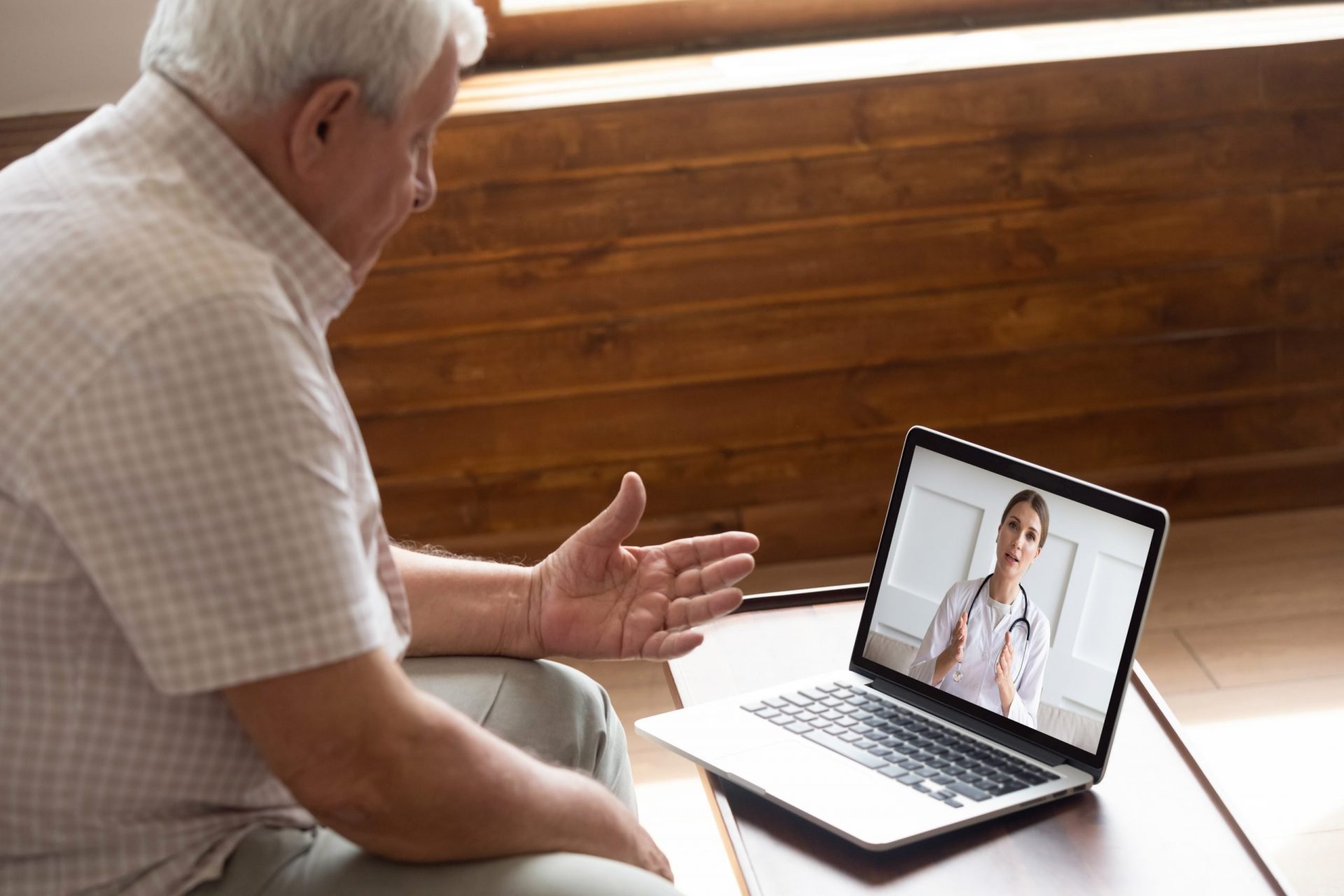
We can provide treatment in multiple ways. To better serve our patients, we offer telemedicine options. Through this, you can receive quality medical care when and how you need it. Should you request an urgent appointment, we can set up video conferencing quickly.
Additionally, we offer mobile care, too. Our wound care specialists can come to you and provide you with the right care in any location. You can be at home, in assisted living, a nursing home, hospice, or elsewhere – we can make our way to you. There, we can formulate a treatment plan that prioritizes your health as well as your schedule.
To get help, schedule an appointment through our site or give us a call.
“Is there anything I can do to help care for my own wounds?” “What can I do when you aren’t here to improve my health?” Our specialists are often asked some variation of those questions. Wound care is a job for trained professionals, specialists with years of experience. Your wounds (or those of your loved ones) deserve the very best care. That said, there may be some steps you can take to help reach your optimal health. Some of the steps mentioned below may seem a bit obvious, a bit fundamental. They can, however, help anyone. When you contact our trained professionals, we can provide you with care for your specific needs.
Healthy Diet and Proper Hydration
At the risk of oversimplification, for your cells to heal your wounds, your cells have to work very hard. They need plenty of energy to do this work, sometimes twice as much energy as they would normally. How can you best provide them with this energy? In part, at least, through a healthy diet. We can work with you to create a diet that’s good for your health as well as for your emotions and your spirit. This is one more aspect of our holistic treatment – treating the whole person and not just the wound.
The Right Exercise for Where You Are
You know that exercise is good for your health, but, if your wounds are healing, you very well may not be in your best condition to exercise. Gentle exercise, done on a consistent basis, can help you in many ways, not the least of which is through helping your circulation. Better blood flow can help to expedite and strengthen the wound healing process.

This doesn’t mean that you have to run a marathon, join a gym, or do anything of that nature. But, some simple exercises performed regularly can have real, lasting benefits for your wound as well as the rest of your body.
Less Stress for Better Wound Healing
No one’s ever really prepared for a wound that requires the care of a specialist. It’s entirely understandable that this experience would be stressful, taking a real toll on both your body as well as your mental health. That said, stress doesn’t help the wound healing process. In fact, it can be a genuine detriment.
Stress can cause increased cortisol to be released into your bloodstream. Too much cortisol can actually slow the healing process, which is the last thing that anyone wants. Now, getting an appropriate amount of sleep and exercising regularly can help with stress. So too can methods as simple as deep breathing, mindfulness, and more. Even watching how much time you spend looking at screens/on social media can help with your stress level. Our trained specialists don’t just change your wound dressings. We can talk to you about ways to manage your stress levels so that you’re calm as you heal.
Wound Care Specialists at Your Service
What’s mentioned above are some basic steps you can take to help with the care of your wounds. We can go into greater detail when you contact us. The truth is that everyone’s wounds are different, so each person requires specialized treatment. That’s exactly what we can provide.
In fact, our specialists can provide individualized care in a location of your choosing. We can come to your home, examine all of your wounds, and then provide the holistic and compassionate care you deserve. To see how we can help, contact us through our site or give us a call.
[fusion_builder_container hundred_percent=”no” equal_height_columns=”no” menu_anchor=”” hide_on_mobile=”small-visibility,medium-visibility,large-visibility” class=”” id=”” background_color=”” background_image=”” background_position=”center center” background_repeat=”no-repeat” fade=”no” background_parallax=”none” parallax_speed=”0.3″ video_mp4=”” video_webm=”” video_ogv=”” video_url=”” video_aspect_ratio=”16:9″ video_loop=”yes” video_mute=”yes” overlay_color=”” video_preview_image=”” border_color=”” border_style=”solid” padding_top=”” padding_bottom=”” padding_left=”” padding_right=”” type=”legacy”][fusion_builder_row][fusion_builder_column type=”2_3″ layout=”1_1″ background_position=”left top” background_color=”” border_color=”” border_style=”solid” border_position=”all” spacing=”yes” background_image=”” background_repeat=”no-repeat” padding_top=”” padding_right=”” padding_bottom=”” padding_left=”” margin_top=”0px” margin_bottom=”0px” class=”” id=”” animation_type=”” animation_speed=”0.3″ animation_direction=”left” hide_on_mobile=”small-visibility,medium-visibility,large-visibility” center_content=”no” last=”false” min_height=”” hover_type=”none” link=”” border_sizes_top=”” border_sizes_bottom=”” border_sizes_left=”” border_sizes_right=”” first=”true” spacing_right=”2.6666666666666665%”][fusion_text columns=”” column_min_width=”” column_spacing=”” rule_style=”default” rule_size=”” rule_color=”” content_alignment_medium=”” content_alignment_small=”” content_alignment=”” hide_on_mobile=”small-visibility,medium-visibility,large-visibility” sticky_display=”normal,sticky” class=”” id=”” margin_top=”” margin_right=”” margin_bottom=”” margin_left=”” font_size=”” fusion_font_family_text_font=”” fusion_font_variant_text_font=”” line_height=”” letter_spacing=”” text_color=”” animation_type=”” animation_direction=”left” animation_speed=”0.3″ animation_offset=””]
“Telemedicine is becoming popular in the healthcare industry. There are over a dozen telemedicine companies already working with doctors. Doctors have started seeing patients virtually for their non-emergency visits.”
Read the full article ” How Telemedicine Is Influencing Wound Care” by Today’s Wound Clinic – CLICK HERE
[/fusion_text][/fusion_builder_column][fusion_builder_column type=”1_3″ layout=”1_3″ spacing=”” center_content=”no” link=”” target=”_self” min_height=”” hide_on_mobile=”small-visibility,medium-visibility,large-visibility” class=”” id=”” hover_type=”none” border_color=”” border_style=”solid” border_position=”all” border_radius=”” box_shadow=”no” dimension_box_shadow=”” box_shadow_blur=”0″ box_shadow_spread=”0″ box_shadow_color=”” box_shadow_style=”” padding_top=”” padding_right=”” padding_bottom=”” padding_left=”” margin_top=”” margin_bottom=”” background_type=”single” gradient_start_color=”” gradient_end_color=”” gradient_start_position=”0″ gradient_end_position=”100″ gradient_type=”linear” radial_direction=”center center” linear_angle=”180″ background_color=”” background_image=”” background_image_id=”” background_position=”left top” background_repeat=”no-repeat” background_blend_mode=”none” animation_type=”” animation_direction=”left” animation_speed=”0.3″ animation_offset=”” filter_type=”regular” filter_hue=”0″ filter_saturation=”100″ filter_brightness=”100″ filter_contrast=”100″ filter_invert=”0″ filter_sepia=”0″ filter_opacity=”100″ filter_blur=”0″ filter_hue_hover=”0″ filter_saturation_hover=”100″ filter_brightness_hover=”100″ filter_contrast_hover=”100″ filter_invert_hover=”0″ filter_sepia_hover=”0″ filter_opacity_hover=”100″ filter_blur_hover=”0″ last=”true” border_sizes_top=”0″ border_sizes_bottom=”0″ border_sizes_left=”0″ border_sizes_right=”0″ first=”false” spacing_left=”1.3333333333333333%”][fusion_widget_area name=”avada-blog-sidebar” title_size=”” title_color=”” background_color=”” padding_top=”” padding_right=”” padding_bottom=”” padding_left=”” hide_on_mobile=”small-visibility,medium-visibility,large-visibility” class=”” id=”” /][/fusion_builder_column][/fusion_builder_row][/fusion_builder_container]
[fusion_builder_container hundred_percent=”no” hundred_percent_height=”no” hundred_percent_height_scroll=”no” hundred_percent_height_center_content=”yes” equal_height_columns=”no” menu_anchor=”” hide_on_mobile=”small-visibility,medium-visibility,large-visibility” status=”published” publish_date=”” class=”” id=”” link_color=”” link_hover_color=”” border_color=”” border_style=”solid” margin_top=”” margin_bottom=”” padding_top=”” padding_right=”” padding_bottom=”” padding_left=”” gradient_start_color=”” gradient_end_color=”” gradient_start_position=”0″ gradient_end_position=”100″ gradient_type=”linear” radial_direction=”center center” linear_angle=”180″ background_color=”” background_image=”” background_position=”center center” background_repeat=”no-repeat” fade=”no” background_parallax=”none” enable_mobile=”no” parallax_speed=”0.3″ background_blend_mode=”none” video_mp4=”” video_webm=”” video_ogv=”” video_url=”” video_aspect_ratio=”16:9″ video_loop=”yes” video_mute=”yes” video_preview_image=”” filter_hue=”0″ filter_saturation=”100″ filter_brightness=”100″ filter_contrast=”100″ filter_invert=”0″ filter_sepia=”0″ filter_opacity=”100″ filter_blur=”0″ filter_hue_hover=”0″ filter_saturation_hover=”100″ filter_brightness_hover=”100″ filter_contrast_hover=”100″ filter_invert_hover=”0″ filter_sepia_hover=”0″ filter_opacity_hover=”100″ filter_blur_hover=”0″ type=”legacy”][fusion_builder_row][fusion_builder_column type=”2_3″ layout=”1_1″ background_position=”left top” background_color=”” border_color=”” border_style=”solid” border_position=”all” spacing=”yes” background_image=”” background_repeat=”no-repeat” padding_top=”” padding_right=”” padding_bottom=”” padding_left=”” margin_top=”0px” margin_bottom=”0px” class=”” id=”” animation_type=”” animation_speed=”0.3″ animation_direction=”left” hide_on_mobile=”small-visibility,medium-visibility,large-visibility” center_content=”no” last=”false” min_height=”” hover_type=”none” link=”” border_sizes_top=”” border_sizes_bottom=”” border_sizes_left=”” border_sizes_right=”” first=”true” spacing_right=”2.6666666666666665%”][fusion_text columns=”” column_min_width=”” column_spacing=”” rule_style=”default” rule_size=”” rule_color=”” content_alignment_medium=”” content_alignment_small=”” content_alignment=”” hide_on_mobile=”small-visibility,medium-visibility,large-visibility” sticky_display=”normal,sticky” class=”” id=”” margin_top=”” margin_right=”” margin_bottom=”” margin_left=”” font_size=”” fusion_font_family_text_font=”” fusion_font_variant_text_font=”” line_height=”” letter_spacing=”” text_color=”” animation_type=”” animation_direction=”left” animation_speed=”0.3″ animation_offset=””]
“In a pandemic situation, it is important for any outpatient wound program to rapidly identify the entire patient cohort that it has been managing and determine optimal strategies to manage patients, preferably at home, based on the resources available to each and the system.”
Read the full article “Wound Center Without Walls: The New Model of Providing Care During the COVID-19 Pandemic” by Wounds Research – CLICK HERE
[/fusion_text][/fusion_builder_column][fusion_builder_column type=”1_3″ layout=”1_3″ spacing=”” center_content=”no” link=”” target=”_self” min_height=”” hide_on_mobile=”small-visibility,medium-visibility,large-visibility” class=”” id=”” hover_type=”none” border_color=”” border_style=”solid” border_position=”all” border_radius=”” box_shadow=”no” dimension_box_shadow=”” box_shadow_blur=”0″ box_shadow_spread=”0″ box_shadow_color=”” box_shadow_style=”” padding_top=”” padding_right=”” padding_bottom=”” padding_left=”” margin_top=”” margin_bottom=”” background_type=”single” gradient_start_color=”” gradient_end_color=”” gradient_start_position=”0″ gradient_end_position=”100″ gradient_type=”linear” radial_direction=”center center” linear_angle=”180″ background_color=”” background_image=”” background_image_id=”” background_position=”left top” background_repeat=”no-repeat” background_blend_mode=”none” animation_type=”” animation_direction=”left” animation_speed=”0.3″ animation_offset=”” filter_type=”regular” filter_hue=”0″ filter_saturation=”100″ filter_brightness=”100″ filter_contrast=”100″ filter_invert=”0″ filter_sepia=”0″ filter_opacity=”100″ filter_blur=”0″ filter_hue_hover=”0″ filter_saturation_hover=”100″ filter_brightness_hover=”100″ filter_contrast_hover=”100″ filter_invert_hover=”0″ filter_sepia_hover=”0″ filter_opacity_hover=”100″ filter_blur_hover=”0″ last=”true” border_sizes_top=”0″ border_sizes_bottom=”0″ border_sizes_left=”0″ border_sizes_right=”0″ first=”false” spacing_left=”1.3333333333333333%”][fusion_widget_area name=”avada-blog-sidebar” title_size=”” title_color=”#0772ba” background_color=”” padding_top=”” padding_right=”” padding_bottom=”” padding_left=”” hide_on_mobile=”small-visibility,medium-visibility,large-visibility” class=”” id=”” /][/fusion_builder_column][/fusion_builder_row][/fusion_builder_container]